Bitcoin Mining: How It Works, Who Does It, and Why It's Changing
When you hear Bitcoin mining, the process of verifying Bitcoin transactions and securing the network by solving complex math problems. Also known as crypto mining, it’s what keeps Bitcoin alive without banks or middlemen. Every ten minutes, a new block of transactions gets added to the blockchain—and someone has to win the race to do it. That someone is a miner, using powerful machines to crack cryptographic puzzles. It’s not magic. It’s math, electricity, and hardware.
At its core, Bitcoin mining runs on proof of work, a consensus mechanism that demands real computational effort to validate transactions and prevent fraud. Miners compete to find a specific number (a hash) that meets the network’s rules. The first to do it gets rewarded in Bitcoin. But here’s the catch: the puzzles get harder over time. What used to be doable on a home computer now needs ASIC miners, specialized hardware built only for Bitcoin mining, far more powerful than regular computers. These machines cost thousands, use as much power as a small house, and run nonstop. That’s why mining isn’t just a tech game—it’s a business. And it’s shifting fast.
Energy use is the biggest debate. Critics say Bitcoin mining guzzles power. Supporters point out that much of it runs on leftover or renewable energy—hydro in Canada, flare gas in Texas, solar in the Middle East. The network doesn’t care where the juice comes from, only that it’s reliable. And as governments crack down or electricity prices spike, miners move. You’ll find them in places with cheap power, loose rules, or both. Some even use stranded energy nobody else wants.
It’s not just about profit anymore. Mining is about control. If only a few big companies own the hardware, they control the network. That’s why some people still run small miners—not to get rich, but to stay part of the system. Decentralization isn’t a buzzword here. It’s the whole point.
And while Bitcoin mining doesn’t directly affect your wallet, it shapes everything you do with Bitcoin. It affects transaction speed, fees, and even how secure your coins feel. If mining gets too centralized, the whole system becomes more vulnerable. If it gets too expensive, fewer people join—and the network weakens.
Below, you’ll find real-world stories about how mining fits into the bigger crypto picture: from exchanges that try to hide mining profits, to countries banning it, to people using it to bypass financial controls. You’ll see how mining connects to regulation, geography, and survival in places where banks won’t help you. This isn’t theory. It’s what’s happening right now.
19
Oct
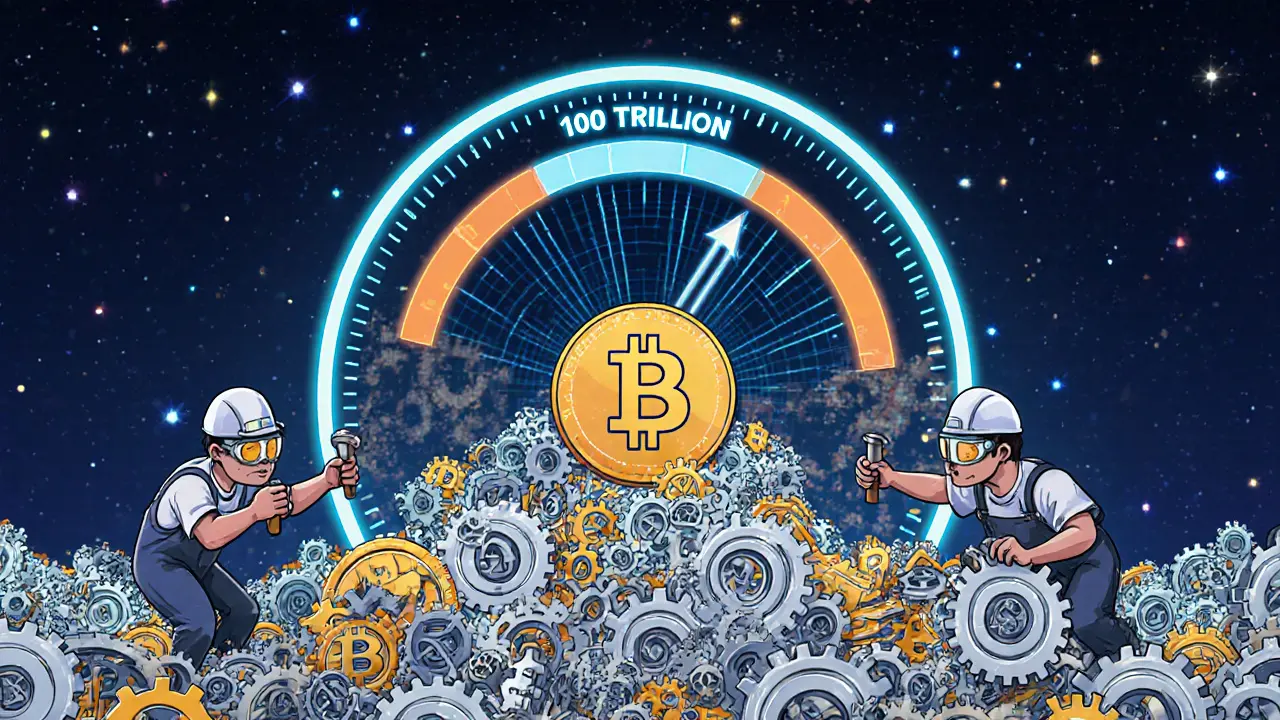
Hash rate and mining difficulty are locked in a self-regulating cycle that keeps Bitcoin's block time at 10 minutes. As more miners join, difficulty rises to maintain stability - ensuring security and predictability for the entire network.
Read More