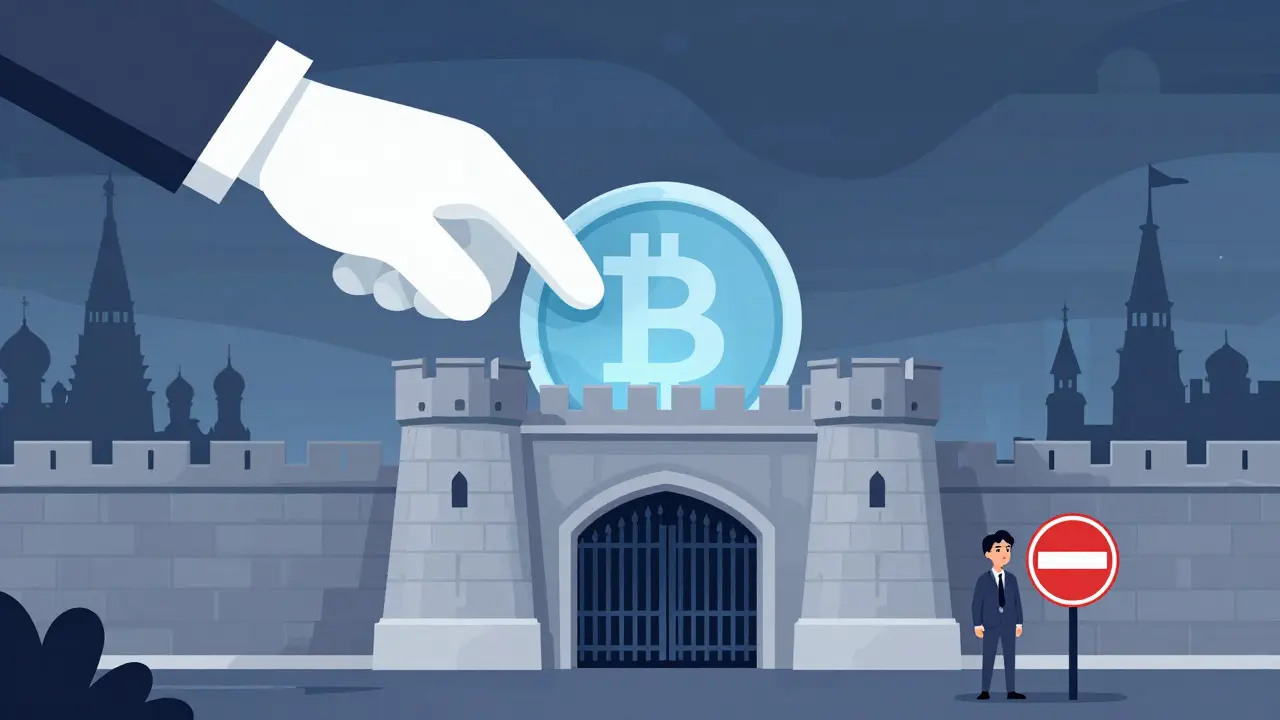
If you thought the Russian Central Bank had softened its stance on digital assets, think again. While headlines often highlight limited allowances for international trade, the reality on the ground is a tightening noose of restrictions designed to keep cryptocurrencies out of the domestic economy. As we move through mid-2026, the regulatory landscape in Russia is defined not by innovation, but by containment. The Shelia Peterson analysis reveals a system where every transaction is tracked, every bank is capped, and every participant must choose between state-sanctioned compliance or total exclusion.
The Core Philosophy: Containment Over Adoption
To understand the current rules, you have to look at the mindset of the regulator. The Central Bank of Russia (CBR) views cryptocurrency primarily as a threat to monetary stability. Unlike jurisdictions that see crypto as a new asset class or payment method, the CBR sees it as a leak in the financial dam. Their goal isn't to foster a vibrant local market; it's to prevent capital flight and maintain control over the ruble.
This philosophy drives the dual-track strategy currently in place. On one track, there is a narrow exception for international trade, allowing companies to use digital currencies to bypass sanctions. On the other track, there is a near-total ban on using crypto for domestic payments. This split creates a complex environment where legality depends entirely on who you are, what you are buying, and whether the transaction crosses a border.
The "CryptoBasel" Capital Caps Taking Effect in 2026
The most significant change hitting the banking sector in 2026 is the implementation of stricter capital requirements. Often referred to by industry experts as "CryptoBasel," these rules formalize the conservative stance the CBR has held since May 2025. Under the informational letter IN 03-23/87, banks engaging with cryptocurrency firms face severe limitations.
Here is the hard limit: digital asset transactions cannot exceed 1% of a bank's capital. This cap effectively limits institutional exposure to minimal levels. If a Russian bank wants to facilitate crypto-related activities, it must back every ruble of investor funds with a ruble of its own capital. This requirement ensures that if the volatile crypto market crashes, the loss falls on the bank’s reserves, not the depositors.
| Constraint Type | Regulatory Limit | Impact on Institutions |
|---|---|---|
| Digital Asset Transaction Cap | Max 1% of Bank Capital | Severely limits volume of crypto services offered |
| Capital Backing Requirement | 1:1 Ratio (Own Funds) | Increases cost of providing crypto loans/services |
| Loan Restrictions | Tighter Scrutiny | Banks hesitant to lend to crypto firms |
| Investment Ban | Prohibited for Financial Infrastructure | Prevents systemic risk from crypto volatility |
Andrey Tugarin, founder of GMT Legal, notes that these changes are less about new restrictions and more about formalizing existing practices. He argues that strict frameworks were already in place, so the 2026 implementation won't fundamentally change how banks operate-they will simply continue to treat crypto as a high-risk, low-volume activity.
The Experimental Legal Regime (ELR): A Controlled Sandbox
You might wonder if there is any room for growth. The answer lies in the Experimental Legal Regime (ELR). This is the CBR's attempt to allow controlled experimentation without opening the floodgates. The ELR creates a sandbox where specific crypto activities can occur, but only under intense scrutiny.
Participation in the ELR is restricted to "especially qualified" investors. These aren't your average retail traders; they are entities that meet high financial thresholds and undergo stringent vetting. Within this regime, companies can test blockchain solutions and digital asset instruments. However, outside of the ELR, the rules are draconian. The CBR has proposed a ban on cryptocurrency settlements between residents, establishing liability for anyone caught violating this prohibition.
This dual approach allows the state to monitor technology while preventing widespread domestic adoption. It’s a way to say, "You can play with fire, but only in our fireplace, and only if you wear our protective suit."

Surveillance and De-anonymization: The End of Privacy?
If you plan to engage with crypto in Russia, privacy is likely a lost cause. The CBR has prioritized transparency and surveillance above all else. In collaboration with the Ministry of Digital Development, the central bank has developed a digital platform specifically for the de-anonymization of cryptocurrency users.
The compliance requirements are exhaustive. Financial institutions must implement robust Anti-Money Laundering (AML) measures. The CBR has issued detailed methodological recommendations for identifying suspicious activities, with a particular focus on peer-to-peer (P2P) transactions. P2P trading, often used to bypass exchange restrictions, is under a microscope.
- Mandatory KYC: All qualified investors must undergo rigorous Know Your Customer checks.
- Tax Reporting: Any crypto transaction exceeding 600,000 rubles must be reported to tax authorities.
- VASP Regulation: Rosfinmonitoring is working to regulate Virtual Asset Service Providers (VASPs), including exchanges and brokers.
The message is clear: integrate into the state-regulated system or face blocking. This extends to platforms, miners, and even grey-market intermediaries. There is no middle ground. You are either compliant and visible, or you are excluded and illegal.
Stablecoins and International Trade Exceptions
One area seeing active development is stablecoin regulation. Deputy Finance Minister Ivan Chebeskov confirmed that Russia aims to finalize new rules for stablecoins by the end of 2025. The Ministry of Finance (Minfin) and the Central Bank are working jointly on these frameworks. The goal is to align with international standards while protecting domestic businesses.
Why the focus on stablecoins? Because they offer a hedge against volatility. For businesses engaged in international trade, stablecoins provide a reliable medium of exchange when traditional banking channels are disrupted by sanctions. In summer 2024, legislation permitted digital currency payments in international trade. This created a critical loophole for companies to conduct business abroad while the domestic ban remained intact.
However, don't expect this to spill over into everyday consumer spending. The CBR remains firm against domestic crypto payments due to monetary stability concerns. The international trade exception is a pragmatic response to geopolitical pressure, not an endorsement of crypto as a national currency.

What This Means for Investors and Businesses
For foreign investors looking at the Russian market, the regulatory environment is challenging. The comprehensive oversight model positions Russia among the most restrictive major economies regarding cryptocurrency regulation. Every transaction must be recorded, and all participants must undergo KYC and AML compliance procedures.
Local businesses face a binary choice. If you want to use crypto for cross-border payments, you must navigate the ELR or utilize the international trade exceptions. If you try to use it domestically, you risk penalties. For retail investors, the path is narrow. High entry barriers for qualified investors mean that casual trading is largely pushed to the margins or underground.
Looking ahead, the CBR plans to consolidate cryptocurrency infrastructure under state control following full ELR implementation. This suggests a future where government oversight is complete. The ban on financial institutions investing in cryptocurrencies reinforces the idea that crypto is a tool for specific, controlled purposes, not a core component of the financial system.
Navigating the Compliance Maze
Surviving in this ecosystem requires meticulous attention to detail. Here are the key steps for entities operating within or adjacent to the Russian crypto space:
- Verify Eligibility: Ensure you meet the "qualified investor" criteria if participating in the ELR.
- Implement Robust AML/KYC: Adopt the CBR's methodological recommendations for reporting suspicious activities.
- Monitor Transaction Limits: Keep digital asset transactions well below the 1% capital cap for any associated banking partners.
- Report Large Transactions: Automatically flag and report any transactions over 600,000 rubles to tax authorities.
- Stay Updated on Stablecoin Rules: Watch for the finalization of stablecoin regulations expected late 2025, as these will impact cross-border trade strategies.
The Russian approach to crypto is unique. It balances the need for international connectivity with a deep-seated desire for domestic control. For those willing to navigate the complexities, there are opportunities. For those seeking freedom and anonymity, Russia is likely not the right jurisdiction.
Can I use cryptocurrency for daily payments in Russia?
No. The Central Bank of Russia maintains a strict ban on using cryptocurrency for domestic payments. While there are exceptions for international trade, using crypto to buy goods or services locally is prohibited and carries legal liability.
What is the 1% capital cap for banks?
The 1% cap means that Russian banks can only engage in digital asset transactions up to 1% of their total capital. This restriction, fully effective in 2026, limits the amount of risk banks can take on with crypto investments and loans.
Who can participate in the Experimental Legal Regime (ELR)?
Only "especially qualified" investors can participate in the ELR. These participants must meet high financial thresholds and pass stringent vetting processes. The ELR serves as a controlled sandbox for testing blockchain technologies and digital asset instruments.
Are stablecoins regulated in Russia?
Yes, regulations for stablecoins are being finalized by the Ministry of Finance and the Central Bank, with completion expected by the end of 2025. These rules aim to align with international standards while facilitating international trade.
Do I need to report crypto transactions to the tax authorities?
Yes. Any cryptocurrency transaction exceeding 600,000 rubles must be reported to the Russian tax authorities. This is part of the broader effort to de-anonymize crypto users and ensure tax compliance.
How does the CBR view cryptocurrency risks?
The Central Bank of Russia views cryptocurrencies as highly risky assets that threaten monetary stability. This perspective drives their restrictive policies, including capital caps, bans on domestic payments, and extensive surveillance measures.
What happens to non-compliant crypto service providers?
Non-compliant service providers, including exchanges and brokers, face blocking and elimination from the Russian market. The CBR requires all providers to integrate into the state-regulated system or cease operations.
Heather Austin
July 25, 2026 AT 07:50honestly the 1% cap is just common sense for banks who dont want to blow up their balance sheets with volatile assets. most people here think crypto is magic money but it's really just high risk speculation wrapped in tech jargon. if you're a bank manager you gotta protect your depositors first right? so yeah keeping exposure low makes total sense even if the purists hate it. also the part about stablecoins for international trade is interesting because that's where the real utility is anyway not buying coffee with bitcoin.
Korn Arrieta
July 26, 2026 AT 22:09This article is painfully naive. It assumes the CBR actually cares about 'monetary stability' when they are actively destroying the ruble through inflationary policies. The 1% cap isn't protection, it's a stranglehold designed to keep capital from fleeing to more stable jurisdictions. Don't be fooled by the bureaucratic language. They aren't managing risk; they are managing control. Every single transaction tracked means every single citizen is a potential target for state confiscation if they fall out of favor. Privacy is dead in Russia, and this regulation is just the funeral program.
Ran Tao
July 27, 2026 AT 01:26Lol imagine thinking the Russian Central Bank gives a damn about your financial freedom 🤡 This whole 'containment' strategy is basically admitting they lost the war against digital currency. They're trying to build a wall while the water is already rising. The ELR sandbox is a joke, only the oligarchs can play there. For the rest of us, it's either join the state-approved club or go underground. Typical authoritarian move: ban what you can't control then pretend you're protecting everyone. So dramatic 😩
Lisa Chong
July 27, 2026 AT 14:04The globalist agenda is clearly at work here forcing these draconian measures on the Russian populace under the guise of security. One must consider that the de-anonymization platform is merely a front for deeper surveillance networks controlled by shadowy cabals who wish to eliminate independent thought. The fact that transactions over 600,000 rubles are reported suggests a coordinated effort to track dissenters before they can organize. We are sleepwalking into a digital panopticon where every keystroke is monitored by unseen eyes. The elites laugh as they tighten the noose around our necks while we debate technicalities. Stay vigilant my friends for the truth is hidden in plain sight.
Ruth Williams
July 29, 2026 AT 09:04It is truly disheartening to observe how little the average reader understands about macroeconomic stability. The Central Bank’s actions, though harsh, are necessary to prevent the kind of hyperinflation we saw in Venezuela or Zimbabwe. Those who clamor for 'freedom' in crypto often lack the intellectual rigor to understand systemic risk. The 1% capital requirement is a sophisticated mechanism to ensure that banking institutions do not become conduits for speculative bubbles. One must appreciate the nuance of regulatory frameworks rather than dismissing them as mere oppression. Education is clearly lacking in these comments.
Sophie Nakasako
July 31, 2026 AT 02:29I find myself wondering what this says about the nature of trust in modern society. If we cannot trust our central banks to manage currency without such extreme measures, perhaps the issue lies deeper than just policy. It makes one ponder whether true financial sovereignty is even possible in a world dominated by centralized power structures. Maybe the answer isn't in resisting the rules but in understanding the human need for both order and freedom. How do we balance safety with autonomy? It's a philosophical dilemma that extends far beyond cryptocurrency.
Kristy Morrow
July 31, 2026 AT 12:41you call it containment i call it survival. the west has been pumping sanctions like crazy so of course russia needs to adapt. calling it draconian is just western bias talking. let them have their sandbox. if it works great if not they'll figure something else out. stop acting like the cbr is evil and start looking at the geopolitical reality. it's not about privacy it's about staying in the game. simple as that.
Logan Edmison
August 1, 2026 AT 13:27look i got a friend who trades p2p in moscow and he says the kyc stuff is getting intense. they really are watching every move. its kinda wild how much data they collect just to make sure you didnt sell some btc for cash. feels like living in a movie sometimes but hey thats life now i guess. hope it gets better soon but doubtful.
Michelle Walker
August 3, 2026 AT 09:38The analysis is flawed. You ignore the black market dynamics. When you ban domestic payments, you don't stop them; you just push them off-ledger. The 1% cap is irrelevant because the volume shifts to OTC desks that don't report to the CBR. This creates a dual economy: one visible and compliant, one invisible and corrupt. The state thinks it has control, but it only has visibility. True control requires enforcement capacity they simply do not possess. The system is brittle.
Shay Thomson
August 4, 2026 AT 22:32Oh wow, reading all this tension between regulation and freedom is just heartbreaking! 😢 Imagine if we could just talk about this without everyone feeling so attacked. On one hand, the banks need to stay safe, which is totally valid. On the other hand, people just want to transact freely, which is also super important. Can't we find a middle ground where everyone feels heard? It seems like a lot of fear is driving these conversations, and maybe if we stepped back and breathed, we'd see there's room for compromise. Let's spread some love instead of anger! ❤️
DJ Maleko
August 5, 2026 AT 09:47So basically if you're not an oligarch you're screwed right? 🤔 I mean seriously why should the little guy care about the 1% cap when they can't even get into the ELR sandbox? It feels like the rules are written specifically to exclude normal people. And don't get me started on the tax reporting threshold. 600k rubles is nothing for big players but huge for regular folks. Seems like another way to squeeze the middle class. What do you guys think is the best workaround? 🧐
Erika Pozzetto
August 7, 2026 AT 05:29In light of the aforementioned regulatory constraints, it becomes imperative to acknowledge the profound implications for institutional liquidity and operational continuity within the Russian financial sector. The implementation of the CryptoBasel standards, whilst seemingly restrictive, serves to align domestic banking practices with international prudential norms, thereby fostering a degree of predictability amidst geopolitical turbulence. Furthermore, the Experimental Legal Regime offers a nuanced pathway for technological innovation, provided that participants adhere to the stringent compliance protocols established by the Central Bank. Thus, one may argue that the current framework, albeit complex, represents a calculated effort to mitigate systemic risk while preserving essential channels for international commerce.
Russ Fincham
August 7, 2026 AT 09:04The narrative here is skewed towards victimhood. The CBR is doing exactly what any competent central bank would do in a sanctioned environment: ring-fencing the domestic economy. The 1% cap is a feature, not a bug. It prevents contagion. The ELR is a testing ground for future CBDC integration. Stop crying about privacy; privacy was never a right in Russia, it was a privilege for the connected. Now it's gone for everyone, which is arguably fairer. The system is working as intended.
Jackie D
August 9, 2026 AT 03:19gosh this whole situation reminds me of that time i tried to buy a vintage lamp online and the payment gateway failed three times. frustrating right? well imagine that but with your entire financial life. its like trying to dance in a straightjacket. but hey maybe thats just me being dramatic. i wonder if anyone has found a creative way to navigate this maze without losing their mind. surely there are some clever hacks out there waiting to be discovered by those with a curious spirit.