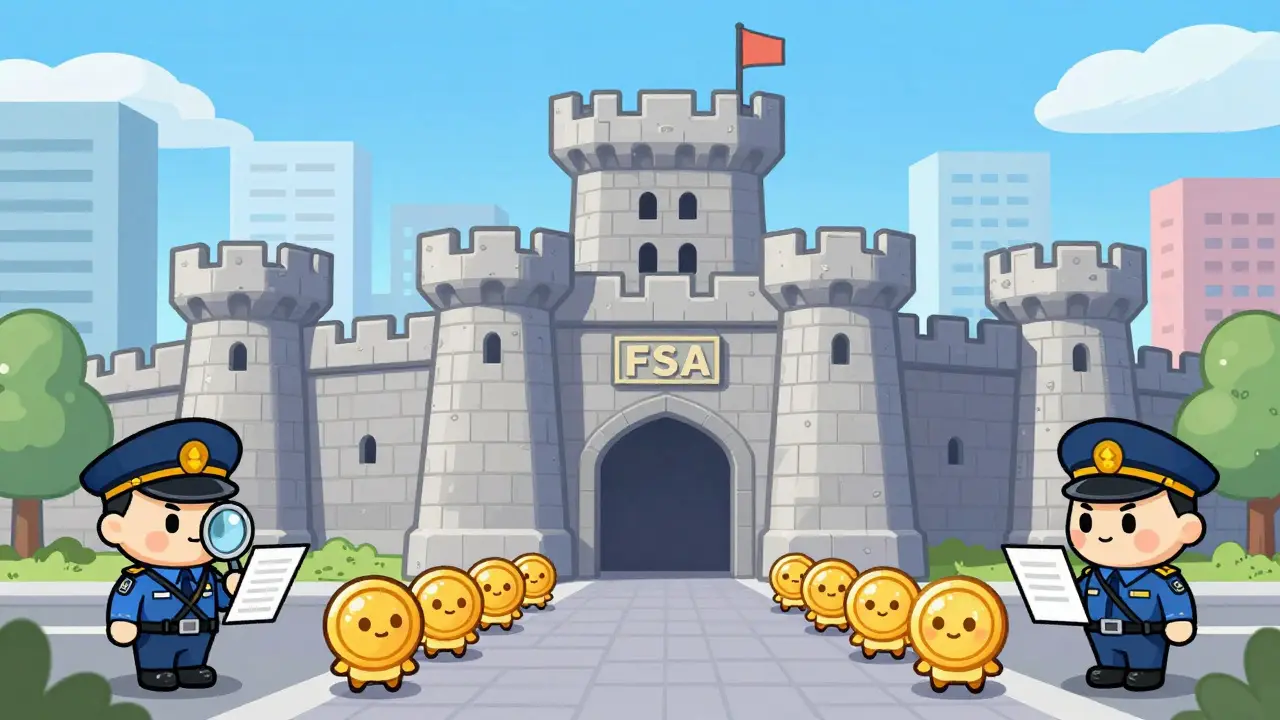
Imagine running a business where the government demands you keep 95% of your customers' money in a digital vault that isn't even connected to the internet. For most, that sounds like a nightmare of operational friction. For crypto exchanges in Japan, it's just Tuesday. Japan doesn't just "regulate" crypto; they have built a fortress around it. After the devastating Mt. Gox collapse in 2014, the Japanese government decided that "move fast and break things" wasn't a viable strategy for financial assets. Instead, they created a system where FSA crypto oversight is the gold standard for investor protection, even if it means a mountain of paperwork for the companies involved.
Quick Summary: The State of Japanese Crypto Compliance
- The Watchdog: The Financial Services Agency (FSA) manages all registration and oversight.
- Dual Framework: Oversight is split between the Payment Services Act (PSA) and the Financial Instruments and Exchange Act (FIEA).
- Security Mandates: 95% of user assets must be held in cold wallets.
- Shift to Securities: Digital assets with investment features are now moving under securities law (FIEA).
- High Barrier to Entry: Registration takes 6-12 months and adds significant operational costs.
The Two Pillars of Japanese Regulation
To understand how Japan handles digital assets, you have to look at the two different laws they use. It's not a one-size-fits-all approach. Depending on what a token does, it falls under one of two legal umbrellas.
First, there's the Payment Services Act is the primary legislation that defines crypto-assets and mandates the registration of exchange service providers . Think of the PSA as the "entry permit." If you want to operate a crypto exchange (known as a CAESP) in Japan, you must register under this act. It forces companies to implement strict Anti-Money Laundering (AML) and Know Your Customer (KYC) rules. You can't just launch an app and start trading; you need a physical presence in Japan and a bulletproof plan for how you'll handle user money.
Then there is the Financial Instruments and Exchange Act (or FIEA) is the law traditionally used for stocks and bonds, now expanded to cover tokens with investment or governance features . In a major shift announced in late 2025, the FSA began moving specific tokens-especially those that act like shares in a company or give holders voting rights-under the FIEA. This is a huge deal because it treats these tokens as securities. This means issuers now have to provide formal disclosures, and things like insider trading are strictly penalized, just like they are on the Tokyo Stock Exchange.
| Feature | Payment Services Act (PSA) | Financial Instruments and Exchange Act (FIEA) |
|---|---|---|
| Primary Focus | Payment utility & exchange operations | Investment, governance, and securities |
| Asset Type | General Crypto-assets (e.g., Bitcoin) | Security Tokens / Investment Tokens |
| Key Requirement | FSA Registration & Cold Storage | Mandatory Disclosure & Market Conduct |
| Goal | Consumer protection & AML | Market integrity & investor transparency |
Why Japan's Security Rules are So Extreme
If you've used a Japanese exchange, you might notice things feel a bit slower or the fees are slightly higher. That's the price of security. The FSA mandates a strict segregation of funds. This means an exchange cannot use your deposits to fund its own business operations. Period.
The most famous rule is the cold storage requirement. The FSA requires that at least 95% of customer assets be kept in offline "cold wallets." By keeping the vast majority of funds disconnected from the internet, the risk of a massive exchange hack is virtually eliminated. While this creates a technical headache for the exchange-which has to manually move funds for a small percentage of active traders-it ensures that even if the exchange's front-end is compromised, the users' core holdings remain safe.
This level of caution didn't happen by accident. Japan is haunted by the ghosts of failed exchanges. By forcing these standards, the FSA has turned Japan into a safe haven for institutional investors who were previously too scared of the "wild west" nature of crypto. It's a trade-off: less convenience for far more safety.

The High Cost of Playing by the Rules
For a startup, trying to get an FSA license is like trying to get into an exclusive club with a very long waiting list. The registration process is notoriously grueling, often taking between 6 to 12 months of preparation. You don't just fill out a form; you undergo comprehensive security audits and provide mountains of documentation on your internal controls.
Once you're in, the overhead doesn't stop. Industry data shows that ongoing compliance costs can eat up 15% to 20% of an exchange's operational expenses. This includes hiring specialized legal teams and maintaining advanced cybersecurity infrastructure. However, the FSA doesn't leave companies entirely in the dark. They work with self-regulatory bodies like the Japan Virtual Currency Exchange Association (or JVCEA) is a self-regulatory organization that helps exchanges implement FSA standards and industry best practices to bridge the gap between government mandates and technical reality.

Adapting to New Frontiers: DeFi and Stablecoins
The FSA isn't just looking at centralized exchanges. They know that the world is moving toward Decentralized Finance (DeFi), and they're trying to figure out how to regulate a system that, by definition, has no central office to audit. To tackle this, the FSA established a formal DeFi Study Group. This group brings together academics, industry leaders, and regulators every few months to brainstorm how smart contracts can coexist with consumer protection laws.
They are also evolving their tax laws to make the market more sustainable. In late 2025, proposals were made to move crypto into a 20% tax bracket and allow investors to carry forward losses for three years. This is a subtle signal that the FSA wants to encourage long-term investment rather than just short-term speculation. By stabilizing the tax environment and clarifying the legal status of tokens under the FIEA, Japan is positioning itself as the most mature crypto market in the world.
Does every crypto token in Japan fall under the FIEA?
No. Only tokens that have investment-like characteristics or provide governance rights (like a share in a company) are reclassified under the Financial Instruments and Exchange Act. Standard payment tokens or those without financial characteristics generally remain under the Payment Services Act.
Why is the 95% cold wallet rule so important?
The rule ensures that the vast majority of user funds are not exposed to online attacks. By keeping assets offline, the FSA prevents a single hack from wiping out the entire liquidity of an exchange, providing a safety net that is almost unheard of in other global jurisdictions.
How long does it take to get an FSA license?
The process is rigorous and typically takes between 6 and 12 months. It involves extensive documentation, security audits, and a deep dive into the company's AML/KYC procedures.
What is the role of the JVCEA?
The Japan Virtual Currency Exchange Association (JVCEA) acts as a self-regulatory organization. It works with the FSA to create industry-wide standards, helping exchanges implement complex regulations and ensuring that the industry evolves in a way that protects users.
Are crypto taxes in Japan changing?
Yes, the FSA has proposed moving crypto assets into a 20% tax bracket and allowing investors to carry forward losses for up to three years to make the market more attractive for long-term holders.
Next Steps for Market Participants
If you're a developer or entrepreneur looking to enter the Japanese market, don't wing it. The first step is to determine if your token is a "payment asset" or a "security" to know whether the PSA or FIEA applies. Next, budget for a significant compliance spend-around 20% of your operational costs-and start building relationships with the JVCEA. Finally, ensure your technical architecture supports a 95% cold storage split from day one, as the FSA will not compromise on this point during your audit.
Matthew Wright
April 4, 2026 AT 23:10This is actually a huge win for the average retail trader!!! Most people don't realize how terrifying it is to leave funds on a hot wallet exchange... especially with the way things have been going lately!!!
Emma Pease-Byron
April 6, 2026 AT 16:01Oh, how quaint. Japan is essentially treating the blockchain like a glorified savings account from the 1950s. The notion that "security" is achieved through bureaucratic inertia and manual cold storage is simply precious.
Arwyn Keast
April 8, 2026 AT 02:07Absolute overkill. The FSA is just engaging in regulatory capture to protect their own legacy financial institutions from actual disruption. Total lack of agility in their operational framework.
Erica Mahmood
April 8, 2026 AT 16:00cold storage mandates are basically the only way to stop systemic contagion when a CEX fails. its a heavy lift on the ops side but the risk mitigation for the liquidity provider is worth the overhead
Evan Borisoff
April 10, 2026 AT 06:18While the Japanese approach to the FIEA provides a level of stability that is arguably superior to the current fragmented regulatory landscape we are seeing in the United States, it is fundamentally an affront to the decentralized ethos of the original whitepaper, and honestly, our market's inherent volatility is what actually drives the kind of venture capital growth that creates trillion-dollar ecosystems, unlike this sterile, government-sanctioned version of crypto that feels more like a digital bond market than a revolution.
Krystal Moore
April 11, 2026 AT 03:20I honestly can't believe people are okay with this! Imagine the stress of waiting 12 months just to get a license! It's literally a nightmare and so unfair to the small guys trying to make a living!
Sharhonda Walker
April 11, 2026 AT 20:31Just a heads up for anyone lookin at the tax part... the 20% bracket is way better than what they had before. Make sure you check out the local guidance on loss carry-fowrds because it can save you a ton of money on your filing!
Emily 2231
April 13, 2026 AT 09:47This is just a front for total surveillance. Why do they need a physical presence in Japan? To track every single transaction and ensure the globalist agenda is implemented through the FSA. It's all about control and nothing else.
Robert Coskrey
April 13, 2026 AT 18:59I concur with the assessment that the 95% cold storage requirement is an exemplary standard for the industry... It provides a necessary safeguard for the end-user!!!
gladys christine
April 15, 2026 AT 09:51Omg we need this everywhere!!! Just imagine the peace of mind knowing your coins aren't just floating in some hacker's dream world!!! Japan is literally saving us all from our own chaos and I am here for it!!!