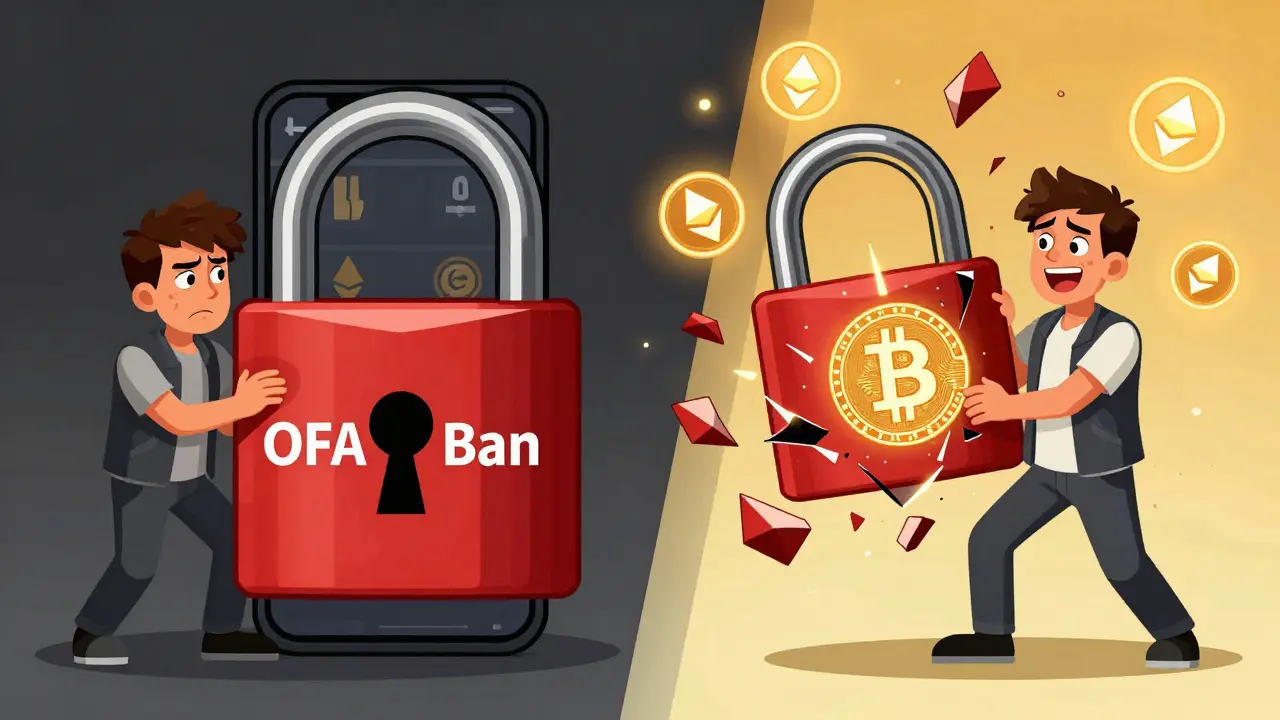
For over two decades, if you lived in Syria and wanted to send money abroad or save your wealth in cryptocurrency is a decentralized digital currency that uses cryptography for security and operates independently of a central bank., you were essentially breaking U.S. law just by trying. The Office of Foreign Assets Control (OFAC) had slapped a blanket ban on almost all financial interactions with Syria. But as we hit the summer of 2026, the landscape has flipped completely. If you are a Syrian user looking to trade Bitcoin, hold Ethereum, or use stablecoins for remittances, the walls have come down-but not entirely.
This shift isn't just a minor tweak; it’s a total overhaul of how Washington views Syrian finance. On June 30, 2025, President Trump signed Executive Order 14312, titled "Providing for the Revocation of Syria Sanctions." This order didn't just loosen the screws; it revoked six foundational executive orders dating back to 2004. By July 1, 2025, the national emergency that justified these broad bans was officially terminated. For the average person holding a wallet on their phone, this meant the immediate threat of having assets frozen or facing criminal prosecution for simple transactions vanished overnight.
The End of the Blanket Ban
To understand why this matters, you need to look at what happened before. Under the old Syrian Sanctions Regulations (SySR), any transaction between a U.S. person (or anyone using U.S.-based services) and a Syrian entity was illegal. That included crypto exchanges like Coinbase or Kraken, which serve millions globally. If a Syrian user tried to create an account, the platform’s compliance software would flag them instantly. The penalty? Civil fines up to $20 million or twice the transaction amount, plus potential jail time. It forced Syrians into underground channels, peer-to-peer cash trades, or risky offshore workarounds.
Then came August 26, 2025. OFAC published a final rule removing the SySR from the Code of Federal Regulations entirely. This wasn't symbolic. It was the legal dismantling of the comprehensive economic embargo. Suddenly, the default assumption changed from "prohibited unless authorized" to "permitted unless specifically restricted." This opened the door for major global crypto platforms to consider serving Syrian customers again, provided they could navigate the new, more complex rules.
What Is Still Off-Limits?
Here is where it gets tricky. Just because the blanket ban is gone doesn’t mean everything is free-for-all. The U.S. government shifted from broad isolation to targeted accountability. They renamed the program to the Promoting Accountability for Assad and Regional Stabilization Sanctions Regulations is a specific regulatory framework replacing the old Syrian Sanctions Regulations, focusing on targeted penalties rather than broad economic isolation., commonly known as PAARSS. This rebranding, finalized in September 2025, signals a clear intent: punish specific bad actors, not the civilian population.
Under PAARSS, OFAC still maintains sanctions on over 100 individuals and entities. Who are they? Mostly people tied to the Bashar al-Assad regime, human rights abusers, traffickers involved in Captagon production, and those linked to past nuclear proliferation activities. There are also continued restrictions on affiliates of ISIS, Al-Qa'ida, and Iran. If you are one of these designated persons, your crypto assets remain frozen, and no U.S. service can touch them. For everyone else-the teachers, doctors, small business owners, and everyday investors-the path is now open.
How Crypto Platforms Are Adapting
So, can you actually sign up for an exchange today? In theory, yes. In practice, it depends on the platform’s risk appetite. General License 25, issued by OFAC in May 2025, provides blanket authorization for transactions that were previously prohibited under the old SySR. This license effectively gives platforms legal cover to process payments and provide services to non-sanctioned Syrians. However, compliance teams at major exchanges are cautious. They don’t want to accidentally process a transaction for a sanctioned regime official.
This means stricter Know Your Customer (KYC) checks. You won’t be able to just buy Bitcoin anonymously anymore if you’re in Syria. Platforms will likely require enhanced identity verification to ensure you aren’t on the List of Specially Designated Nationals and Blocked Persons (SDN List). Remember, OFAC removed 518 names from the SDN list in 2025, which helped many, but thousands remain. If your name matches a sanctioned entity, even by mistake, your account could be flagged. Expect delays, extra documentation requests, and potentially higher fees due to the increased compliance workload.
| Feature | Pre-July 2025 (Old SySR) | Post-August 2025 (PAARSS Era) |
|---|---|---|
| General Access | Prohibited for all U.S.-linked services | Permitted for non-sanctioned individuals |
| Exchange Registration | Instant rejection/ban | Allowed with enhanced KYC screening |
| Penalties for Violation | Up to $20M fine or criminal charges | Fines only for interacting with sanctioned lists |
| Remittances | Blocked via formal channels | Stablecoins and crypto usable for cross-border transfers |
| Hardware Imports | Licensed required for mining gear | License Exception SPP allows EAR99 tech imports |
The Hardware Loophole: Mining and Infrastructure
It’s not just about trading on apps. The physical side of crypto infrastructure got a boost too. The Bureau of Industry and Security (BIS), part of the Commerce Department, updated export controls in late August 2025. They created a new category called License Exception Syria Peace and Prosperity (SPP). Effective September 2, 2025, this exception allows the export of all EAR99 items to Syria without a specific license. What does that mean for you? EAR99 covers most commercial goods, including standard computers, servers, and consumer-grade cryptocurrency mining equipment. Previously, importing ASIC miners or setting up a node required navigating a maze of permits. Now, it’s much easier to build local blockchain infrastructure, which could lower transaction fees and increase network reliability within the region.

Navigating the Risks as a User
If you are planning to engage with crypto in Syria right now, you need to be smart. First, check the SDN list regularly. It’s public and searchable. Make sure your name, your family members’ names, and any businesses you own aren’t listed. Second, choose platforms carefully. Not every exchange will accept Syrian residents yet. Some may still over-comply out of fear, blocking accounts based on IP address alone. Look for platforms that explicitly state they follow the current OFAC guidance and General License 25. Third, keep records. Save proof of your identity and source of funds. If a freeze happens-which is rare but possible-you’ll need to prove you aren’t connected to the Assad regime or terrorist organizations to get your assets unlocked.
Also, watch out for scams. With the news of sanctions relief, fraudsters often target hopeful users. They might claim to offer "special access" to banned exchanges or promise high returns from "sanctioned arbitrage." Stick to reputable, well-known services. The era of underground hawala-style crypto deals is ending, and for good reason. The regulated route is safer, even if it requires a bit more paperwork.
Looking Ahead: What Could Change?
While the current situation is vastly improved, it’s not static. OFAC has hinted that they plan to supplement the PAARSS framework with more detailed regulations. This could include new definitions of what constitutes a "sanctioned activity" or additional general licenses. For example, there might be future rules specifically addressing decentralized finance (DeFi) protocols, which are harder to regulate than centralized exchanges. Keep an eye on official announcements from OFAC and the Department of State. The 180-day waiver mentioned earlier, which relaxed some Caesar Act restrictions, will eventually expire or need renewal. That date will be critical for long-term investment decisions.
Ultimately, the removal of the blanket ban is a historic win for financial inclusion in Syria. It recognizes that punishing the entire population for the actions of a few leaders doesn’t make sense, especially in a digital age where money moves instantly across borders. For Syrian crypto users, the opportunity is real. You can now participate in the global economy, hedge against inflation, and receive remittances efficiently. Just remember: freedom comes with responsibility. Do your due diligence, know who is still sanctioned, and stay informed. The doors are open, but you still have to walk through them carefully.
Can I use Binance or Coinbase as a resident of Syria now?
Yes, theoretically. With the removal of the Syrian Sanctions Regulations (SySR) in August 2025, major U.S.-linked platforms are no longer legally barred from serving Syrian citizens. However, each platform decides its own policy. Many will require strict KYC verification to ensure you are not on the SDN list. Check the specific terms of service of the exchange you want to use, as some may still restrict access based on regional risk assessments.
Who is still sanctioned under the new PAARSS rules?
Sanctions remain in place for individuals and entities affiliated with the Bashar al-Assad regime, human rights abusers, Captagon traffickers, and those linked to terrorism (ISIS, Al-Qa'ida) or Iran. If you are not associated with these groups, you are generally free to transact. Always verify your status against the OFAC SDN list.
Is it legal to mine Bitcoin in Syria?
Yes. The BIS introduced the License Exception Syria Peace and Prosperity (SPP) in September 2025, allowing the import of most commercial electronics, including mining hardware, without special licenses. As long as the equipment is not dual-use military technology, you can import and operate mining rigs legally.
What happens if I accidentally transact with a sanctioned person?
If you inadvertently interact with a sanctioned entity, you should immediately cease the transaction and report it to OFAC. Self-disclosure can mitigate penalties. Since the blanket ban is lifted, penalties are now focused on intentional violations involving designated bad actors, not casual civilian transactions.
Will these sanctions relief measures last forever?
Not necessarily. While the core emergency declaration was terminated, OFAC retains authority to adjust the PAARSS regulations. Future changes depend on geopolitical developments. However, the trend since mid-2025 has been toward normalization and targeted enforcement rather than comprehensive isolation.
Jay Sharma
July 1, 2026 AT 20:11They think lifting sanctions fixes the problem? It’s a trap. The deep state wants to track every satoshi moving out of Damascus now that the 'blanket ban' is gone. They’re not helping Syrians; they’re building a digital panopticon for future regime change ops. Wake up.
Scott Miller
July 3, 2026 AT 09:31THIS IS HUGE NEWS! Finally, some progress! Syrians deserve financial freedom after decades of being locked out. This is a massive win for human rights and economic stability. Let’s gooo! 🚀
Rebecca Shoniker
July 4, 2026 AT 21:25I find it utterly exhausting that people are celebrating this as if it were a moral victory. It is merely a bureaucratic adjustment, a shifting of regulatory paradigms. The underlying geopolitical machinations remain unchanged, yet here we are, applauding the removal of a paper barrier. How quaint. One must question the sincerity of such 'relief' when it is dictated by executive order rather than genuine humanitarian concern. It is superficial. It is fleeting. And frankly, it is annoying.
Abby Martin
July 6, 2026 AT 20:01Look, I’m all for people getting their money back, but let’s not pretend this is about charity. It’s about control. The US government realized they couldn’t monitor the underground hawala networks anymore, so they brought it into the light where they can watch every transaction. You think Coinbase is doing this because they love Syrian teachers? No. They want your KYC data. They want to know who you are, what you buy, and who you send it to. Enjoy your 'freedom' while Big Tech profiles you.
Mélanie Boulay
July 6, 2026 AT 21:59While I appreciate the detailed breakdown of the new PAARSS regulations, I feel compelled to point out that the transition period will likely be fraught with significant administrative hurdles for those who have been operating in the shadows for so long. The requirement for enhanced identity verification is not just a formality; it is a substantial barrier to entry for individuals who may not possess standard documentation due to the prolonged conflict. Furthermore, the psychological impact of suddenly being able to access global markets cannot be overstated, as it represents a shift from survival mode to potential economic participation. We must remain patient and respectful of the learning curve involved in navigating these new compliance landscapes, ensuring that no one is left behind due to a lack of technical literacy or access to reliable internet infrastructure during this critical juncture.
Maurice Flynn
July 7, 2026 AT 11:16It’s funny how we always assume sanctions work. They never do. They just make life harder for regular people. Now that the rules changed, maybe things will get better, or maybe nothing will change at all. Time will tell. Just keep your keys safe either way.
nancy jarecki
July 8, 2026 AT 05:31The sheer ignorance displayed in assuming that 'General License 25' simplifies anything is staggering. It adds layers of compliance overhead that only institutional players can afford to navigate. The average user is still screwed by the SDN list ambiguities. Typical populist take on a complex regulatory framework. Yawn.
Robert Hundley
July 9, 2026 AT 12:26Hey guys! 👋 Great article! I think this is a really positive step forward. It’s awesome to see crypto breaking down walls again. Keep spreading the good vibes! ✌️
Melissa L
July 10, 2026 AT 08:05i guess its good news then? i dont really understand all the legal stuff but if people can send money home easier that sounds nice. hope it works out for them.
Rob Morton
July 10, 2026 AT 11:26This raises an interesting philosophical question: does financial inclusion truly lead to political stability, or does it merely provide the resources for further conflict? I wonder if the removal of these sanctions will empower the grassroots economy or simply strengthen the hands of those already in power. It is worth considering the long-term societal impacts beyond just the immediate ability to trade Bitcoin.
Routh Middaugh
July 10, 2026 AT 15:56We should all try to find common ground here. Some see this as a win, others see it as a threat. Both perspectives have merit. The key is to ensure that the benefits reach the ordinary citizens who suffered the most. Let’s stay open-minded and supportive of peaceful resolutions.
Ryan Peters
July 10, 2026 AT 18:22Typical soft-hearted nonsense. Syria earned its isolation. If they want to play in the big leagues, they need to follow American rules. But don’t expect us to hold their hands through the KYC process. They broke the law for years; now they pay the price in paperwork. Good riddance to the old regime’s enablers, but don’t cry me a river if their accounts get frozen for 'compliance checks.'
ross harris
July 11, 2026 AT 01:22The narrative of 'liberation' is a seductive poison. OFAC hasn’t lifted sanctions; they’ve monetized them. By allowing controlled access, they create a dependency loop. The Syrian user is no longer banned; they are managed. A cattle prod replaced with a leash. Deliciously cynical, isn’t it?
Carl Belgrave
July 12, 2026 AT 08:05About time! The US leads the world, and we decide who gets access to our financial systems. If Syria wants to trade, they do it on our terms. No more hiding behind 'humanitarian' excuses. Strength demands accountability. Period.
Carl Hanzel
July 12, 2026 AT 17:31You’re all too eager to believe the official story. Nothing changes until the power structure collapses. This is just theater. The elites still control the taps. Don’t waste your energy celebrating a mirage.
Daniel J. Cox
July 14, 2026 AT 09:08As someone who has friends in the region, this is genuinely heartwarming. 😊 It’s not just about money; it’s about dignity. Being able to connect with the global community without fear is priceless. Hope everyone stays safe and smart out there! 🌍