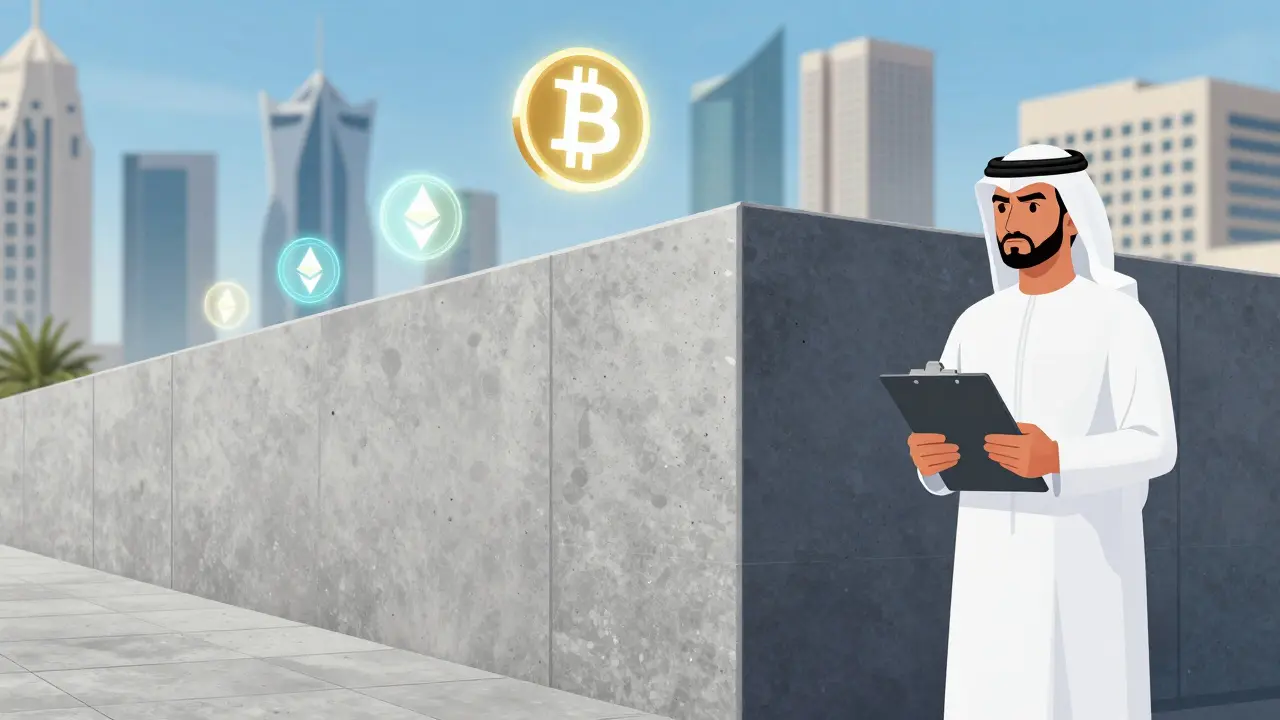
If you're living in Doha or anywhere else in Qatar and thinking about buying some Bitcoin or using a stablecoin, you need to stop and read this first. Unlike some of its neighbors in the Gulf, Qatar doesn't play around when it comes to digital currencies. The government has built a very strict wall around what you can and cannot do with blockchain technology. While the world talks about the "future of money," Qatar has a very specific vision that separates speculative coins from actual value.
| Asset Type | Status | Examples | Legal Path |
|---|---|---|---|
| Cryptocurrencies | Excluded/Banned | Bitcoin, Ethereum | None (Prohibited) |
| Stablecoins | Excluded/Banned | USDT, USDC | None (Prohibited) |
| Asset-Backed Tokens | Permitted | Tokenized Real Estate, Gold | Licensed QFC Provider |
| Security Tokens | Permitted | Tokenized Shares, Bonds | Licensed QFC Provider |
The Hard Line on Cryptocurrencies
Let's get the most important part out of the way: crypto restrictions for Qatar residents is a strict regulatory environment where traditional cryptocurrencies are classified as "Excluded Tokens" . If you're looking for a way to trade Bitcoin or use a digital wallet for speculative coins through a local bank, you're out of luck. The Central Bank of Qatar is the national monetary authority that banned all banks from trading cryptocurrencies back in 2018 , and that ban has only grown stronger over time.
The government views coins like Bitcoin as "currency substitutes." In their eyes, these are too volatile and risky to be allowed into the formal financial system. This isn't just a suggestion; it's a legal boundary. The QFCRA (Qatar Financial Centre Regulatory Authority) the body responsible for supervising financial services within the QFC has spent years closing loopholes. By 2020, they had effectively prohibited all virtual asset services within the Qatar Financial Centre (QFC) jurisdiction. If you try to run a crypto exchange or a custody service here, you're swimming against a very strong tide.
The 2024 Pivot: Permitted Tokens
Now, it's not all "no." In September 2024, Qatar introduced a bit of a twist with the Digital Assets Regulations 2024. They created a two-track system. While they kept the ban on coins, they opened the door for something called "Permitted Tokens." This is where things get interesting for investors who prefer tangible assets over digital memes.
A permitted token is basically a digital receipt for something that actually exists in the real world. Think of it as Tokenization, the process of converting rights to a real-world asset into a digital token on a blockchain . Instead of buying a volatile coin, you might buy a token that represents a piece of a luxury hotel in West Bay or a specific amount of gold in a vault. This is a way for Qatar to use blockchain technology to make investing more efficient without the gambling aspect of the crypto market.
To get a permitted token, the process is very rigid. It's not as simple as clicking "buy" on an app. First, a validator has to issue a certificate proving the asset is real. Then, the owner requests tokenization, and finally, a licensed token generator creates the token on a specific, approved digital infrastructure. It's a controlled, bureaucratic process designed to prevent fraud and money laundering.
Risks, Law, and Money Laundering
Why is Qatar so strict? It mostly comes down to security and stability. The government is terrified of money laundering and terrorism financing. To combat this, they use Law No. 20 of 2019, the primary legislation for combating money laundering and terrorism financing in Qatar . This law is written very broadly. It defines "funds" to include assets from "electronic and digital" systems.
Here is the catch: even though the QFCRA says cryptocurrencies are "excluded" from their digital asset framework, that doesn't mean they are legal. It just means they aren't *supported* or *regulated* as legitimate assets. If you're moving large sums of money via crypto, you might still find yourself under the microscope of AML (Anti-Money Laundering) laws. The state doesn't need a specific "crypto law" to come after you if they suspect the money is coming from or going to an illicit source.

Institutional vs. Personal Ownership
If you're running a company, the rules are crystal clear: you cannot deal in cryptocurrencies. Financial institutions are strictly forbidden from offering any services related to "Excluded Tokens." If a bank is caught facilitating a Bitcoin trade, the penalties are severe. This is why you won't find a domestic Qatari bank that lets you link a Coinbase or Binance account.
For individuals, the grey area is slightly larger, but the danger remains. While there isn't a law that puts every single person with a private wallet in jail, there is zero legal protection for you. If you use an offshore exchange and get scammed, or if your wallet is hacked, don't expect the Qatari courts to help you recover "Excluded Tokens." The law essentially treats these assets as non-existent for the purpose of legal protection.
How to Stay Compliant in 2026
If you want to explore the world of digital assets without landing in legal trouble, your best bet is to stick to the licensed paths provided by the QFC. Instead of looking for "crypto," look for "tokenized assets." Here is the safest way to navigate the current landscape:
- Avoid Currency Substitutes: Stay away from Bitcoin, Ethereum, and especially stablecoins like USDT. These are the primary targets of the "Excluded Tokens" classification.
- Use Licensed Providers: Only engage with token service providers who are officially licensed by the QFCRA. If they can't show you a license under the 2024 Regulations, walk away.
- Focus on Real-World Assets (RWA): Look into tokens backed by real estate, commodities, or government bonds. These are the only digital assets the state currently recognizes as legal and valid.
- Keep Paper Trails: Because of Law No. 20 of 2019, always be able to prove where your money came from. The government hates anonymous wealth.

The Bigger Picture: Qatar vs. The GCC
When you look at the rest of the Gulf Cooperation Council (GCC), Qatar's approach is definitely the most cautious. While Dubai has become a global hub for crypto firms and Saudi Arabia is experimenting with its own digital strategies, Qatar is taking a "tangible-first" approach. They aren't interested in the hype; they are interested in how blockchain can make their existing wealth-like real estate and natural gas-more liquid and easier to trade.
This means Qatar is essentially betting that the speculative bubble of cryptocurrencies will eventually pop, and that the real value lies in the underlying technology (the blockchain) applied to real-world assets. By banning the coins but allowing the tokens, they are trying to have their cake and eat it too: they get the efficiency of the 21st century without the volatility of the crypto market.
Is Bitcoin legal in Qatar?
Bitcoin is classified as an "Excluded Token" and is effectively prohibited within the Qatar Financial Centre (QFC) regulatory framework. While personal possession isn't explicitly criminalized in every scenario, it is not legally recognized, and financial institutions are banned from trading it.
What are "Permitted Tokens" in Qatar?
Permitted Tokens are digital assets backed by real-world rights, such as shares, bonds, commodities, or real estate. These are legal provided they are issued and managed by licensed token generators and validators under the Digital Assets Regulations 2024.
Can I use a crypto wallet in Qatar?
Providing wallet services for cryptocurrencies (Excluded Tokens) is prohibited within the QFC. Using a foreign wallet for personal use exists in a legal grey area, but you have no legal protection under Qatari law if your funds are lost or stolen.
Are stablecoins like USDT allowed?
No, stablecoins are specifically listed as "Excluded Tokens" alongside cryptocurrencies and CBDCs. They are viewed as currency substitutes and are not permitted under the current QFC regulatory framework.
What happens if I trade crypto illegally in Qatar?
You risk violating Law No. 20 of 2019 regarding Anti-Money Laundering (AML). Because the state views the lack of regulation in crypto as a risk for illicit financing, large or frequent trades could trigger investigations into the source of your funds.
Next Steps for Residents
If you are an expat or a citizen in Qatar, the best move is to steer clear of the "get rich quick" crypto schemes. If you're serious about digital investment, start by researching licensed QFC firms that offer tokenized real estate or gold. This keeps you on the right side of the law while still letting you benefit from blockchain's speed and transparency. Always keep your transaction records organized; in a jurisdiction this strict, being able to prove your money is "clean" is more important than the investment itself.