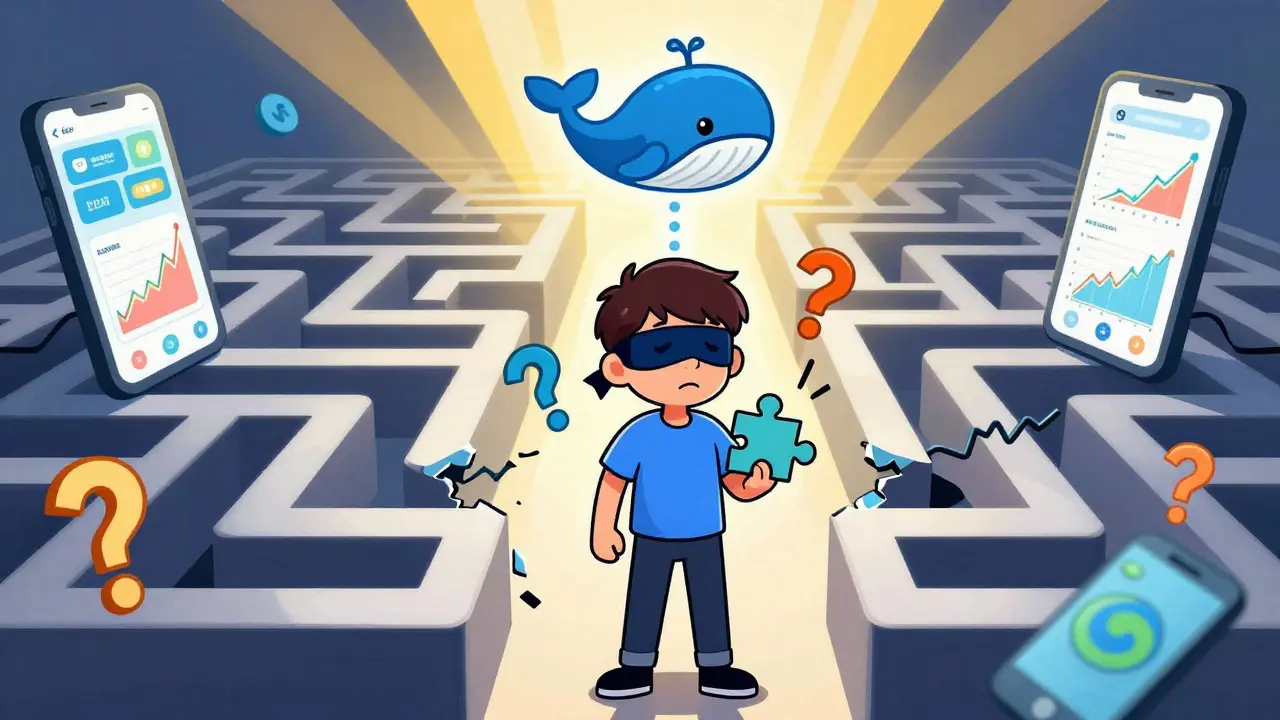
Remember when buying crypto felt like trying to solve a puzzle blindfolded? You had to jump between three different apps just to swap one token, and if you wanted to earn interest, good luck understanding the terms. That was the early days of decentralized finance. Now, we have protocols designed to fix that friction. One of the most interesting projects emerging from this need is Kujira, a Layer 1 blockchain built on the Cosmos ecosystem.
If you’ve seen the ticker symbol KUJI popping up on charts or heard whispers in crypto communities, you might be wondering: what exactly is it? Is it just another coin, or does it actually do something useful? The short answer is that Kujira isn’t just a token; it’s an entire financial infrastructure built for everyday people, not just whale investors.
The Origin Story: From Terra to Independence
To understand where Kujira stands today, you have to look at where it started. Kujira didn’t begin as its own chain. It launched initially as an application on the Terra blockchain. This made sense at the time because Terra was booming, offering high yields and innovative stablecoins. But then came May 2022. If you were in crypto back then, you remember the collapse of TerraUSD (UST) and Luna (LUNA). It was a catastrophic event that wiped out billions of dollars in value overnight.
Instead of folding, the Kujira team made a bold move. They migrated their protocol off the failing Terra network and launched their own dedicated Layer 1 chain shortly after. This wasn’t just a technical pivot; it was a statement. By building on the Cosmos SDK, they gained independence while keeping the ability to talk to other blockchains. This migration proved their resilience and set the stage for a more secure, interoperable future.
Why “Whale” Matters: The Philosophy Behind Kujira
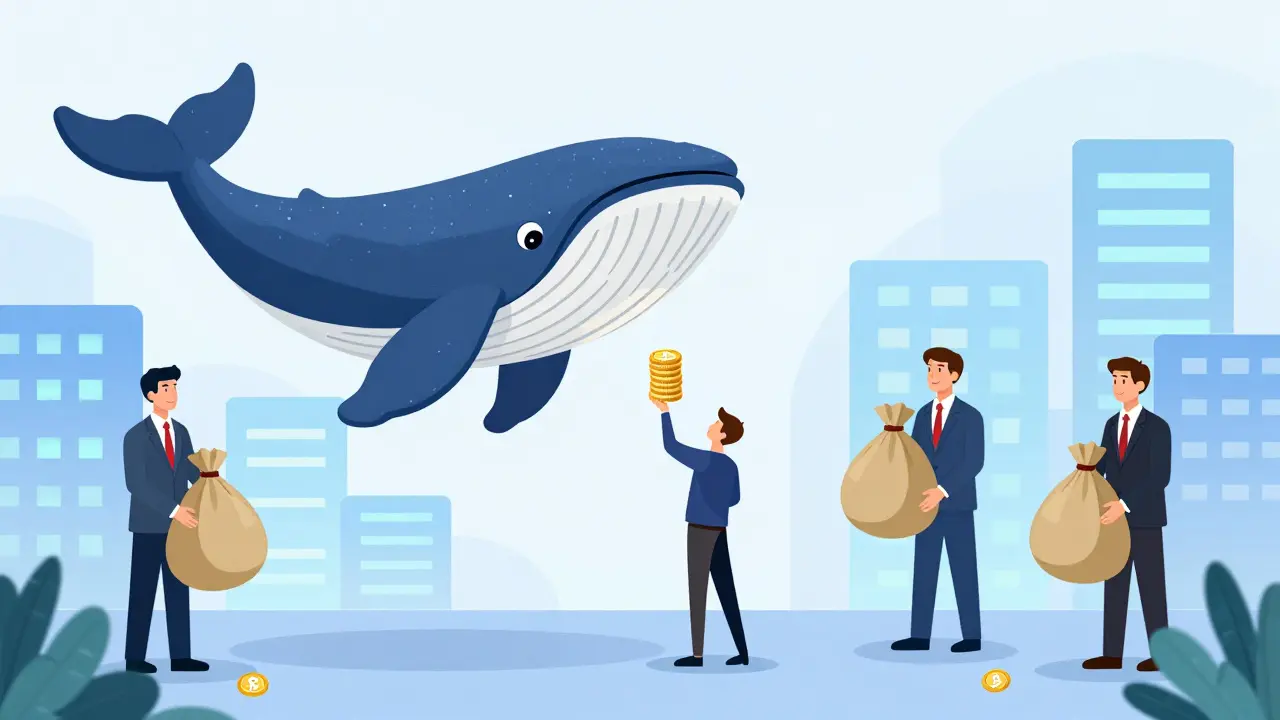
The name Kujira comes from the Japanese word for "whale." In crypto slang, a "whale" is someone with enough capital to move markets. Usually, being a whale is reserved for the ultra-wealthy or institutional investors. Kujira flips this script. Their manifesto is simple: "Everyone deserves to be a crypto whale."
What does that mean in practice? It means democratizing access to sophisticated financial tools. On traditional exchanges, you need massive amounts of money to get VIP fees or access certain funds. On Kujira, the platform provides affordable, user-friendly DeFi investment tools that level the playing field. Whether you have $10 or $10,000, you get access to the same lending, borrowing, and trading mechanisms.
How Kujira Works: The Four Pillars
Kujira isn’t just a place to hold tokens. It’s a suite of interconnected applications (DApps) that work together to provide a full banking experience without a bank. Think of it as a digital financial district. Here are the four main components you’ll interact with:
- FIN: This is your token swap and trading hub. If you want to exchange USDC for KUJI, or any other asset supported by the network, FIN is the interface you use. It aggregates liquidity to ensure you get competitive rates.
- ORCA: This is where things get interesting. ORCA offers unique liquidation collateral auction markets. When borrowers in lending protocols fail to repay their loans, their collateral gets liquidated. Instead of dumping it all at once (which crashes the price), ORCA auctions it off efficiently. This creates stability in the ecosystem and gives traders a chance to buy assets at a discount.
- BLUE: BLUE is the lending and borrowing engine. You can deposit your crypto here to earn interest, or use your holdings as collateral to borrow other tokens. It combines traditional lending logic with decentralized algorithms to manage risk.
- Finder: Not every tool needs to be complex. Finder is a discovery and information tool that helps users navigate the ecosystem, find new projects, and understand market data without getting lost in technical jargon.
The Role of the KUJI Token
You can’t use the Kujira network without interacting with its native token, KUJI. Unlike meme coins that rely purely on hype, KUJI has actual utility baked into the code. Here is how it functions within the economy:
- Staking and Security: Kujira uses a Proof-of-Stake consensus mechanism. This means validators secure the network by locking up KUJI tokens. As a regular user, you can delegate your KUJI to these validators. In return, you help secure the network and earn rewards. It’s passive income for holding the asset.
- Governance Power: Kujira operates on a semi-permissioned governance model. New projects wanting to launch on the network must be approved by the community. KUJI holders vote on these proposals. Your stake gives you a voice in the direction of the platform.
- Fee Payment: Every transaction, swap, or loan initiation on Kujira requires a small fee paid in KUJI. This creates constant demand for the token as network usage grows. Without KUJI, you can’t transact.
- Liquidity and Trading: KUJI is traded on various exchanges, including Osmosis, which is a major decentralized exchange in the Cosmos ecosystem. This allows for price discovery and easy entry or exit for investors.
Cosmos Interoperability: Talking to Other Chains
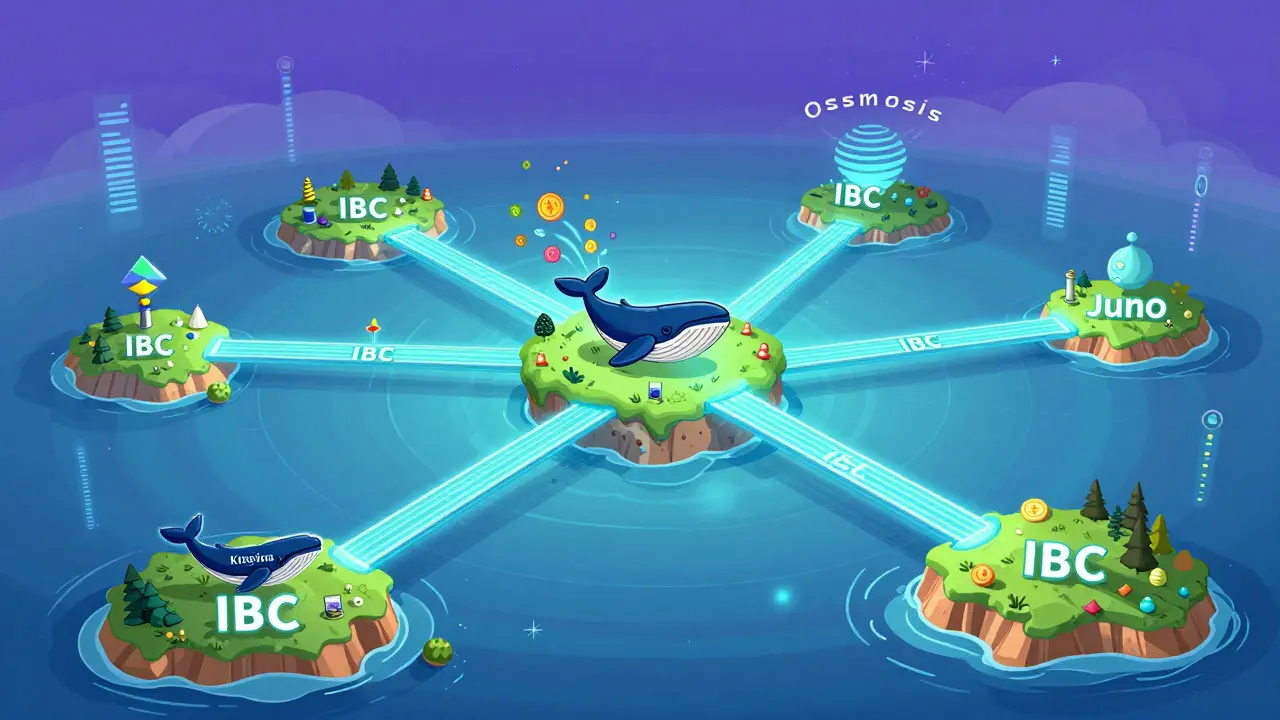
One of Kujira’s biggest advantages is its location within the Cosmos ecosystem. Most blockchains are isolated islands. To move assets from Ethereum to Solana, you usually need a risky bridge or a centralized exchange. Kujira uses the Inter-Blockchain Communication (IBC) protocol.
Think of IBC as a universal translator and highway system. It allows Kujira to send and receive assets directly from other Cosmos chains like Cosmos Hub, Juno, or Secret Network. This means if you hold assets on another Cosmos chain, you can bring them over to Kujira to earn yield or trade them without leaving the ecosystem. This cross-chain connectivity is a huge plus for users who don’t want their funds stuck in one silo.
Risks and Challenges: What You Need to Know
No investment is without risk, and Kujira is no exception. Before you dive in, consider these factors:
- Smart Contract Risk: Like all DeFi platforms, Kujira relies on code. If there’s a bug in the smart contracts governing FIN, BLUE, or ORCA, funds could potentially be exploited. While audits are standard, vulnerabilities can still exist.
- Market Volatility: The price of KUJI fluctuates based on market sentiment and broader crypto trends. Even if the protocol works perfectly, the value of your staked tokens can go down if the market dips.
- Regulatory Uncertainty: The regulatory landscape for DeFi is still evolving. Governments worldwide are figuring out how to classify tokens and lending protocols. Changes in laws could impact how Kujira operates or who can use it.
- Competition: The DeFi space is crowded. Kujira competes with established giants like Aave and Uniswap, as well as other Cosmos-native chains. Staying relevant requires continuous innovation and user engagement.
Is Kujira Right for You?
If you are looking for a hands-off, set-and-forget investment with zero risk, Kujira might not be the fit. However, if you are interested in participating in the decentralized economy, earning yield on your assets, and having a say in how a protocol evolves, Kujira offers a compelling package. Its focus on usability and its robust position within the Cosmos ecosystem make it a noteworthy player in the Layer 1 landscape.
What is the current price of KUJI?
The price of KUJI fluctuates constantly based on market supply and demand. As of recent data, it has traded in ranges varying from under $0.10 to near $1.00 depending on market cycles. For the exact live price, check a reliable tracker like CoinMarketCap or CoinGecko, as prices change by the second.
How do I buy Kujira (KUJI)?
You can buy KUJI on several cryptocurrency exchanges. Centralized exchanges often list it for fiat-to-crypto purchases. Within the Cosmos ecosystem, you can also acquire it via decentralized exchanges like Osmosis by swapping other assets like ATOM or USDC for KUJI. Make sure you have a wallet that supports Cosmos-based assets, such as Keplr or Leap.
Is Kujira safe to use?
Kujira employs security best practices, including smart contract audits and a proof-of-stake consensus model. However, no DeFi platform is 100% immune to risks. Users should always be cautious of phishing sites, keep their private keys secure, and only invest what they can afford to lose. Understanding the inherent risks of smart contracts is crucial.
What is the difference between Kujira and Terra?
Kujira originally launched as an app on the Terra blockchain but migrated to its own independent Layer 1 chain after the Terra collapse in 2022. Today, Kujira is a separate entity built on the Cosmos SDK, whereas the original Terra network underwent a hard fork and rebranding. They are now distinct ecosystems with different governance and tokenomics.
Can I stake KUJI?
Yes, staking is a core feature of Kujira. You can stake your KUJI tokens directly through the Kujira website or compatible wallets like Keplr. By staking, you contribute to the security of the network and earn rewards in the form of additional KUJI tokens. The annual percentage rate (APR) varies based on total staking participation.
Jessie Smith
July 12, 2026 AT 06:51Look, i get the hype around kujira but lets not pretend its some revolutionary utopia for the little guy. the whole 'everyone is a whale' thing is just marketing fluff to sell tokens to degens who dont understand liquidity pools. most of these cosmos chains are just echo chambers where people high-five each other over tvl that evaporates when the market dips. you really think migrating from terra makes you immune to smart contract risk? lol. keep dreaming.
Drew M
July 13, 2026 AT 14:55Oh wow, such negativity! 🙄 Kujira actually has a really cool philosophy about democratizing finance. It’s not just about the tech, it’s about the *vibe* and the community spirit ✨. The ORCA auction mechanism is genius because it prevents those ugly liquidation dumps we saw elsewhere. Plus, being part of the Cosmos ecosystem means you’re playing in the big leagues with IBC interoperability. Don’t be a hater, join the revolution! 🐋💎🚀
Deep Rahman
July 15, 2026 AT 06:52I have been thinking deeply about the nature of financial systems and how they often exclude the majority of humanity, and when I read about Kujira, I felt a sense of resonance with their mission statement which suggests that everyone deserves to be a whale, and while this might seem like a simple slogan on the surface, it actually touches upon profound philosophical questions regarding equity and access in our modern digital age, and I believe that if we can create tools that allow ordinary people to participate in complex financial mechanisms without needing a degree in mathematics or computer science, then we are moving towards a more just society where wealth is not hoarded by the few but circulated among the many, and perhaps this is what true decentralization should look like, not just as a technical achievement but as a moral imperative for our time.
Nick G
July 16, 2026 AT 04:51It is truly fascinating to observe how different cultures approach the concept of trust in financial institutions, and in my experience living between East and West, I have seen that the desire for autonomy is universal, yet the methods vary greatly. Kujira seems to bridge this gap by offering a platform that respects individual sovereignty while providing the communal safety nets that many societies value. I appreciate the detailed explanation of the four pillars, as it shows a thoughtful architecture that considers both the technical and human elements of DeFi. Perhaps we can learn from this model in other areas of life, fostering cooperation without sacrificing independence.
Anuj Kashyap
July 17, 2026 AT 10:38Ah yes, another 'democratized' finance project that promises the moon while quietly relying on the same fragile assumptions as every other DeFi protocol 😂. The irony of calling it 'Kujira' (whale) while trying to appeal to retail users is not lost on me. It’s like naming a diet soda 'Candy Bar'. But sure, let’s ignore the fact that smart contract risks are real and audits are just snapshots in time. Enjoy your governance power voting on proposals you barely understand 🤷♂️✨.
Tracy Marshall
July 18, 2026 AT 18:17you cannot trust any system that operates outside of government oversight because history has shown us that unregulated markets lead to exploitation and chaos :( the idea that you can secure your own money with code is a dangerous illusion promoted by those who want to avoid taxes and accountability. kujira may claim to be safe but without a central authority to hold responsible when things go wrong you are on your own and that is not freedom that is anarchy disguised as innovation. do not fall for the hype.
Guy Davis
July 19, 2026 AT 06:32typo alert: ur post says kujira is safe but its not. smart contracts get hacked all the time. stop lying to newbies.
KEITH WONG
July 20, 2026 AT 16:45Listen up kids 👂. You think staking KUJI is easy money? Think again. The APR fluctuates based on participation and market conditions. If you’re not reading the docs and understanding the tokenomics, you’re just a liquidity provider for the whales who actually know what they’re doing. Don’t be that guy who panics sells when the chart goes red. DYOR or get rekt 📉🔥.
Natalie Lucas
July 21, 2026 AT 10:33omg i just tried using keplr to connect to kujira and it was so smooth!! i love how easy it is to swap tokens now. no more jumping between 5 different apps. this is the future guys!! let's gooo 🚀💖
Curtis Johnson
July 23, 2026 AT 02:37It is important to remember that while technology advances, we must remain grounded in our shared humanity. Kujira offers a tool, but it is we who decide how to use it. Let us approach this with open minds and respectful dialogue, ensuring that no one is left behind in this digital transition. The potential for growth is immense, but so is the responsibility we bear as participants in this ecosystem. Together, we can build something meaningful.
Steven Briggs
July 24, 2026 AT 04:05i prefer to watch from the sidelines. too much noise.
Hamza k
July 24, 2026 AT 22:10The sheer audacity of building a Layer 1 after surviving the Terra collapse is nothing short of legendary! 🌊 Most projects would have folded into obscurity, but Kujira stood tall, migrated, and emerged stronger. This resilience is exactly what the crypto space needs-projects that don’t just chase trends but build enduring infrastructure. Respect to the team for keeping the vision alive despite the chaos!
Kim Kay
July 26, 2026 AT 16:09i think its great that they made it easier for beginners. sometimes the jargon is too hard to understand. good job explaining the parts like FIN and BLUE. helps a lot.