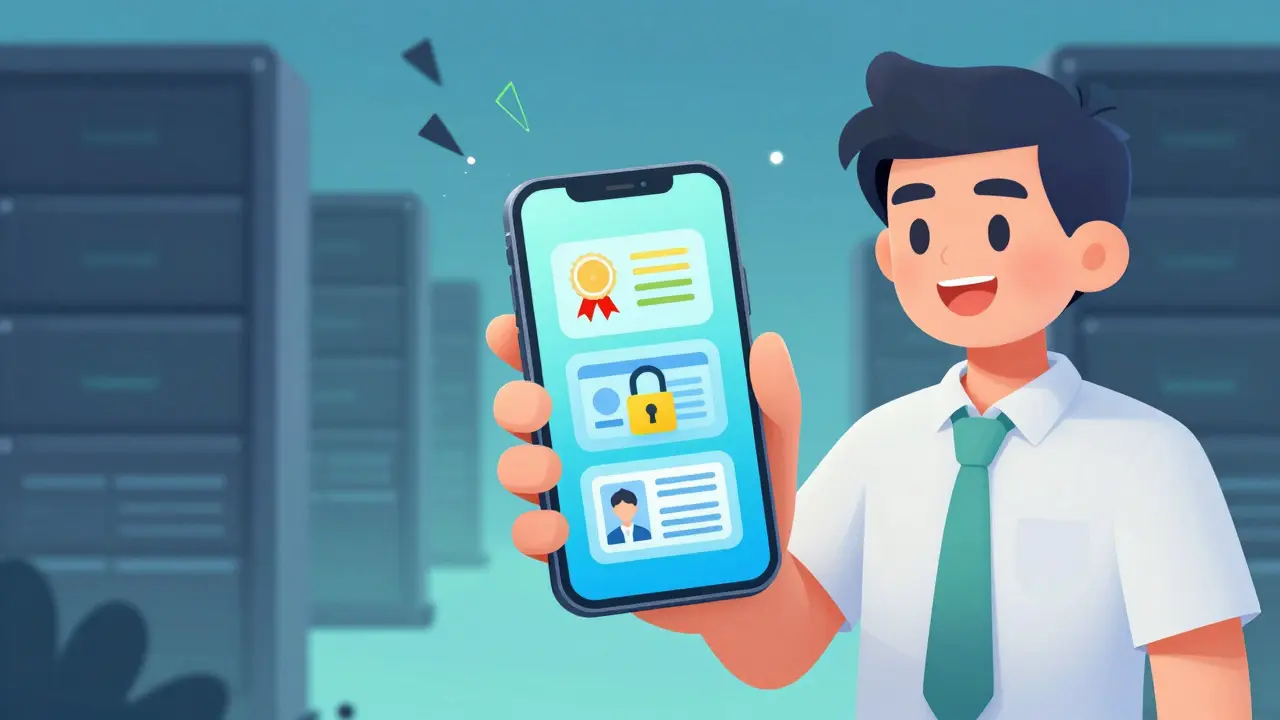
Imagine logging into a website without creating a new password. No email verification codes, no security questions about your childhood dog’s name, and no fear that the company will sell your data or get hacked. This isn’t science fiction anymore. It is the promise of Decentralized Identity Management, also known as DCI or Self-Sovereign Identity (SSI).
For years, we have handed over our personal information to tech giants, banks, and governments. They store it in massive central databases, which are prime targets for hackers. In 2026, with data breaches becoming more sophisticated, this old model is breaking down. Decentralized identity flips the script. Instead of companies owning your identity, you do. You hold your credentials in a secure digital wallet, sharing only what is necessary, when necessary, without revealing your entire life history.
How Decentralized Identity Works
To understand why this matters, you need to see how it differs from the system you use every day. Currently, if you want to prove you are over 18 to buy alcohol online, you might upload a photo of your driver’s license. The merchant stores that image. If their database is breached, thieves get your name, address, and license number. That is risky.
In a decentralized system, the process is cleaner. It relies on three main players: Issuers, Holders, and Verifiers. Let’s break them down using a real-world scenario.
- Issuers: These are trusted entities like universities, governments, or employers. They issue Verifiable Credentials (VCs). Think of these as digital diplomas or ID cards. They are cryptographically signed, meaning they cannot be forged.
- Holders: That is you. You store these VCs in a Digital Wallet on your phone or computer. You control who sees them and when.
- Verifiers: These are the websites or services asking for proof. A bar checking your age or a bank verifying your income. They check the validity of your credential without storing your personal data.
The magic happens through Decentralized Identifiers (DIDs). A DID is a unique string of characters that represents you on the blockchain. Unlike an email address or social media handle, it is not tied to any central registry. It points to a DID Document containing public keys used for encryption. This ensures that even if someone knows your DID, they cannot access your private information without your permission.
The Role of Blockchain and Cryptography
You cannot talk about decentralized identity without mentioning blockchain. But here is the twist: your personal data usually does not live on the blockchain. That would be a privacy nightmare. Instead, the blockchain acts as a trust layer. It stores the DIDs and the public keys of issuers, providing an immutable record that proves an issuer is legitimate.
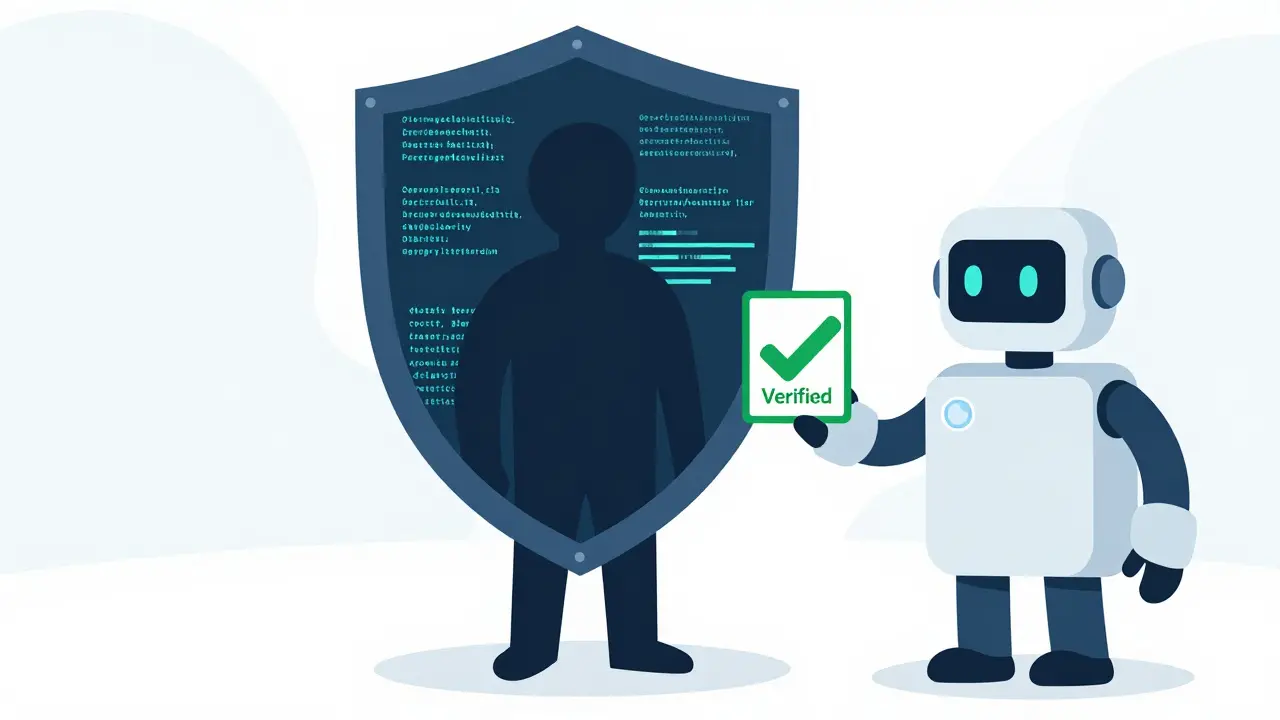
When you present a credential, the verifier checks the signature against the issuer’s public key on the blockchain. If it matches, the credential is valid. This process uses advanced cryptography, including Zero-Knowledge Proofs (ZKPs). ZKPs allow you to prove a statement is true without revealing the underlying data. For example, you can prove you are over 21 without showing your birthdate or full name. You simply provide a cryptographic proof that satisfies the condition.
This architecture offers significant security benefits. Since there is no central honeypot of user data, hackers have nothing to steal in the traditional sense. Even if a service provider is compromised, they do not have your identity details stored in their servers. They only have a temporary, verified claim that expired after the transaction.
Why Centralized Systems Are Failing
The current identity landscape is fragmented and insecure. We have hundreds of passwords, many of which are weak or reused. According to cybersecurity reports, billions of records are exposed annually due to breaches at large corporations. Users are tired of managing this chaos.
Centralized systems also create friction. Every time you sign up for a new service, you fill out forms, verify emails, and wait for approvals. With decentralized identity, you can reuse existing credentials. If you already have a government-issued digital ID in your wallet, you can use it to open a bank account, register to vote, or access healthcare services instantly. This reduces administrative overhead for organizations and improves the user experience for individuals.
Furthermore, privacy regulations like GDPR in Europe and various state laws in the US are making it harder for companies to store personal data. Decentralized identity aligns perfectly with these "privacy by design" principles. By minimizing data collection, companies reduce their legal liability and build trust with customers who are increasingly aware of surveillance capitalism.
Comparison: Centralized vs. Decentralized Identity
| Feature | Centralized Identity | Decentralized Identity (DCI) |
|---|---|---|
| Data Storage | Company servers (High risk) | User’s device/wallet (Low risk) |
| Control | Service Provider | User (Self-Sovereign) |
| Portability | Locked to specific platforms | Universal across compatible services |
| Privacy | Full data exposure often required | Selective disclosure via Zero-Knowledge Proofs |
| Recovery | Password reset via email/phone | Multi-sig wallets or social recovery protocols |
Challenges to Adoption in 2026
Despite the clear advantages, widespread adoption faces hurdles. The biggest challenge is user experience. Managing private keys is still intimidating for non-technical users. Losing your seed phrase means losing access to your identity forever. While solutions like social recovery and biometric authentication are improving, they are not yet seamless enough for the mass market.
Interoperability is another issue. There are multiple standards and blockchain networks supporting DCI. The World Wide Web Consortium (W3C) has established standards for DIDs and Verifiable Credentials, but implementation varies. Some systems work on Ethereum, others on Hyperledger Indy or Solana. For DCI to succeed, these systems must communicate smoothly. The Trust Over IP Foundation plays a key role here, cataloging DID methods and promoting compatibility.
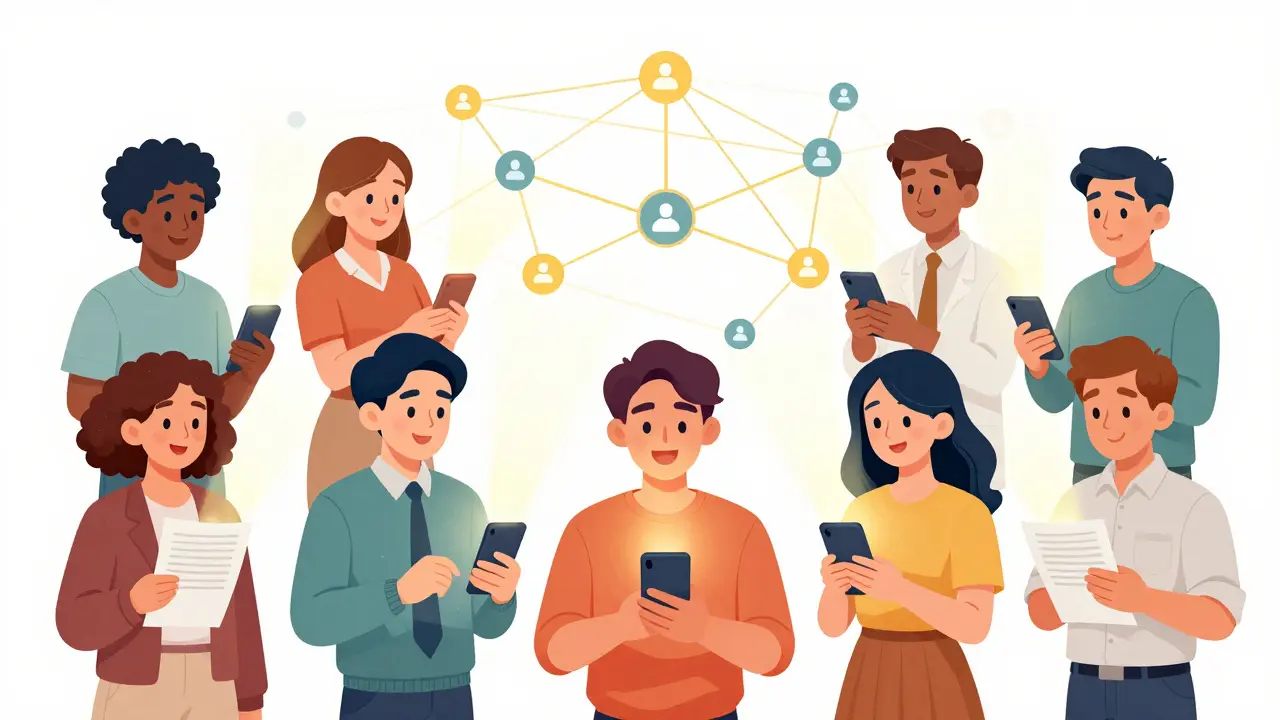
Network effects also matter. A decentralized identity is only useful if verifiers accept it. Major institutions like banks and governments are moving slowly. However, momentum is building. Countries like Estonia and Singapore have pioneered digital ID programs, and private sector players like Microsoft and IBM are integrating SSI capabilities into their enterprise offerings.
Real-World Use Cases
Let’s look at where this technology is being applied today.
- Healthcare: Patients can store medical records in their wallets. When visiting a specialist, they grant temporary access to relevant test results. The doctor verifies the source (the hospital) without needing to query multiple disparate systems.
- Finance: Know Your Customer (KYC) processes are expensive and repetitive. With DCI, a user completes KYC once with a trusted bank. They then carry that verified credential to other financial institutions, reducing onboarding time from days to minutes.
- Education: Universities issue digital diplomas as Verifiable Credentials. Employers can instantly verify degrees without contacting the university registrar, eliminating fake resumes.
- Gaming: Gamers can own their avatars and achievements across different games. If a game shuts down, the player retains their proven history and assets in their wallet.
The Future of Digital Identity
By the end of 2026, we are likely to see decentralized identity integrated into mainstream apps. As smartphones become more secure and operating systems support native digital wallets, the friction will decrease. The focus is shifting from "how does it work?" to "how easy is it to use?"
Regulatory pressure will accelerate adoption. Governments are realizing that giving citizens control over their data is both a privacy win and an economic opportunity. Cross-border travel could soon involve digital visas stored in wallets, scanned at airports without paper stamps.
For developers, learning DCI protocols is becoming a valuable skill. Understanding how to issue, hold, and verify credentials opens doors in fintech, healthtech, and enterprise software. The ecosystem is maturing, with better documentation and developer tools emerging monthly.
Decentralized identity management is not just a technical upgrade; it is a fundamental shift in power dynamics. It returns agency to the individual. While challenges remain, the direction is clear. The era of centralized data hoarding is ending, and the age of self-sovereign identity is beginning.
What is the difference between DID and Verifiable Credential?
A DID (Decentralized Identifier) is a unique identifier for you, like a digital fingerprint, that exists on the blockchain. It does not contain personal data. A Verifiable Credential (VC) is the actual document or certificate, such as a driver's license or degree, issued by an authority. You store VCs in your wallet and link them to your DID for verification.
Is my data safe if I lose my digital wallet?
If you lose access to your private keys, you cannot access the credentials in that specific wallet. However, because DIDs are decentralized, some systems allow for "social recovery" where trusted contacts can help restore access. Always back up your seed phrase securely. Unlike a password, there is no "forgot password" button in pure crypto systems, so backup is critical.
Which blockchains support Decentralized Identity?
Many blockchains support DCI, including Ethereum, Polygon, Solana, and Hyperledger Indy. The choice depends on the specific DID method used. The W3C standard ensures that regardless of the underlying blockchain, the identifiers and credentials can interoperate if the implementations follow the protocol correctly.
How do Zero-Knowledge Proofs protect my privacy?
Zero-Knowledge Proofs (ZKPs) allow you to prove a fact is true without revealing the fact itself. For instance, you can prove you are over 18 without showing your exact birth date. The verifier receives a mathematical confirmation that the condition is met, but learns nothing else about your identity. This minimizes data exposure significantly.
Can businesses adopt decentralized identity now?
Yes, but it requires integration effort. Businesses need to implement verification endpoints that can read and validate Verifiable Credentials. Many identity providers offer SDKs and APIs to simplify this. Early adopters include financial institutions for KYC and universities for diploma verification. The infrastructure is ready for pilot programs and gradual rollout.