Have you ever tried to trade a token on a new blockchain only to realize there’s no liquidity? That is exactly the problem QuickSwap v3 a decentralized exchange protocol deployed on the DogeChain network aims to solve. Launched in August 2022, this platform brings QuickSwap’s proven technology to the DogeChain an EVM-compatible blockchain built for low-cost transactions ecosystem. If you are holding DOGE or other tokens on this network, you need a reliable place to swap them without paying insane fees. But is QuickSwap v3 actually safe and efficient, or is it just another flash-in-the-pan DeFi project?
This review breaks down everything you need to know about trading on QuickSwap v3 (DogeChain). We will look at how the technology works, what the fees really cost, who should use it, and where the hidden risks lie. By the end, you will know if this exchange fits your trading strategy.
How QuickSwap v3 Works on DogeChain
QuickSwap is not a centralized company like Binance or Coinbase. It is a protocol-a set of smart contracts that run automatically. When you use QuickSwap v3 on DogeChain, you are interacting directly with these contracts. The key feature here is the Gamma V3 pool architecture a concentrated liquidity model that allows providers to focus capital within specific price ranges.
In older versions of decentralized exchanges (DEXs), your money was spread out across all possible prices. This meant most of your capital sat idle. With Gamma V3, you tell the system, "I think the price of DOGE will stay between $0.10 and $0.15." The protocol then uses your funds only in that range. This creates much higher efficiency for liquidity providers because their money is working harder. For traders, this means tighter spreads and less slippage when you make a swap.
The interface looks familiar if you have used Uniswap or PancakeSwap. You connect your wallet, select the tokens, and click swap. However, under the hood, it is optimized specifically for DogeChain’s speed and fee structure. According to traffic data from Q2 2024, the platform sees around 185,000 monthly visits, making it one of the busiest hubs on the network.
Fees and Trading Costs
Let’s talk money. Why do people choose DogeChain? Low fees. QuickSwap v3 inherits this benefit. While exact fee tiers can vary by pool, the general experience is significantly cheaper than Ethereum mainnet. Users report transaction fees averaging around $0.002 per swap during normal conditions. Compare that to Ethereum, where a single swap can cost $5 to $50 depending on congestion.
However, there are two types of costs to watch:
- Protocol Fees: These are charged by the pool creators. They vary based on the volatility of the pair. Stablecoin pairs usually have lower fees (around 0.05%), while volatile pairs might charge 0.3% or more.
- Gas Fees: These go to the DogeChain validators. Since DogeChain is designed for high throughput, these remain negligible for most users.
Keep in mind that if you are bridging assets from another chain (like Ethereum or Polygon) to DogeChain first, you will pay gas on the source chain. That initial bridge step is often where the biggest cost lies, not the swap itself on QuickSwap.
Liquidity and Token Selection
A DEX is only as good as its liquidity. If there is no money in the pool, you cannot trade. QuickSwap v3 holds an estimated 38% market share among DEXs on DogeChain, according to FXVerify’s Q2 2024 analysis. This makes it the dominant player on the network.
The most active trading pair is AUSD/USDC, which handles millions in volume daily. For major tokens like DOGE, WDOGE, and USDT, liquidity is deep enough for large trades. One user reported swapping $15,000 with only 0.3% slippage. That is impressive for a niche chain.
But here is the catch: newer or smaller DogeChain-native tokens may have thin liquidity. If you try to trade a low-cap meme token, you might face wide spreads or failed transactions. Always check the pool depth before entering a large order. Unlike centralized exchanges, there is no order book backing you up; you are relying entirely on the liquidity provided by other users.
| Feature | QuickSwap v3 | DogeDex | ShibaSwap |
|---|---|---|---|
| Liquidity Depth | High (2.3x competitor avg) | Medium | Low |
| Interface Usability | Intuitive, Standard DEX layout | Basic | Gamified, Complex |
| Cross-Chain Support | Yes (via Squid Router) | Limited | No |
| Advanced Features | Concentrated Liquidity | Standard AMM | NFT Integration |
Safety and Regulatory Risks
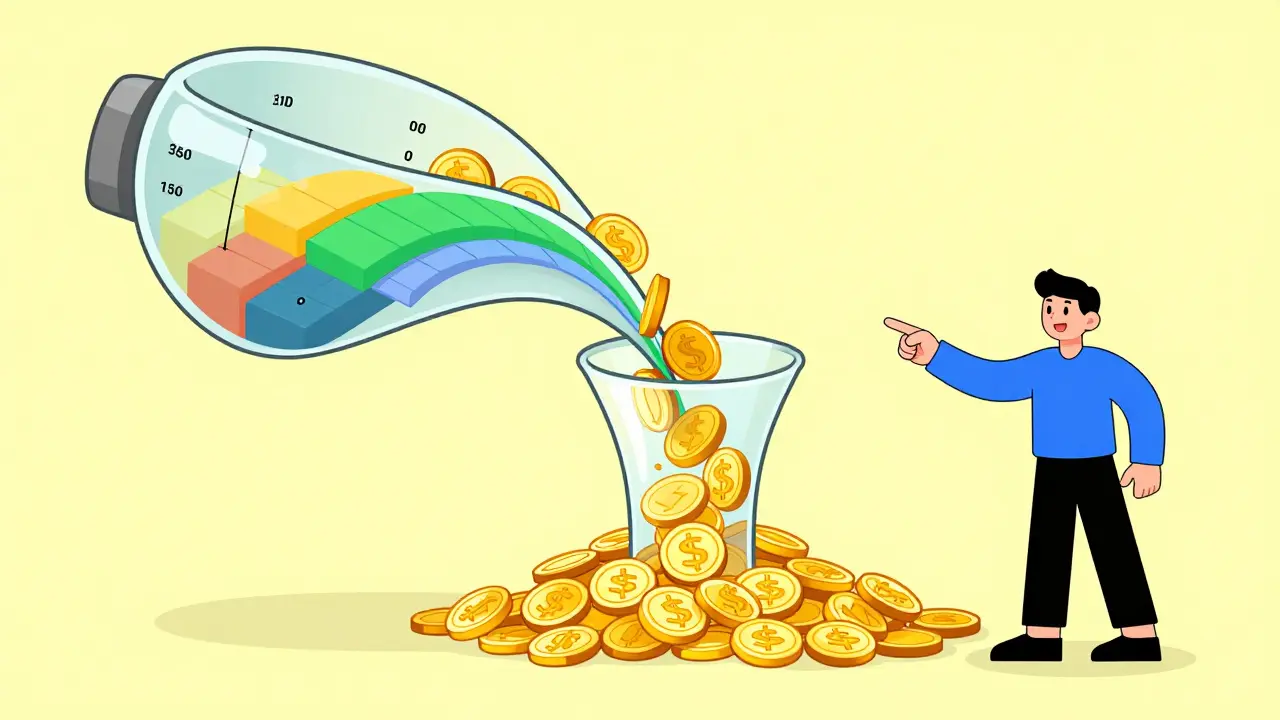
Here is the hard truth: QuickSwap v3 is not regulated. FXVerify’s 2023 assessment clearly states it operates without government oversight. This is true for almost all decentralized exchanges. There is no customer support team to call if you send funds to the wrong address. There is no insurance fund to cover you if a smart contract gets hacked.
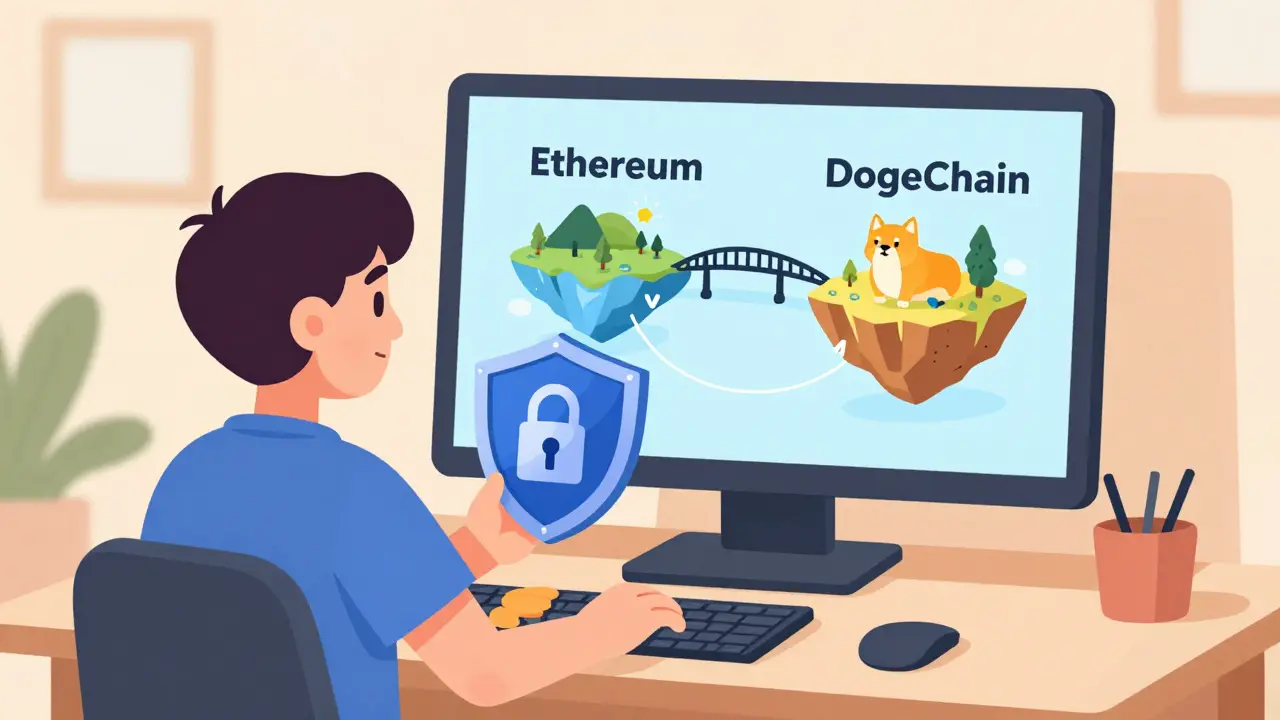
You assume full custody risk. This means you are responsible for securing your private keys and verifying every transaction. The platform has a solid reputation, having launched in 2020 and expanding to multiple chains. However, the DogeChain implementation relies on bridge security. Bridges are historically weak points in crypto. If the bridge connecting DogeChain to other networks fails, your assets could be stuck or lost.
Additionally, regulatory bodies like the U.S. SEC have warned that providing liquidity might constitute unregistered securities offerings. While this primarily targets large providers, it adds a layer of uncertainty to the entire DeFi space. Always do your own research and never invest more than you can afford to lose.
User Experience and Setup
Getting started is straightforward but requires a few technical steps. Here is what you need to do:
- Install a Web3 Wallet: MetaMask is the most common choice. Make sure it is updated.
- Add DogeChain Network: You can manually add the network parameters or use the “Add DogeChain Network” button on the QuickSwap interface. This reduces configuration errors significantly.
- Bridge Assets: Move your tokens from Ethereum or another chain to DogeChain using a trusted bridge. Keep some WDOGE in your wallet for gas fees (at least 0.5 WDOGE recommended).
- Connect and Swap: Go to dogechain.quickswap.exchange, connect your wallet, and start trading.
New users often struggle with the bridging step. It can take 15-20 minutes for assets to appear. During this time, do not refresh aggressively or double-click buttons. Patience is key. Once connected, the interface is clean and fast. Slippage tolerance settings are crucial-set them to 1-2% for stable pairs and 3-5% for volatile tokens to avoid failed transactions.
Who Should Use QuickSwap v3?
This platform is not for everyone. If you are a complete beginner to crypto, you might find the process of managing wallets and bridges confusing. It is best suited for:
- Experienced DeFi Users: People who already understand gas fees, slippage, and wallet security.
- DogeChain Holders: Users who want to swap native tokens without leaving the ecosystem.
- Arbitrage Traders: Those looking to exploit price differences between chains using low-cost swaps.
- Liquidity Providers: Investors willing to provide capital in exchange for trading fees and rewards.
If you prefer the simplicity of buying Bitcoin on Coinbase with a credit card, stick to centralized exchanges. QuickSwap v3 is a tool for those who want control and lower costs, not convenience.
Future Outlook
QuickSwap is actively expanding its ecosystem. Recent integrations with Squid Router allow seamless cross-chain swaps to over 60 networks. This makes DogeChain less isolated and more useful for global traders. The upcoming EVM 3.0 compatibility upgrade for DogeChain in late 2024 could further boost performance and attract more developers.
However, the long-term viability depends on Dogecoin’s health. Historical data shows that a 30% drop in Dogecoin’s price leads to a 22% drop in activity on DogeChain DEXs. So, while the technology is sound, the demand is tied to the broader meme coin narrative. Stay tuned for updates on QuickPerps derivatives, which may eventually come to DogeChain.
Is QuickSwap v3 on DogeChain safe to use?
It is as safe as any decentralized exchange, meaning the code is public and audited, but there is no central authority to protect your funds. You bear full responsibility for your private keys and must trust the smart contract integrity. Always verify URLs to avoid phishing sites.
What is the minimum amount to trade on QuickSwap v3?
There is no official minimum set by the protocol. However, you need enough funds to cover the gas fee (WDOGE) and the swap amount. Practically, starting with small amounts like $10-$20 helps you learn the process without risking significant capital.
How do I get DogeChain tokens onto QuickSwap?
You must bridge your assets from another chain like Ethereum or Polygon. Use a reputable bridge service, select DogeChain as the destination, and wait for the confirmation. Ensure you also bridge some WDOGE to pay for transaction fees on the network.
Why is my transaction failing on QuickSwap?
Common reasons include insufficient gas balance (WDOGE), slippage tolerance being too low for volatile markets, or network congestion. Check your wallet balance, increase slippage to 3-5%, and retry during off-peak hours.
Can I earn rewards by providing liquidity?
Yes, QuickSwap offers yield farming opportunities. By adding liquidity to Gamma V3 pools, you earn a portion of the trading fees. However, be aware of impermanent loss, especially if you provide liquidity for volatile asset pairs.
Kat Barr
July 6, 2026 AT 12:51Oh my gosh!! This is such a helpful breakdown!!! 😍 I was so confused about the whole bridging thing but this makes it seem way more manageable! 🙌 Just remember to double check your wallet connections okay?!! Safety first!!! ❤️
Michelle Walker
July 6, 2026 AT 13:52You are all missing the point. The bridge risk is catastrophic. If the bridge fails, your funds are gone. Period. QuickSwap v3 on DogeChain is a trap for retail investors who think low fees mean safety. It does not. The liquidity depth is fake news.
Erika Pozzetto
July 7, 2026 AT 04:27I must respectfully disagree with the previous assertion regarding the inherent dangers of decentralized protocols, as the technology has evolved significantly since its inception and provides a level of autonomy that centralized entities simply cannot match without compromising user privacy or imposing excessive regulatory burdens which ultimately stifle innovation in the financial sector.
Logan Edmison
July 8, 2026 AT 14:34its funny how we trust code more than banks but then panic when a bridge breaks lol. maybe the real issue is our attachment to money itself. dogechain is just a mirror of our greed i guess.
Linda Hilliard
July 9, 2026 AT 07:04:( Typical FUD from people who don't understand concentrated liquidity. Gamma V3 pools are superior because they maximize capital efficiency. If you can't handle the slight complexity of setting price ranges, you shouldn't be providing liquidity in the first place. It's basic DeFi literacy. 🤷♀️
Shay Thomson
July 10, 2026 AT 12:09Wait wait wait!! Hold on!! Are you saying that the slippage could actually eat into profits if you aren't careful?! 😱 That sounds terrifying!! I thought it was just free money!! Can someone please explain how to set the tolerance correctly before I lose everything?! 😭
DJ Maleko
July 10, 2026 AT 19:39Look at that table again. QuickSwap dominates. You're ignoring the data because you're scared. I've swapped $50k through there last week. Zero issues. The gas fees are literally pennies. Stop whining and start trading. 🚀💰
Russ Fincham
July 11, 2026 AT 05:10The regulatory aspect is what keeps me up at night. SEC warnings are not to be taken lightly. Even if the tech works, the legal framework is nonexistent. One day the government will wake up and shut down the bridges. Then what?
Jessie Smith
July 11, 2026 AT 18:19the irony of using 'safe' words to describe volatile assets is rich. quickswap is fine if you know what you're doing. most of you dont. keep your bags small and your expectations lower. the market always wins in the end.
Winston Lacewing
July 12, 2026 AT 11:26This entire thread is a disaster of misinformation!! 😡 People are giving bad advice left and right!! You need to secure your keys properly or you deserve to get hacked!! It's a moral failing to be careless with digital assets!! 📉🔥