NFT Art Authentication: How to Verify Ownership and Provenance in Web3
When you buy an NFT artwork, you’re not just buying a JPEG—you’re buying a NFT art authentication, a verifiable digital certificate tied to a unique blockchain record that proves who owns the original version. Also known as digital art provenance, it’s the only way to tell if that cool pixel art you saw online is the real thing or a copied fake. Without this, the whole NFT art market collapses into a sea of duplicates with no real value.
Every NFT is linked to a blockchain like Ethereum or Polygon, where its creation, ownership history, and transfers are permanently recorded. This chain of custody is called NFT provenance, the complete history of who created and owned the NFT from start to now. Also known as blockchain art verification, it’s what lets you trace a piece back to the original artist—even if it’s been sold ten times. If someone claims they own a Bored Ape, you can check the blockchain and see every transaction since it was minted. No middleman. No guesswork.
But here’s the catch: just because an NFT has a blockchain record doesn’t mean it’s legitimate. Scammers mint fake versions of famous art and list them on shady marketplaces. That’s why NFT ownership, the legal and technical right to control and transfer an NFT via a private key. Also known as digital asset custody, it’s not enough to see a name attached to a token—you need to verify the artist’s official wallet address and check if the NFT was minted on a trusted platform like OpenSea, Foundation, or SuperRare. Tools like Etherscan or NFTScan let you dig into the metadata, see the contract address, and confirm if the artist’s signature matches their verified profile.
Some artists now sign their NFTs with digital signatures or embed watermarks only visible in the original file. Others use off-chain verification through platforms like Artory or Verisart, which add third-party certification to the blockchain record. These aren’t magic fixes—they’re layers of trust. And in 2025, collectors who skip this step are losing money fast.
You don’t need to be a coder to check NFT authenticity. Most marketplaces show basic provenance data. But if you’re spending real money, always cross-reference the wallet address with the artist’s official social media, check the mint date against their public announcements, and look for red flags like copied descriptions or zero sales history. A low price on a famous piece? That’s usually a trap.
And don’t forget: NFT art authentication isn’t just about buying. It’s about selling too. If you’re an artist, your first step isn’t minting—it’s securing your wallet, publishing your official minting address, and educating buyers on how to verify you. Without that, even your real work gets buried under fakes.
Below, you’ll find real-world examples, tools, and warnings from people who’ve been burned—and those who learned how to protect themselves. No fluff. No hype. Just what actually works to keep your digital art safe and valuable.
12
Nov
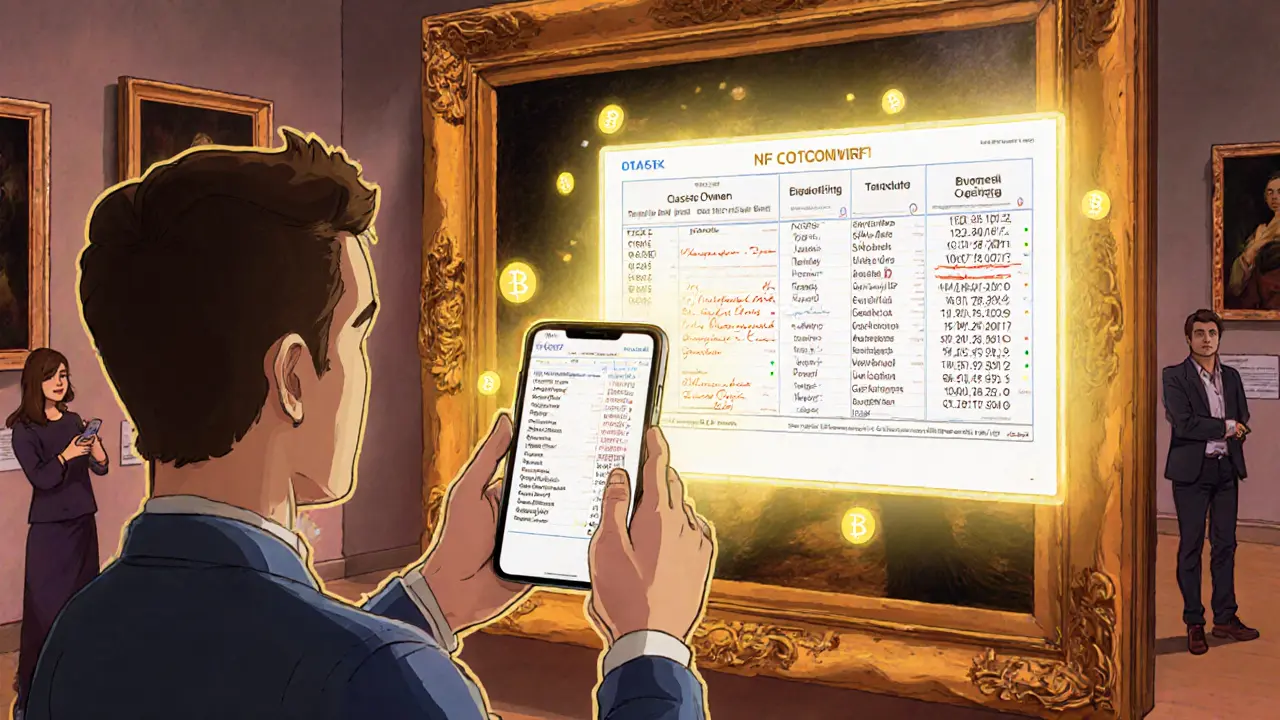
NFTs are revolutionizing how digital and physical art are authenticated, using blockchain to create tamper-proof ownership records. Learn how QR codes, NFC chips, and digital watermarks stop forgery and give collectors confidence.
Read More