Hard Fork in Blockchain: What It Means and Why It Matters
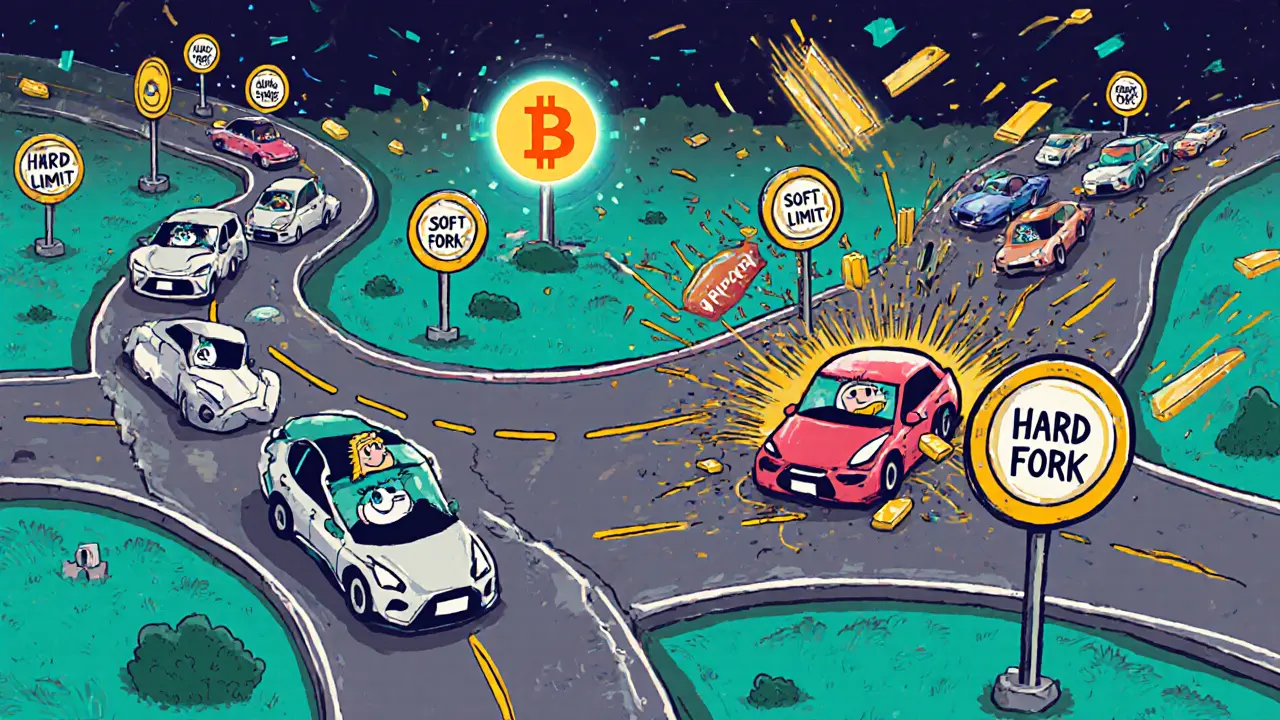
When a hard fork, a permanent change to a blockchain’s protocol that makes old versions incompatible with new ones. Also known as a blockchain fork, it’s not just a software update—it’s a vote on the future of the network. Unlike soft forks, which keep everyone on the same chain, a hard fork splits the blockchain into two separate paths. One follows the new rules, the other sticks with the old. If miners and users don’t agree, you end up with two coins—like Bitcoin and Bitcoin Cash.
Hard forks happen for real reasons: fixing security holes, changing how transactions are processed, or even reversing thefts. The Ethereum hard fork in 2016, for example, reversed the DAO hack and returned $60 million to users. But not all forks are heroic. Some are just power plays—developers pushing changes without community support. That’s why you need to know what’s changing before a fork hits. If you hold crypto in an exchange, you might not even get the new coin. If you hold it in your own wallet, you could end up with two balances… or lose access to one.
It’s not just about money. A hard fork tests the whole system. Who controls the rules? Can users really say no? Some forks, like Bitcoin SV, were started by people who wanted to scale differently. Others, like Litecoin, were meant to be improved alternatives from day one. But every fork carries risk: exchange delays, wallet confusion, scams pretending to be the "real" chain. You need to check your wallet provider, track official announcements, and never click random links claiming to "claim" your forked coins.
What you’ll find below are real stories of hard forks gone right, gone wrong, and gone ignored. From exchanges that froze withdrawals during splits to coins that vanished after a split, these posts show what actually happens when a blockchain breaks in two. No theory. No fluff. Just what you need to know before the next fork hits.
31
Oct
Understand the difference between hard forks and soft forks in cryptocurrency. Learn how they affect network upgrades, your coins, and why some changes split blockchains while others don't.
Read More