Crypto AML: How Anti-Money Laundering Rules Shape Crypto Trading and Compliance
When you trade crypto, you’re not just sending coins—you’re moving value through a system built to catch bad actors. Crypto AML, anti-money laundering rules applied to digital currencies to prevent illegal funding and fraud. Also known as cryptocurrency compliance, it’s the quiet force behind exchange sign-ups, wallet checks, and why some platforms block users from certain countries. This isn’t theory. It’s what stops North Korean hackers from cashing out stolen Bitcoin, keeps Iranian traders from using centralized exchanges, and forces platforms like KoinBay and ZG.com to prove they’re not hiding illegal activity.
Crypto AML doesn’t work alone. It’s tied to cryptocurrency mixers, tools that scramble transaction trails to hide where funds came from. Also known as crypto tumblers, they’re used by criminals—and sometimes by privacy-focused users—but regulators treat them as red flags. That’s why OFAC sanctions, U.S. government restrictions targeting specific individuals, groups, or countries like Iran and North Korea. Also known as blockchain analytics enforcement, they’re why Iranian users can’t trade on Binance or Coinbase, and why exchanges must scan every wallet address before letting anyone in. These rules also shape crypto compliance, the set of steps exchanges and platforms take to follow legal requirements. Also known as KYC and AML procedures, it’s why you upload ID to trade, why some coins get delisted, and why airdrops now check your wallet history before sending free tokens. If you’ve ever been denied access to a platform because your wallet once interacted with a mixer, or if you’ve seen a new exchange refuse users from certain regions, that’s crypto AML in action.
What you’ll find here isn’t just legal jargon. These posts show how AML rules play out in real life: how Iran’s traders use DEXs like Uniswap to bypass controls, how North Korea hides funds through tumblers, why Germany demands licenses, and how exchanges like KoinBay and Excalibur get flagged for lacking transparency. You’ll see how compliance isn’t just about forms—it’s about wallets, chains, and the hidden paths money takes. Whether you’re trying to claim an airdrop, trade on a new platform, or just understand why your transaction got blocked, this collection gives you the real-world map.
28
Oct
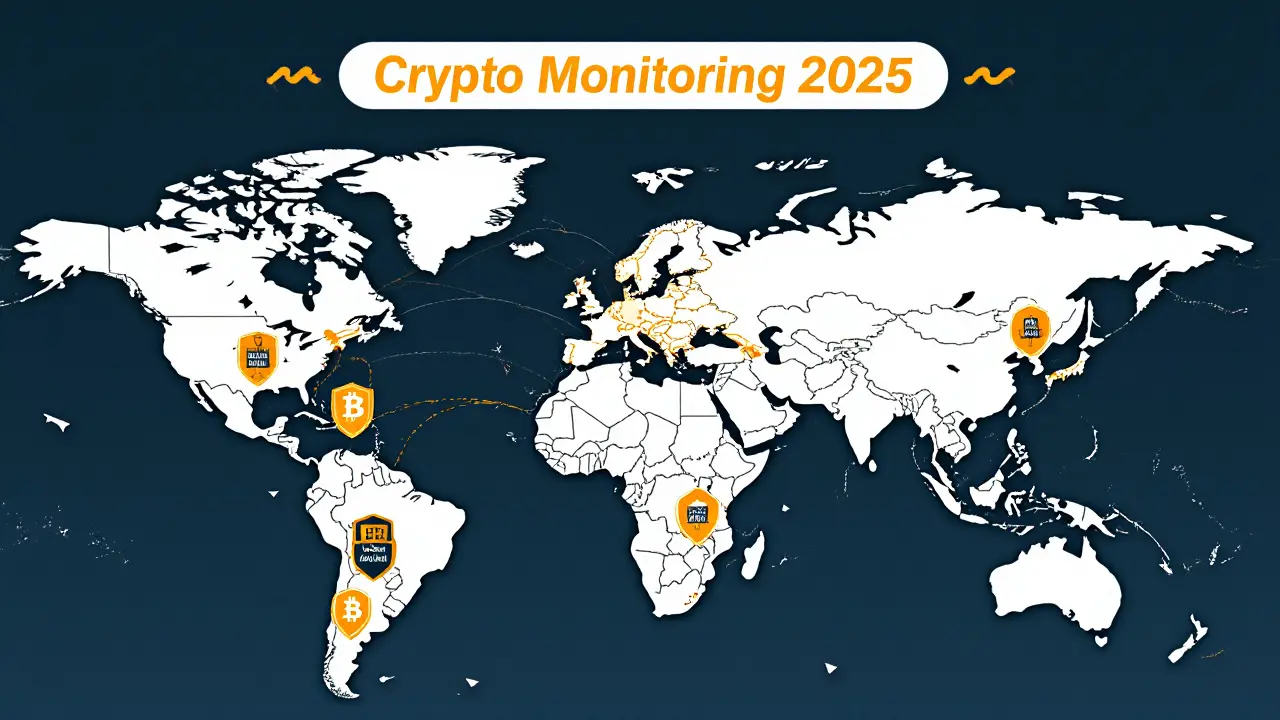
Governments worldwide now require crypto exchanges to track cross-border transactions over $3,000. Learn how the Travel Rule, FinCEN, and MiCA are shaping global crypto compliance-and what you need to do to stay legal.
Read More