Bitcoin fork: What It Is, Why It Happens, and What It Means for You
When a Bitcoin fork, a split in the Bitcoin blockchain that creates a new version of the cryptocurrency. Also known as a blockchain fork, it happens when developers or users disagree on how the network should run—whether it’s about block size, transaction speed, or mining rules. This isn’t a glitch. It’s a deliberate upgrade—or rebellion—that results in two separate chains, each with its own rules and coin. The most famous example is Bitcoin Cash, born in 2017 after a fight over whether Bitcoin should stay small and secure or grow to handle more everyday payments. That fork didn’t just make a new coin—it changed how people think about decentralization, governance, and what Bitcoin is even supposed to be.
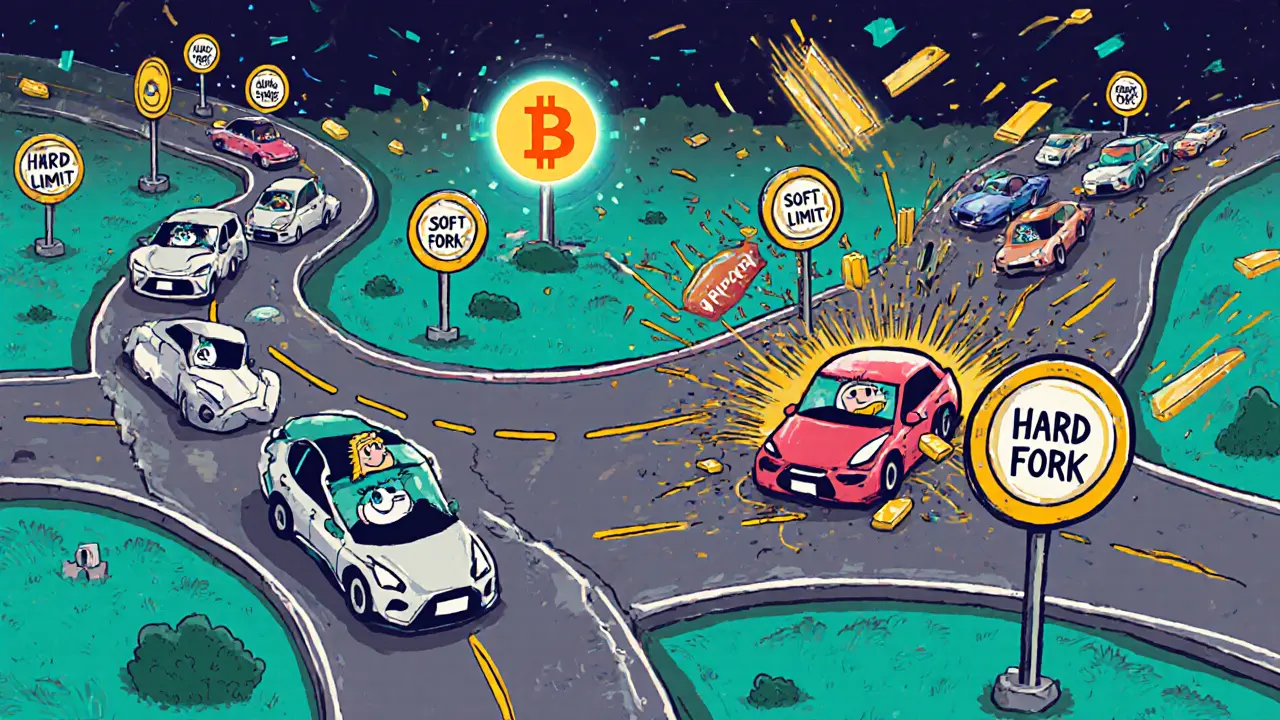
Not all forks are the same. There are hard forks, permanent splits that require all users to upgrade their software to stay on the main chain—like Bitcoin Cash and Bitcoin SV—and soft forks, backward-compatible updates that don’t split the network, which are more like routine software patches. Hard forks are the ones that matter to you as a holder. If you owned Bitcoin at the moment of a hard fork, you often got free coins on the new chain. But that doesn’t mean they’re valuable. Many forked coins vanish within months, ignored by exchanges, developers, and users. Only a few, like Bitcoin Cash, stuck around with real activity and community support.
Why do these splits keep happening? Because Bitcoin’s code is open. Anyone can propose a change. But without a central authority to decide, disagreements turn into code wars. Some want faster, cheaper transactions. Others want to keep Bitcoin as digital gold—limited, slow, and secure. These aren’t just technical debates—they’re philosophical ones about money, control, and trust. That’s why Bitcoin forks aren’t just about code. They’re about who gets to decide what money means.
What you need to know: If you hold Bitcoin, you might get free coins from a fork. But don’t assume they’re worth anything. Check if the new chain has real trading volume, active developers, and exchange support. Most forks are dead on arrival. Only a handful survive—and even fewer become meaningful alternatives. The real lesson? Forks reveal the fault lines in crypto. They show where the community splits, where trust breaks, and where innovation actually happens.
Below, you’ll find real-world breakdowns of past forks, reviews of exchanges that support them, and guides to claiming forked coins safely—no fluff, no hype, just what you need to know before you act.
31
Oct
Understand the difference between hard forks and soft forks in cryptocurrency. Learn how they affect network upgrades, your coins, and why some changes split blockchains while others don't.
Read More