The metaverse isn't just a place to hang out in VR headsets anymore. It's a sprawling, complex economic engine where billions of dollars change hands every year. But unlike the real world, this economy doesn't run on dollars or euros. It runs on tokens. If you've ever wondered how someone can buy a patch of digital land for $450,000 or earn money playing a game, the answer lies in metaverse economy structures and the token systems that power them.
By 2026, we are seeing a clear shift from the hype-driven speculation of the early 2020s to a more mature, albeit volatile, landscape. The market is projected to hit massive valuations by 2032, but getting there requires understanding how these digital currencies actually function. This guide breaks down the mechanics, the risks, and the reality of participating in virtual economies today.
How Metaverse Token Systems Actually Work
To understand the value, you first need to understand the infrastructure. Most metaverse platforms rely on blockchain technology to verify ownership and process transactions. Think of the blockchain as a public ledger that everyone can see but no one can alter. This ensures that when you buy a digital sword or a piece of virtual land, it truly belongs to you, not the game company.
Most systems use a dual-token model to keep things running smoothly. You typically have two types of tokens:
- Governance Tokens: These give you a voice in the platform's future. Holding them often allows you to vote on proposals, like changing the rules of a game or allocating funds for new features. Examples include AXS (Axie Infinity) and SAND (The Sandbox).
- Utility Tokens: These are the everyday currency. You use them to buy items, pay for transaction fees, or reward other players. An example is SLP (Smooth Love Potion) in Axie Infinity.
This separation helps stabilize the economy. Governance tokens usually have a fixed supply, creating scarcity, while utility tokens are often minted constantly to reward activity. However, this balance is delicate. If too many utility tokens are created without enough demand, their value crashes-a problem we saw severely with Axie Infinity's SLP token, which lost nearly all its value due to unsustainable inflation.
The Big Players: Decentraland vs. The Sandbox
When people talk about the metaverse economy, they are usually talking about a few key platforms. Each has a different approach to its token system and user experience.
| Platform | Token Symbol | Primary Use Case | Key Strength | Current Challenge |
|---|---|---|---|---|
| Decentraland | MANA | Socializing, Virtual Events | Strong community governance (78% voter participation) | Low daily active users despite high wallet registrations |
| The Sandbox | SAND | Gaming, Brand Partnerships | Major brand deals (Adidas, Ubisoft) and high land sales volume | Lower governance participation compared to competitors |
| Axie Infinity | AXS / SLP | Play-to-Earn Gaming | Pioneered the play-to-earn model | Historical token inflation issues; recovering trust |
| Star Atlas | ATLAS / POLIS | High-Fidelity Space Strategy | Unreal Engine 5 graphics on Solana blockchain | Very low user adoption relative to tech quality |
Decentraland focuses heavily on community control. Its MANA token holders decide what happens in the virtual world. The Sandbox, on the other hand, leans into entertainment and brands. They’ve sold over $150 million in virtual land in recent quarters by partnering with huge names like Snoop Dogg and Adidas. Your choice depends on whether you want to be part of a democratic society or a branded entertainment hub.
Technical Realities: Speed, Cost, and Compatibility
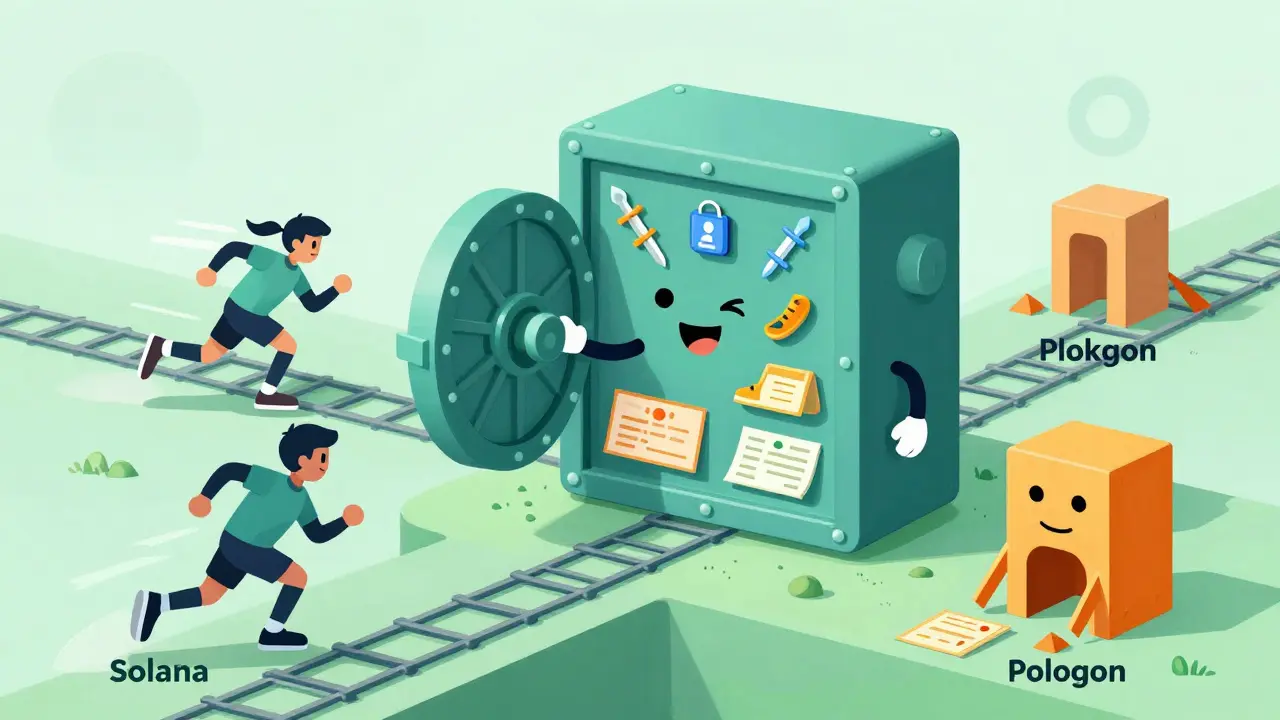
You can't ignore the tech underneath the pretty graphics. The performance of a metaverse economy depends heavily on the blockchain it uses. Ethereum was the pioneer, but it has a bottleneck: it only processes about 15 to 30 transactions per second. During busy times, gas fees (the cost to execute a transaction) can spike to $50 or more. That makes buying a $10 digital hat impractical if the fee is $20.
This is why newer platforms are moving to faster chains. Solana, used by Star Atlas, can handle thousands of transactions per second. Polygon, used by The Sandbox, offers finality in just 2 to 5 seconds. These Layer-2 solutions and alternative blockchains are crucial for making micro-transactions possible.
Interoperability remains the biggest technical hurdle. Currently, only about 12% of metaverse projects allow you to move your assets between platforms. If you buy a skin in one game, you likely can't wear it in another. Standards like ERC-6551 are being developed to fix this, aiming to make digital assets portable across different virtual worlds by late 2026.
Risks and Security: Protecting Your Digital Assets
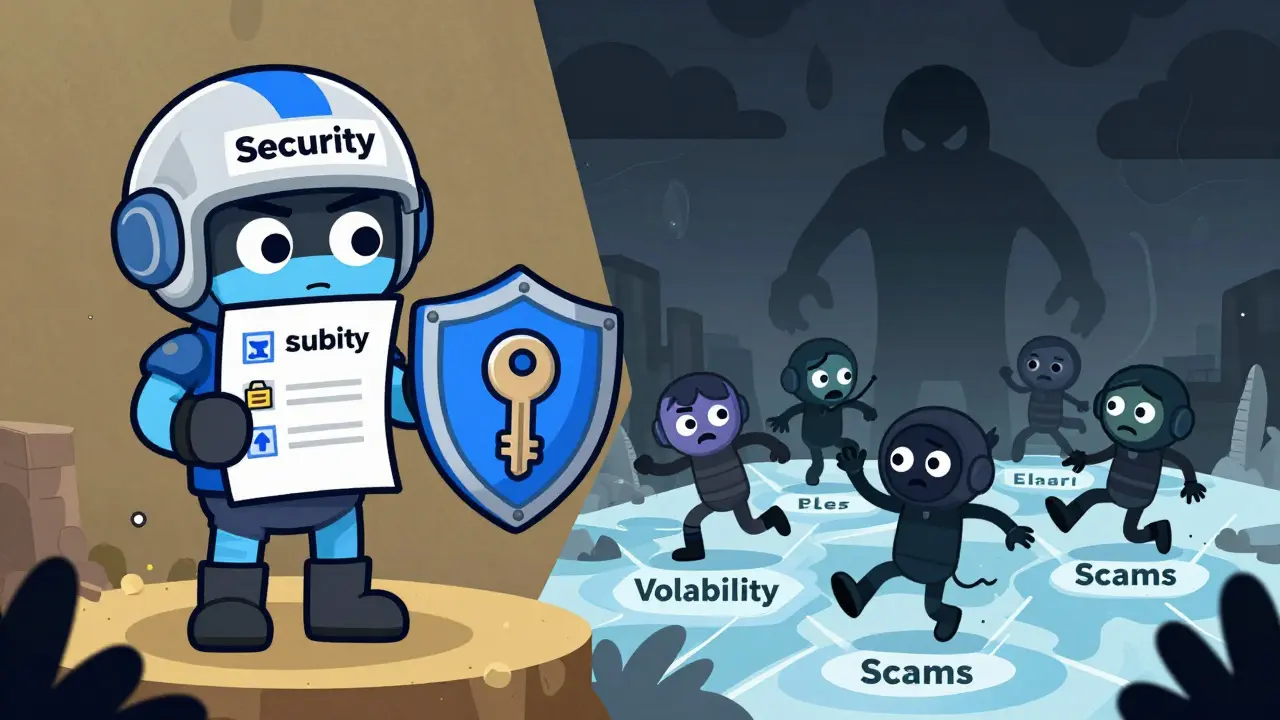
Entering the metaverse economy means taking on significant risk. The most famous example is the Ronin Bridge hack in 2022, where attackers stole $625 million from Axie Infinity. While security has improved since then, vulnerabilities remain.
Here are the main risks you face:
- Smart Contract Vulnerabilities: Code bugs can be exploited. Always check if a platform’s code has been audited by reputable firms.
- Phishing Attacks: Scammers create fake websites to steal your wallet credentials. Never share your seed phrase.
- Market Volatility: Token prices can drop 90% in weeks. Never invest money you cannot afford to lose.
- Regulatory Uncertainty: Governments are still figuring out how to tax and regulate these assets. The EU’s MiCA legislation now requires strict reserve backing for many utility tokens.
User sentiment reflects these dangers. Surveys show that 58% of new users abandon platforms during the wallet setup process because it feels too risky or complicated. Trustpilot reviews for metaverse platforms average just 2.8 out of 5 stars, with complaints centering on unpredictable values and steep learning curves.
Getting Started: A Practical Guide for 2026
If you want to participate, you don't need to be a coder, but you do need to be careful. Here is the standard path to entry:
- Set Up a Web3 Wallet: Download MetaMask or Trust Wallet. Write down your recovery phrase on paper and store it safely. This is your bank account; if you lose it, your money is gone forever.
- Buy Stablecoins: Instead of buying volatile tokens directly, buy USDC or USDT on a major exchange like Coinbase or Binance. Transfer these to your wallet.
- Swap for Platform Tokens: Use a decentralized exchange (DEX) like Uniswap to swap your stablecoins for MANA, SAND, or other tokens. Check current gas fees using tools like Etherscan Gas Tracker to avoid paying too much.
- Connect to the Platform: Go to the official website of the metaverse you chose. Connect your wallet. Start small-buy a cheap item or rent a small plot of land before committing large sums.
Expect a learning curve of 3 to 6 months to feel comfortable. Join Discord communities for support; The Sandbox’s community, for instance, responds to technical queries within hours.
The Future: Sustainability Over Speculation
The era of "get rich quick" play-to-earn schemes is largely over. Experts like Gartner predict that 25% of metaverse platforms will collapse by 2026 due to bad economics. The survivors will be those that offer real utility. We are already seeing this shift. Nike’s .SWOOSH platform generated $185 million in virtual sneaker sales in mid-2024 by tying digital items to physical brand loyalty. Mastercard is integrating carbon credits into metaverse transactions.
The future belongs to platforms that connect the virtual and real worlds. Interoperability will improve, allowing your digital avatar to carry assets across different experiences. But until then, treat the metaverse economy as a high-risk, high-reward experiment. Do your research, secure your keys, and never invest based on hype alone.
What is the safest way to enter the metaverse economy?
Start with established platforms like Decentraland or The Sandbox. Use hardware wallets for storing significant assets, begin with small amounts of capital, and thoroughly research the tokenomics of any project before investing. Avoid unknown "play-to-earn" games promising high returns, as these are often unsustainable.
Can I really make money in the metaverse?
Yes, but it is not guaranteed. Income sources include selling virtual real estate, creating and selling digital art (NFTs), or earning rewards through gameplay. However, many users lose money due to market volatility. Successful participants treat it like a business, focusing on long-term value creation rather than short-term speculation.
Why did Axie Infinity's token value crash?
Axie Infinity suffered from hyperinflation. The game rewarded players with SLP tokens for playing, but the supply of tokens grew much faster than the demand. As fewer new players joined to buy these tokens, the price collapsed. This highlights the importance of balanced tokenomics.
What are gas fees and why do they matter?
Gas fees are the costs paid to miners or validators to process transactions on a blockchain. On congested networks like Ethereum mainnet, these fees can be very high. For metaverse activities involving frequent small transactions, high gas fees make the experience expensive and impractical, which is why many platforms now use Layer-2 solutions like Polygon.
Is my data safe in the metaverse?
Your financial assets are secured by cryptography, but your personal data privacy depends on the platform. Some platforms collect extensive user data. Always review privacy policies and use anonymous wallets where possible. Be cautious about linking social media accounts to your Web3 identity to prevent phishing attacks.