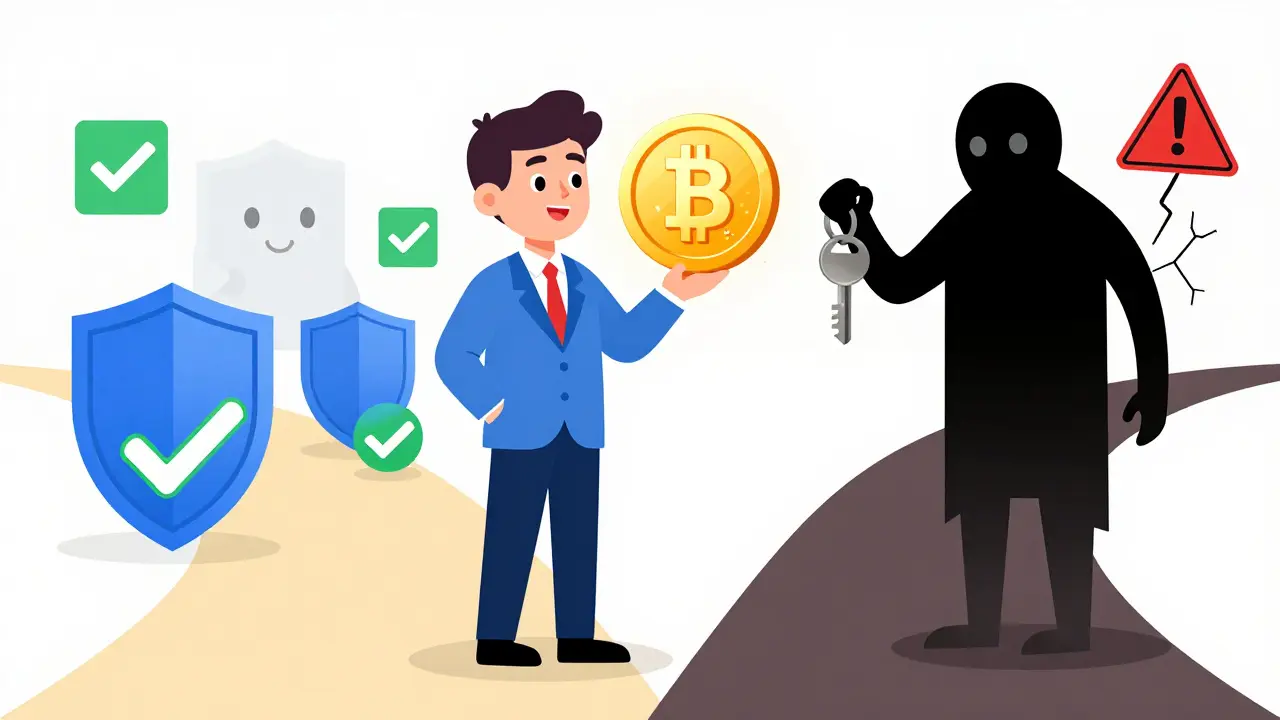
Imagine you have $10,000 in cryptocurrency. You want it to work for you, earning passive income while you sleep. In a Proof-of-Stake (PoS) network, that income comes from staking, but your returns depend entirely on one decision: which validator do you trust with your assets?
Choosing the wrong validator is like handing your house keys to a stranger who promises high rent but might break the windows. If that validator goes offline or acts maliciously, you don't just lose potential earnings-you could face slashing penalties, where the protocol punishes both the validator and the delegators by burning a portion of their stake. With over $300 billion locked in staking across major networks as of late 2023, and projections showing continued growth into 2026, getting this right is no longer optional for serious investors.
This guide cuts through the noise. We will look at exactly what metrics matter, how to spot red flags, and why the highest advertised yield is often a trap.
The Core Metrics That Actually Matter
When you browse a list of validators, you see dozens of numbers. Most are distractions. To protect your capital and maximize long-term returns, focus on these four non-negotiable metrics.
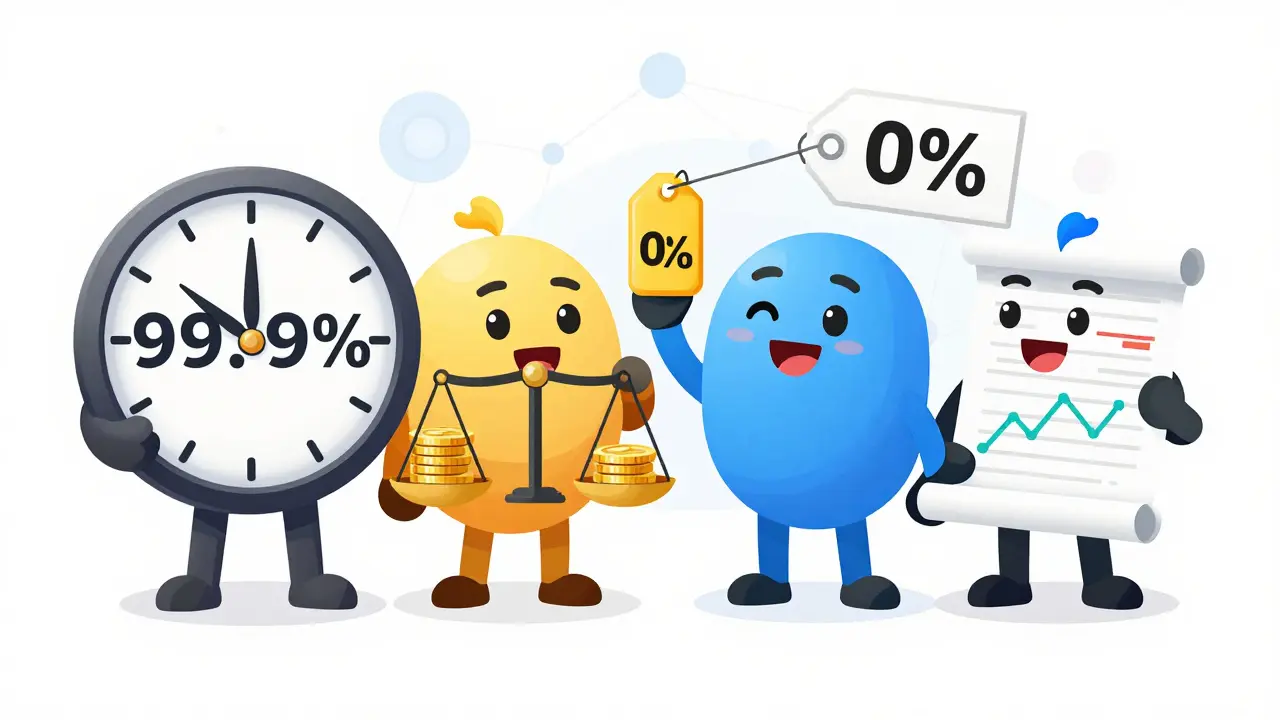
- Uptime and Availability: This is the heartbeat of a validator. Industry standards demand 99.9% or higher uptime. If a validator is offline, they aren't proposing blocks or attesting to transactions, meaning they earn nothing-and neither do you. For example, Ethereum validators lose approximately 0.000015 ETH per minute of downtime. Over a month, even minor outages eat significantly into your annual percentage rate (APR).
- Self-Bonded Ratio: This measures how much of the validator's own skin is in the game. A reliable validator typically maintains a self-bonded ratio above 10%. According to DAIC Capital's 2024 analysis, validators with less than 5% self-bonded stakes show a 37% higher incidence of slashing events. Why? Because if they don't risk their own money, they have less incentive to maintain rigorous security protocols.
- Commission Structure: Validators charge a fee for their service, usually ranging from 5% to 15% of the rewards you earn. Be wary of validators advertising 0% fees. CryptoVantage's 2025 analysis warns that these are often bait-and-switch operations. They attract delegators with free rides, then hike commissions to 100% once users are locked in or become ineligible for future airdrops due to centralization concerns.
- Historical Performance Data: Look beyond the current APR. Check their voting accuracy. On networks like Ethereum, top-tier validators maintain 99.5%+ performance across "head, target, and source" voting metrics. Consistent historical data proves reliability better than any marketing claim.
Network-Specific Nuances: One Size Does Not Fit All
Different blockchains operate differently. Your selection strategy must adapt to the specific mechanics of the network you are staking on.
| Network | Typical APR Range | Minimum Stake (Solo) | Key Selection Metric | Slashing Risk |
|---|---|---|---|---|
| Ethereum | 3.5% - 4.5% | 32 ETH | RANDAO Performance & Uptime | High (0.5 ETH minor, full loss major) |
| Polkadot | 14.0% - 15.3% | ~560 DOT | Nomination Trust & Self-Bond | Very High (Up to 70% stake loss) |
| Solana | 6.5% - 8.0% | 1 SOL (Delegation) | Hardware Quality & Latency | Moderate |
| Cardano | 4.0% - 5.0% | None (Delegation only) | Active Epochs & Saturation | Low (No slashing for delegators) |
For instance, Ethereum relies heavily on the RANDAO mechanism for selecting block proposers every 12 seconds. A validator's ability to participate effectively in RANDAO directly impacts their reward efficiency. In contrast, Polkadot offers higher yields-up to 15.31% APR for validators-but carries severe slashing risks. The Web3 Foundation documents that malicious behavior can result in up to 70% of a validator's stake being burned. Therefore, on Polkadot, trust and self-bonding ratios are even more critical than on Ethereum.
Cardano presents a different landscape. It has no slashing penalties for delegators. Here, your primary concern is avoiding saturated pools. Once a pool reaches saturation, additional delegation earns diminishing returns. You should choose a pool that is active but not yet at its maximum capacity.
Red Flags: How to Spot a Bad Validator
Not all validators are created equal. Some are run by professional infrastructure teams; others are hobbyists running nodes on unstable home connections. Here is how to identify the latter before you delegate your funds.
- Zero Commission Rates: As mentioned, 0% fees are rarely sustainable. Legitimate businesses need to cover server costs, electricity, and maintenance. A validator offering free services is likely using your stake as leverage for something else, such as farming airdrops or preparing to raise fees later.
- Poor Communication Channels: A transparent validator maintains active Discord servers, Telegram groups, or regular email newsletters. During network upgrades or downtime, silence is alarming. User testimonials on platforms like Staking Facilities show that validators with regular updates retain 23% more delegators. If you can't find their contact info, walk away.
- New Accounts with Low Self-Bond: Brand-new validators with minimal self-staked tokens are high-risk. They haven't proven their operational history. Stick to validators with at least 6-12 months of consistent uptime records.
- Geographic Concentration Risks: While less common for individual delegators, be aware that some large validators operate in jurisdictions with strict regulatory crackdowns. Diversifying across validators in different geographic regions (e.g., US, EU, Singapore) can mitigate systemic risk.
The Strategy of Diversification
Never put all your eggs in one basket. Even the best validators can suffer hardware failures, internet outages, or accidental misconfigurations. Figment.io's 2024 institutional guide recommends spreading stakes across 15-20 validators to minimize single-point failure risks. For retail investors, aiming for 4-12 validators is a practical sweet spot.
Diversification works because it averages out performance. If one validator goes offline for an hour, the others continue earning. Your overall portfolio remains stable. However, avoid splitting your stake too thinly. On networks like Polkadot, there may be minimum thresholds for effective nomination. Ensure each delegation is large enough to generate meaningful rewards after commission deductions.
Consider using tools like Staking Rewards or ValidatorDB to track multiple validators simultaneously. These platforms provide dashboards that highlight uptime drops, commission changes, and reward consistency across your chosen set.

Step-by-Step: Executing Your Selection
Now that you know what to look for, here is how to actually make the choice.
- Create a Secure Wallet: Use a hardware wallet or a reputable software wallet that supports delegation on your chosen network. Never share your seed phrase.
- Research Candidates: Spend 60-90 minutes reviewing at least 5-7 validators. Use community resources like Reddit's r/ethstaker or official network forums. Look for discussions about reliability, not just yield.
- Verify Metrics: Cross-reference the validator's claimed stats with independent trackers. Check their self-bonded ratio, uptime history, and commission structure.
- Check Communication: Join their Discord or read their latest blog post. Do they explain technical issues clearly? Are they responsive to questions?
- Execute Delegation: Bond your tokens to the selected validators. Remember, on networks like Ethereum, you cannot change your validator immediately if things go wrong. There is an exit queue. Choose wisely.
- Monitor Regularly: Set aside 15-30 minutes weekly to check performance. Did your validator miss attestations? Did they raise commissions unexpectedly? Adjust your strategy if needed.
Future-Proofing Your Staking Strategy
The staking landscape is evolving rapidly. By 2026, we expect greater regulatory clarity, especially with frameworks like the EU's MiCA taking full effect. This means unlicensed or opaque validators may face legal challenges, making transparency even more valuable.
Technological upgrades also play a role. Ethereum's Pectra upgrade introduced enhanced performance metrics, making it easier for delegators to verify validator accuracy. Future updates, like Verkle trees, aim to reduce hardware requirements, potentially lowering barriers to entry and increasing decentralization. Stay informed about these developments. A validator that adapts to new protocols quickly is more likely to remain profitable and secure.
Finally, remember that staking is a long-term commitment. Short-term yield chasing leads to mistakes. Focus on security, reliability, and transparency. Your patience will pay off in steady, compounding returns without the fear of sudden losses.
What happens if my validator gets slashed?
Slashing is a penalty imposed by the blockchain protocol when a validator violates rules, such as going offline for extended periods or signing conflicting blocks. Depending on the network, you may lose a portion of your staked assets. For example, on Ethereum, minor infractions cost 0.5 ETH, while double-signing can lead to total loss. On Polkadot, slashing can remove up to 70% of the stake. Always choose validators with strong security records to minimize this risk.
Is it safe to stake with a 0% commission validator?
Generally, no. Validators with 0% commissions are often scams or bait-and-switch operations. They may attract delegators with free rewards, then suddenly increase fees to 100% or engage in malicious activities. Legitimate validators charge 5-15% to cover operational costs. Avoid anything that sounds too good to be true.
How many validators should I diversify across?
For most retail investors, diversifying across 4-12 validators is recommended. This balances risk reduction with management simplicity. Institutional investors may spread stakes across 15-20 validators. The goal is to ensure that if one validator fails, your overall earnings remain stable.
Does validator location matter?
Yes, indirectly. Geographic concentration can pose risks if a region faces power outages, internet blackouts, or regulatory crackdowns. Choosing validators distributed across different countries (e.g., US, Europe, Asia) adds a layer of resilience to your staking portfolio.
Can I change my validator after staking?
It depends on the network. On Ethereum, exiting a validator involves a queue that can take days or weeks, during which you earn no rewards. On other networks like Polkadot or Solana, changes may be faster but still require waiting for epoch boundaries. Plan carefully before delegating, as flexibility is limited.
Kenneth Riley
June 15, 2026 AT 02:46another generic guide written by people who probably never ran a node themselves lol. you think uptime is the only metric? what about hardware redundancy and geographic distribution of their seed nodes? this article is surface level fluff for retail sheep.
Kumaran sowkarpet
June 16, 2026 AT 07:49hi friends! i read this and it helped me understand why my old validator was so slow :D. self-bonded ratio is very important indeed, we should always check if they have skin in the game. thank you for sharing this useful info with us all!
Benjamin Eisen
June 17, 2026 AT 23:58i really appreciate this breakdown especially the part about diversification. i used to put everything into one big validator because it seemed easier but now i see how risky that is. im going to split my eth across maybe 5 different ones starting next week thanks for the tip
ravi mahla
June 19, 2026 AT 14:13oh wow look at you guys acting like validators are some mystical entity lol. just pick the one with the highest apr and move on with your life. who cares about slashing risk when you can make extra sips?
Kenneth Riley
June 20, 2026 AT 00:10@ravi mahla you absolute clown. picking highest apr without checking security is how you get wiped out. its basic crypto hygiene. do your own research before commenting like an idiot.
Mark Brunschwiler
June 20, 2026 AT 18:46the energy here is toxic. why do we need to fight over staking strategies? everyone wants passive income and peace of mind. let us all earn together without the drama. love and light to all validators out there.
Filbert Reeves
June 21, 2026 AT 12:56they dont tell you this but the big validators are all connected to the same central bank servers. its a setup. the whole proof of stake thing is just a way to track where your money goes. wake up sheeple. the regulators are watching every transaction you make through these 'trusted' nodes.
Nick Rice
June 21, 2026 AT 22:37stop spreading fear mongering nonsense filbert. decentralization is real and the metrics matter. if you cant handle the technical details then stay away from crypto. we need serious discussion here not conspiracy theories.
Amit Thakur
June 23, 2026 AT 18:19listen up chaps. the jargon heavy stuff is crucial. you need to understand RANDAO performance and attestation head accuracy. if you dont know what those mean you are gambling not investing. stop being lazy and learn the protocol mechanics properly.
Eric Scheinberg
June 24, 2026 AT 22:49It is imperative that one considers the historical data meticulously. The commission structure must be transparent and consistent. I find that validators who maintain formal communication channels tend to be more reliable in the long term. Precision in selection yields precision in returns.
pankaj chawla
June 25, 2026 AT 01:09i agree with amit thakur here. we need to be assertive in our choices. dont let anyone fool you with fancy marketing. look at the raw data and make a decision based on facts not feelings.
Jessica Lane
June 26, 2026 AT 03:54I found this section on network specific nuances particularly enlightening. It is fascinating how Polkadot differs so significantly from Ethereum in terms of risk. I plan to explore Cardano further as the lack of slashing for delegators seems quite appealing for someone cautious like myself.
Charles Pawlikowski
June 26, 2026 AT 10:03only american validators are safe bro. the rest of the world is corrupt and will steal your coins. stick to US based nodes or you are asking for trouble. keep america great and keep your stack safe :)
Andrea Burd
June 28, 2026 AT 05:37this article is okay i guess but it feels like basic stuff. i expected more depth from a 2026 guide. anyway i am staking with a friend who knows better than any website so whatever.
Akeem Whittaker
June 28, 2026 AT 22:56let me help you understand why zero commission is bad. it is not sustainable business practice. if they are not charging you they are selling your data or preparing to rug pull. be smart and avoid those traps.
Manish Prajapat
June 30, 2026 AT 22:30the philosophy of staking is about trust but verify. we must balance the desire for yield with the wisdom of caution. diversity in our portfolio reflects diversity in thought. it is a harmonious approach to wealth preservation.
John Doe
July 1, 2026 AT 10:11i feel your pain regarding the complexity of choosing validators. it is overwhelming at first. but once you set up your monitoring dashboard it becomes much easier. take a deep breath and start small.
Mekz Wheoki
July 3, 2026 AT 09:01you people are adorable trying to 'choose' validators like it matters. the whales control the block production regardless of your little diversification strategy. save your time and just hodl.