Imagine finding a new cryptocurrency exchange that promises high returns and low fees. It sounds too good to be true, right? That is exactly the situation with Bitzon is an unverified cryptocurrency trading platform with no credible public presence or regulatory licensing as of 2026.. If you are reading this, you probably saw an ad for Bitzon or received an email inviting you to trade. Before you deposit even one dollar, you need to know the hard truth: there is almost no evidence that Bitzon is a legitimate, safe place to keep your money.
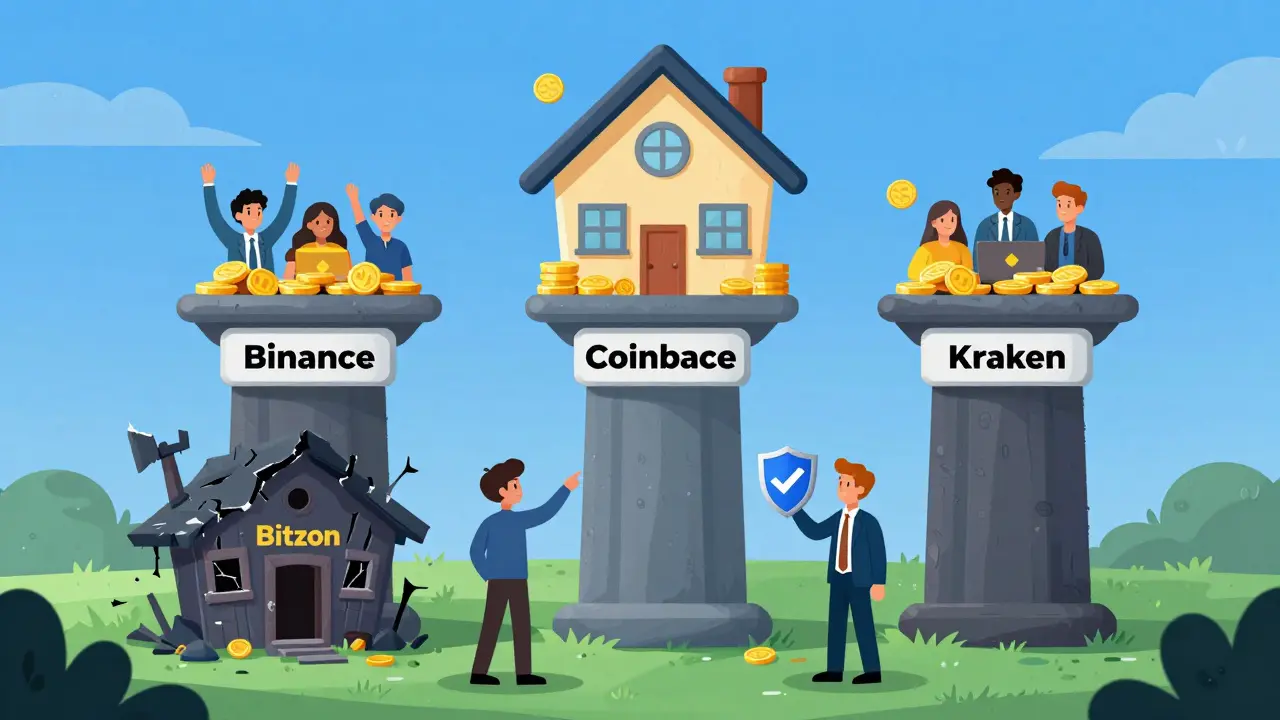
In the world of crypto, silence is loud. Legitimate exchanges like Binance is a global cryptocurrency exchange founded in 2017, Coinbase is a US-based digital asset exchange and wallet provider, or Kraken is a secure cryptocurrency exchange founded in 2011 have thousands of reviews, clear regulatory licenses, and active communities. Bitzon has none of these. This review isn't just about listing features; it is about protecting your capital from a potential fraud.
The Red Flags: Why Bitzon Doesn't Exist on Major Lists
The first step in checking any financial service is looking at independent data aggregators. Sites like CoinGecko is a cryptocurrency price tracking website and exchange aggregator and CoinMarketCap is a cryptocurrency market information website list hundreds of active exchanges. They track trading volume, trust scores, and security audits. If you search for "Bitzon" on these platforms today, you will find nothing. Not a single entry.
This absence is a massive red flag. Even small, niche exchanges usually appear on these lists because they want visibility. When a platform is completely missing from CoinGecko and CoinMarketCap, it means one of two things: either the exchange is brand new and has zero users, or it is operating in the shadows to avoid scrutiny. Given the history of crypto scams, we must assume the latter until proven otherwise.
Furthermore, major consumer finance guides like those from NerdWallet is a personal finance company providing comparisons and advice and Finder is a financial comparison website do not mention Bitzon in their 2026 best-exchange lists. These publications vet platforms rigorously. Their silence confirms that Bitzon does not meet basic industry standards for legitimacy.
Regulatory Void: No Licenses, No Protection
Legitimate crypto exchanges operate under strict regulations. In the United States, they register with FinCEN is the Financial Crimes Enforcement Network, a bureau of the U.S. Department of the Treasury as Money Service Businesses. In the UK, they are registered with the FCA is the Financial Conduct Authority, the financial services regulator. In Singapore, they hold licenses from the MAS is the Monetary Authority of Singapore, the central bank and financial regulatory authority.
There is no record of Bitzon holding any of these licenses. A quick check of public regulatory registers yields zero results for a company named Bitzon operating as a crypto exchange. Without regulation, you have no legal recourse if they freeze your account, refuse withdrawals, or disappear with your funds. Remember the collapse of FTX is a former cryptocurrency derivatives exchange that collapsed in 2022? While FTX was large, many smaller, unregulated platforms vanish overnight, leaving customers with nothing. Operating without a license is the hallmark of a scam.
Historical Context: The Old Bitzon Project
You might find old references to "Bitzon" online. Around 2018-2019, during the initial coin offering (ICO) boom, a project called Bitzon was listed on sites like ICOBench. However, that project was described as a decentralized e-commerce marketplace, not a centralized exchange for trading Bitcoin or Ethereum. There is no evidence linking that defunct marketplace project to a modern-day trading platform.
Scammers often reuse names from dead projects to create a false sense of history and legitimacy. If someone is marketing "Bitzon Exchange" today, they are likely hijacking the name of an old, irrelevant project to trick investors. Do not confuse a 2018 failed startup idea with a 2026 financial institution.
Technical Due Diligence: What’s Missing?
Real exchanges provide transparency through technology. They publish Proof of Reserves (PoR) to show they actually hold user assets. They maintain GitHub repositories for their code so developers can audit their security. They have clear API documentation for traders who use bots.
Bitzon has none of this. There is no GitHub repo, no published security audit from firms like CertiK or Hacken, and no Proof of Reserves report. How can you trust a platform that won’t show you where your money is kept? Legitimate exchanges keep most funds in cold storage (offline wallets) to prevent hacks. Bitzon offers no details on its custody model. This lack of technical transparency suggests they may be running a fake book-a system where trades don’t actually happen on a real order book, but are simulated by the platform to manipulate prices and prevent withdrawals.
Comparison: Bitzon vs. Legitimate Exchanges
| Feature | Bitzon | Binance / Coinbase / Kraken |
|---|---|---|
| Listing on CoinGecko/CoinMarketCap | No | Yes |
| Regulatory License (FinCEN/FCA/MAS) | None Found | Yes (Jurisdiction Dependent) |
| User Reviews (Trustpilot/G2) | Zero | Thousands |
| Proof of Reserves | Not Published | Regularly Published |
| Customer Support Responsiveness | Unknown / Likely Non-existent | 24/7 Live Chat / Email |
| Security Audits | None Public | Annual Third-Party Audits |
The table above makes the risk profile clear. Every metric that defines a trustworthy exchange is missing for Bitzon. In contrast, established players compete on fee structures, speed, and security, all while maintaining full transparency.
How to Verify Any Crypto Platform Yourself
If you encounter another unknown exchange in the future, don’t rely on ads. Use this checklist to protect yourself:
- Check Domain Age: Use WHOIS lookup tools. If the domain was registered only a few weeks ago, it is highly suspicious. Legitimate businesses have older domains.
- Search for Negative Reviews: Type "[Exchange Name] scam" or "[Exchange Name] withdrawal issues" into Google and Reddit. Real problems surface quickly in crypto communities.
- Verify Social Media: Check Twitter/X and Telegram. Are the followers real people or bots? Is the team engaging with questions? Silence is a bad sign.
- Look for Regulatory Warnings: Check the SEC, FCA, or MAS websites for warnings against the specific entity.
- Test with Small Amounts: If you must try it, deposit the minimum possible amount. Try to withdraw immediately. If they make excuses or charge hidden fees, leave.
Safe Alternatives for Trading in 2026
Instead of risking your money on Bitzon, consider using platforms that have stood the test of time. Here are three reliable options depending on your needs:
- Binance: Best for advanced traders who want low fees and a wide variety of cryptocurrencies. It has the highest liquidity globally.
- Coinbase: Ideal for beginners in the US. It is publicly traded, fully regulated, and offers easy fiat on-ramps via bank transfer.
- Kraken: Known for strong security and excellent customer support. It is a great middle ground between ease of use and professional features.
These platforms pay taxes, follow anti-money laundering laws, and have millions of verified users. Your safety is worth more than the promise of "hidden gems" promoted by shady ads.
Is Bitzon a scam?
While we cannot legally declare a company a "scam" without a court ruling, Bitzon exhibits all the characteristics of a fraudulent operation. It lacks regulatory licenses, has no presence on major tracking sites like CoinGecko, has no user reviews, and provides no proof of reserves. The risk of losing your entire deposit is extremely high.
Why is Bitzon not on CoinMarketCap?
CoinMarketCap lists exchanges that meet strict criteria for legitimacy, including verifiable trading volume, active user base, and compliance standards. Bitzon fails to meet these basic requirements, which is why it is absent from their directory.
Can I withdraw money from Bitzon?
There is no public evidence that anyone has successfully withdrawn funds from Bitzon. Unregulated platforms often allow deposits but block withdrawals once they have collected enough money. Do not deposit funds expecting to get them back easily.
What happened to the original Bitzon project?
The original Bitzon was a blockchain-based e-commerce marketplace project launched around 2018. It appears to have been abandoned or failed to gain traction. It is not related to any current cryptocurrency exchange operations.
How do I report Bitzon if I suspect fraud?
If you have lost money to Bitzon, report it to your local financial regulatory authority (such as the SEC in the US or FCA in the UK) and file a complaint with the Internet Crime Complaint Center (IC3). You should also warn others by posting your experience on Reddit and Trustpilot.
mark valmart
May 31, 2026 AT 18:10man i really feel for anyone who got hit by this stuff because it is so hard to spot these scams when they look slick and professional at first glance but honestly the lack of any real presence on coinmarketcap or coingecko should have been a huge warning sign right from the start since those aggregators are basically the gatekeepers for legitimacy in the crypto space and if you are not listed there you are basically operating in the shadows where predators thrive and prey on people who just want to make some easy money without doing their due diligence which is exactly what bitzon seems to be doing by hiding behind vague promises and zero transparency about their reserves or regulatory status so please everyone just stick to the big regulated exchanges like binance or coinbase that actually have skin in the game and millions of users relying on them every single day
Hadleigh Edwards
June 2, 2026 AT 00:19I think it is incredibly important that we continue to share these kinds of detailed warnings because the landscape of digital finance is constantly evolving and new threats emerge every single day, especially with the rise of AI-generated marketing materials that can make even the most fraudulent platforms look convincing to the untrained eye. It is heartening to see such a thorough breakdown of the red flags, including the absence of proof of reserves and the lack of regulatory licenses, which are critical components of trust in any financial institution. By educating ourselves and others on these specific indicators, we create a stronger community that is less susceptible to manipulation and more resilient against fraud. I believe that collective awareness is our best defense, and posts like this serve as a vital resource for protecting our capital and ensuring that we only engage with platforms that adhere to high standards of transparency and accountability. Let us keep supporting each other by sharing knowledge and experiences, as this collaborative approach helps to shine a light on shady operations before they can cause significant harm to unsuspecting investors.
Crystal Davis
June 2, 2026 AT 08:45The article is technically accurate but lacks depth in its analysis of the psychological mechanisms that drive victims to ignore obvious red flags. The mere absence from CoinGecko is a trivial point; sophisticated scammers know this and often build fake review sites to mimic legitimacy. The real issue is the cognitive dissonance experienced by users who are promised high returns despite the lack of regulatory oversight. This is not just a technical failure of verification but a systemic failure of investor education. Most retail traders do not understand Proof of Reserves or cold storage protocols, making them easy targets for platforms that exploit this knowledge gap. The comparison table is superficial and fails to address the liquidity depth issues that plague smaller exchanges, which is often the precursor to a rug pull. Furthermore, the historical context of the original Bitzon project is irrelevant to the current operation, yet the article gives it undue weight. A proper analysis would delve into the blockchain forensics of the wallet addresses associated with the platform, which are likely mixers or tumblers designed to obscure the flow of funds. Until then, this review is merely a surface-level cautionary tale that does little to equip readers with the tools to identify similar schemes in the future.
Barclay Chantel
June 4, 2026 AT 02:34It is truly pathetic how many people still fall for these obvious traps despite the abundance of information available online. The fact that one needs a blog post to explain why an exchange without regulatory licenses is suspicious speaks volumes about the general decline in critical thinking skills among the populace. These scammers rely on the sheer laziness and greed of their victims, preying on those too arrogant or too ignorant to perform basic due diligence. It is not rocket science to check if a company is registered with the FCA or FinCEN, yet here we are, discussing a platform that has no credible public presence. The elitist nature of legitimate finance exists for a reason: to protect assets from precisely this kind of amateurish speculation. Those who choose to operate outside the bounds of regulation deserve whatever consequences they face, as they are essentially gambling rather than investing. The rest of us should simply ignore these distractions and focus on established, audited institutions that respect the rule of law and the sanctity of private property.
Joshua Alcover
June 4, 2026 AT 22:28The epistemological crisis within the cryptocurrency sector is exemplified by entities such as Bitzon, which operate in a state of ontological ambiguity regarding their legal standing and operational integrity. From a geopolitical perspective, the lack of adherence to national regulatory frameworks poses a significant threat to the sovereignty of financial systems, particularly in jurisdictions like the United States where the Treasury Department’s Financial Crimes Enforcement Network (FinCEN) mandates strict compliance for Money Service Businesses. The absence of verifiable Proof of Reserves suggests a potential violation of fiduciary duties, raising questions about the actual existence of user assets versus simulated ledger entries. This phenomenon underscores the necessity for robust national security measures to counteract the illicit flows of capital facilitated by unregulated platforms. It is imperative that citizens recognize the inherent risks associated with decentralized technologies that evade traditional oversight mechanisms, as these entities often serve as vectors for money laundering and terrorist financing. The philosophical implications of trusting a digital entity with no physical anchor or legal recourse are profound, challenging our understanding of value and trust in a post-modern economic landscape.
Diana Morris
June 6, 2026 AT 08:15stop wasting time on these sketchy platforms and start building real wealth through disciplined trading strategies on reputable exchanges because your financial freedom depends on making smart choices today not tomorrow and if you think bitzon is the answer you are already losing the game before you even begin so wake up and take control of your destiny by sticking to the proven giants like binance and coinbase that have survived multiple market cycles and regulatory crackdowns while keeping your funds safe and accessible whenever you need them
Dianne Wright
June 7, 2026 AT 06:28i cant believe people still dont get it after all these years of scams and hacks and lost billions because they trusted strangers on the internet instead of doing basic research which is so sad and depressing to watch unfold over and over again because the pattern is always the same shiny promises followed by silence and then total loss of funds and it makes me so angry that there are still so many naive individuals out there waiting to be exploited by these predatory operators who clearly have no intention of providing a legitimate service
trisya hazriyana
June 8, 2026 AT 22:28the irony of seeking alpha in a black box is almost poetic in its futility because true innovation requires transparency not obscurity and bitzon represents the antithesis of the decentralized ethos by hoarding data and avoiding scrutiny which is a classic move for bad actors trying to extract value from the community without contributing anything substantial back to the ecosystem so lets just acknowledge that the only way to win is to play on fields that are properly lit and regulated otherwise you are just feeding the machine
Debbie Lewis
June 10, 2026 AT 20:13I noticed that many people overlook the simple step of checking domain age which can reveal a lot about a platform's legitimacy. It is always good to take a moment to verify these details before committing any funds.