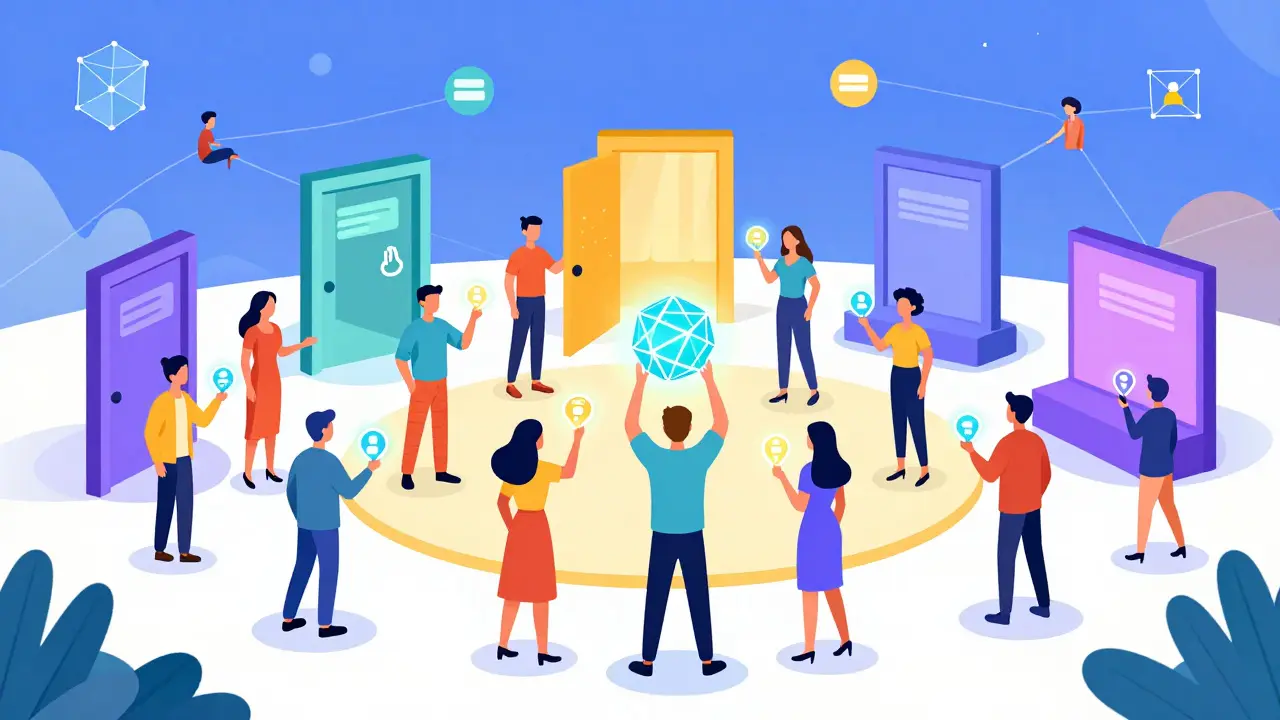
Imagine building a community where every member is also an owner. No ads interrupting the chat, no platform changing the rules overnight to squeeze more data from users, and no passive lurking without contributing. Instead, you have a group of people who hold a digital asset-a social token-that proves their membership, grants them voting power, and gives them a slice of the value the community creates together.
This isn't science fiction. It’s the reality of Web3 community economics. While traditional platforms like Facebook or Reddit treat users as products to be sold to advertisers, social tokens flip the script. They turn members into stakeholders. If you’ve ever wondered how online groups can survive beyond the hype cycle, or how creators can build sustainable income without relying on volatile ad revenue, social tokens offer a compelling answer.
What Exactly Are Social Tokens?
To understand the benefits, we first need to strip away the jargon. A social token is a digital asset issued by a creator, project, or community that represents access, status, or ownership within that specific group. Think of it as a digital membership card, but one that lives on the blockchain (like Ethereum, Polygon, or Solana) rather than in a company’s private database.
Linda Xie, a pioneer in this space, categorized these tokens into three main types:
- Personal Tokens: Issued by individuals (e.g., an artist or influencer). Holding these might give you direct access to their time or exclusive content.
- Creator Tokens: Similar to personal tokens but often tied to a brand or creative output.
- Community Tokens: Issued by a collective group. These are the most relevant for our discussion, as they focus on shared governance and treasury management.
The key difference between a social token and a standard cryptocurrency like Bitcoin is intent. Bitcoin is designed to be a store of value or currency. A social token is designed to coordinate human behavior within a specific ecosystem. Its value comes from social capital-the trust, engagement, and utility it provides to holders-rather than just market speculation.
Shared Ownership Aligns Incentives
The biggest problem with traditional online communities is misaligned incentives. On Twitter or Instagram, the platform wins when you spend hours scrolling, even if that makes you feel worse. The community doesn’t benefit; the algorithm does.
Social tokens fix this by creating shared ownership. When community members hold tokens, they literally own a piece of the network. This changes psychology. You stop asking, "How do I get out of this?" and start asking, "How do I make this better so my asset gains value?"
Take the example of Friends With Benefits (FWB). This community started as a simple Discord server. By issuing the $FWB token, they turned members into co-owners. The community built a treasury worth millions of dollars. Decisions about how to spend that money-from hosting events to funding projects-were made by token holders, not a central CEO. This alignment led to explosive growth because everyone was pulling in the same direction.
When members feel ownership, churn drops. People don’t quit companies they own shares in. They work harder to improve them. This long-term value alignment is the single most powerful benefit of social tokens for community resilience.
Token-Gated Access and Exclusive Experiences
Before blockchain, "exclusive access" meant paying a monthly subscription fee to a platform like Patreon. That model has flaws. If the platform goes down, you lose access. If the creator leaves, your history disappears. And crucially, you can’t resell your membership.
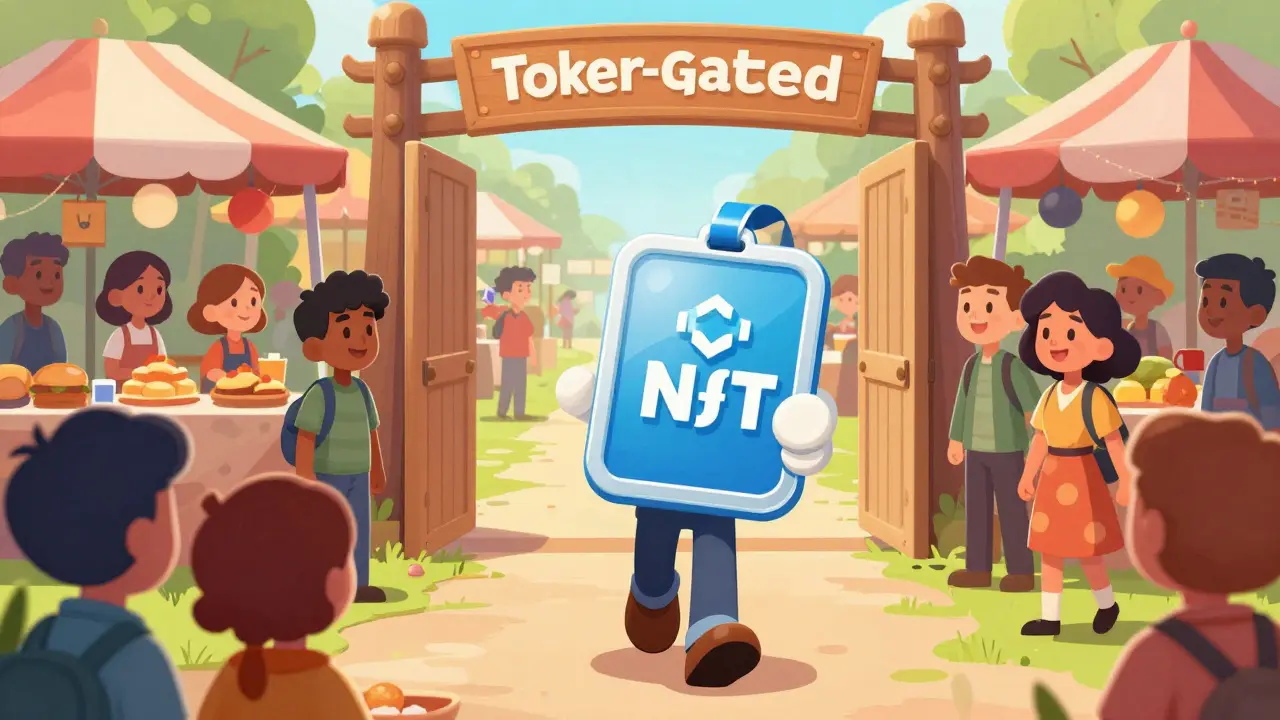
Social tokens enable token-gated access. Smart contracts automatically verify if you hold the required token before letting you into a Discord channel, a Zoom call, or a private website. This creates seamless, verifiable exclusivity.
| Feature | Traditional Subscription (Patreon/Substack) | Token-Gated Access (Social Tokens) |
|---|---|---|
| Ownership | You rent access; the platform owns the relationship. | You own the key; you control the access credential. |
| Portability | Locked to one platform. Hard to migrate. | Portable across any service that supports wallet verification. |
| Resale Value | Zero. Once paid, the money is gone. | Potential. Tokens can be traded on secondary markets. |
| Verification | Email/password based. Prone to sharing/sharing accounts. | Cryptographic proof. Impossible to fake without holding the token. |
Consider the Whale (WHALE) art community. They used tiered token holdings to grant different levels of access. Holding 10 tokens got you into virtual exhibitions. Holding 100+ earned you physical art pieces. This wasn’t just a paywall; it was a dynamic system where deeper investment yielded higher rewards. Result? Community retention jumped by 65% because members had a tangible stake in staying engaged.
Decentralized Governance: Real Power to Members
Most online communities claim to be democratic, but in practice, decisions are made by admins behind closed doors. Social tokens enable true decentralized governance.
With a social token, every holder gets a vote. But it’s not just "one person, one vote." Many communities use sophisticated models like quadratic voting or conviction voting, which prevent wealthy whales from dominating while still rewarding active participants.
For instance, the Index Coop community uses its INDEX token for governance. Holders with significant stakes can propose changes to the community’s strategy. In 2021, they processed 27 successful proposals with a 78% voter turnout. Compare that to typical corporate shareholder meetings or even DAOs with low engagement, and the difference is stark. Why? Because voters aren’t just clicking a button; they’re protecting the value of their assets.
This shifts leadership from a top-down hierarchy to a collaborative network. As Linda Xie noted, this structure allows communities to hire contributors directly, bypassing traditional HR structures. BanklessDAO, for example, employed over 200 contributors across various working groups, compensating them partly in BANK tokens. This created a flexible, global workforce aligned with community goals.
Sustainable Monetization Without Ads
Creators and community builders face a brutal choice: monetize via ads (which annoys users) or subscriptions (which require constant churn management). Social tokens offer a third path: appreciation-based monetization.
Here’s how it works: 1. A creator issues a limited supply of tokens. 2. Early supporters buy in at a low price. 3. As the community grows and delivers value, demand for tokens rises. 4. The token price appreciates. 5. Both the creator and early members benefit from the increased value.
This aligns the creator’s success with the community’s happiness. If the creator burns out or produces bad content, the token value drops. So, the incentive is to keep delivering high-quality experiences.
Additionally, smart contracts can automate royalties. If Janice sells her community token to Bob, she can program the contract to receive 5% of every future resale. This creates a perpetual revenue stream from secondary market activity, something impossible with traditional ticket sales or merchandise.
A fitness community documented in Sidecar AI’s research implemented this by paying trainers 70% in community tokens and 30% in cash. This reduced their cash expenses by 45% while increasing trainer retention by 60%. The trainers became evangelists for the brand because their income was tied to the community’s growth.
Network Effects and Discoverability
One of the hardest parts of starting a community is the "cold start" problem-getting the first 100 people. Social tokens solve this through token-based social graphs.
Because tokens live on public blockchains, anyone can see what tokens you hold. Platforms like RabbitHole issue NFT badges for completing educational tasks. If you hold a badge for "Smart Contract Basics," other communities focused on development know you’re qualified. You don’t need to fill out a lengthy application form. Your wallet speaks for you.
This creates organic cross-pollination. If you’re part of a crypto-art community, your token holdings signal your interest to adjacent communities like NFT gaming or digital fashion. Tools like Collab.Land process millions of these verifications monthly, allowing communities to easily find and recruit aligned members without expensive advertising.
Unlike algorithmic feeds that prioritize outrage or clickbait, token graphs connect people based on verified interests and commitments. This leads to higher-quality interactions and stronger network effects.
Risks and Considerations
While the benefits are clear, social tokens aren’t a magic bullet. There are real risks to consider:
- Volatility: Token prices can crash. If a community relies solely on token value for compensation, members could lose income quickly. Diversification is key.
- Regulatory Uncertainty: Governments are still figuring out how to classify social tokens. In some jurisdictions, they might be seen as securities, leading to legal complications.
- Technical Barrier: Managing wallets, gas fees, and private keys can be intimidating for non-crypto natives. User experience needs to improve significantly for mass adoption.
- Governance Attacks: If a small group buys up enough tokens, they could hijack the community’s decision-making. Robust voting mechanisms are essential.
Successful communities mitigate these risks by focusing on utility over speculation. The token should provide immediate value (access, votes, discounts) regardless of its market price.
Are social tokens legal in all countries?
Not necessarily. Regulations vary widely. In the US, the SEC may view certain social tokens as securities if investors expect profits primarily from the efforts of others. Always consult local laws. Some regions, like Switzerland and Singapore, have clearer frameworks for digital assets.
Do I need to be a crypto expert to use social tokens?
Ideally, no. While current tools require managing wallets and understanding gas fees, new platforms are abstracting this complexity. However, basic knowledge of blockchain security (like never sharing your seed phrase) is essential for safety.
How do social tokens differ from loyalty points?
Loyalty points are controlled by the company, cannot be transferred, and usually expire. Social tokens are owned by you, can be traded on open markets, and often grant governance rights. They represent equity-like ownership rather than just discount coupons.
Can I lose money investing in social tokens?
Yes. Social tokens are highly speculative. Their value depends entirely on the community’s continued relevance and activity. If the community dies, the token likely becomes worthless. Never invest more than you can afford to lose.
Which blockchain is best for social tokens?
Ethereum is the most established but has high fees. Polygon and Solana offer lower costs and faster transactions, making them popular for high-frequency social interactions. The choice depends on your budget and technical preferences.
Jay Sharma
June 27, 2026 AT 12:21They want you to buy their digital IOUs so they can track every single click and transaction on the blockchain forever. It is not freedom, it is a permanent digital leash wrapped in crypto jargon. The SEC knows exactly what this is, but they are waiting for the market to crash before they come in and seize everything. You think you own the token? No, you are just funding their next round of venture capital while they sell your metadata to the highest bidder.
Scott Miller
June 28, 2026 AT 21:31Wake up people! This is the future of community building and if you are sleeping on it you are missing out on massive opportunities. I have seen communities like FWB explode because everyone had skin in the game. Stop being scared of new technology and start leveraging it for your own gain. If you don't adapt now, you will be left behind by those who do.
Melissa L
June 30, 2026 AT 01:20i mean its kinda cool that u own a piece of the group but also sounds like a lot of work to manage wallets and all that stuff. i prob wouldnt bother unless there was free money involved lol
ELNORA JEFFERSON
June 30, 2026 AT 01:35Another day another scam wrapped in buzzwords. Governance? Please. The whales will just vote for whatever benefits them and the rest of you will get screwed. Typical tech bro fantasy where they pretend decentralization exists while they hold 50% of the supply in cold storage. Boring and predictable.
Trent Erman1
June 30, 2026 AT 03:59I actually think this is a fascinating shift in how we view digital ownership. When you align incentives through shared equity, you create a self-sustaining ecosystem that doesn't rely on predatory ad models. It’s about trust and transparency. Imagine a world where your contribution directly correlates to your reward without a middleman taking a cut. That is powerful.
Sajjad Ghorbani Moghaddam
July 1, 2026 AT 18:32Hey everyone, just wanted to add that the technical barrier mentioned in the post is real but getting better. Tools like wallet abstraction are making it easier for non-crypto natives to participate. We need more inclusive onboarding processes to make this truly accessible to everyone, not just the tech-savvy crowd.
Rebecca Shoniker
July 3, 2026 AT 00:50The regulatory implications are profound; one must consider the Howey Test applicability here. If the tokens are marketed as investments with an expectation of profit derived from the efforts of others, they are securities. Period. Ignoring this nuance leads to catastrophic legal exposure for issuers and holders alike. Due diligence is not optional; it is imperative.
Mélanie Boulay
July 4, 2026 AT 20:58While the concept of token-gated access is intriguing, I find myself concerned about the exclusionary nature of such systems, which often inadvertently alienate individuals who may not have the financial means or technical literacy to acquire and manage these digital assets, thereby creating a two-tiered society within online communities that contradicts the very ethos of open and inclusive digital spaces that many of us strive to uphold.
John Curry
July 5, 2026 AT 07:02It is a philosophical question really: does owning a piece of a community change the human dynamic, or does it just monetize relationships? I feel like we are trying to put a price tag on social capital, which might degrade the genuine connection that makes communities special in the first place.
Fiona Ellis
July 5, 2026 AT 09:35Hi John! 😊 I totally get your point about monetizing relationships, but haven't you noticed how traditional platforms already monetize our attention? At least with tokens, you have some control over your data and value. Plus, it's fun to see who holds what in their wallet! 🚀💎
Rob Morton
July 5, 2026 AT 23:22The governance aspect is what interests me most. Quadratic voting seems like a fair way to prevent whale dominance, but has anyone actually seen this work at scale without voter apathy setting in? I wonder if the complexity of the voting mechanism itself becomes a barrier to meaningful participation.
Routh Middaugh
July 7, 2026 AT 06:22I am very excited about the potential for cross-community collaboration using token graphs!! It could solve the cold start problem beautifully... however, I worry about privacy implications when your entire interest profile is public on the blockchain. Is there a middle ground?
Ryan Peters
July 8, 2026 AT 21:05This whole Web3 nonsense is just a Ponzi scheme designed to enrich offshore elites while regular folks lose their savings. The US government should ban this speculative garbage immediately. Real value comes from hard work and tangible assets, not digital IOUs issued by anonymous scammers hiding behind pseudonyms.