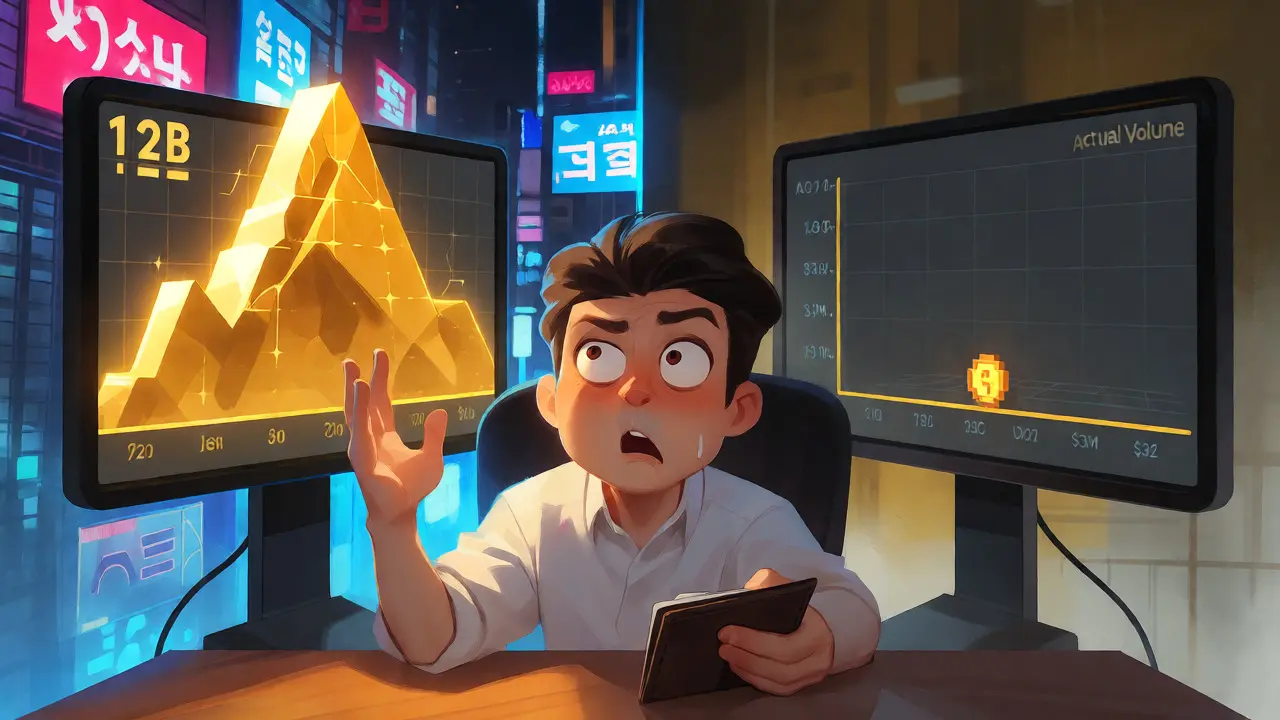
Imagine logging into a trading platform that claims to handle $12 billion in daily volume, only to find the actual charts showing barely $3 million. That’s the reality for anyone looking at BCEX, a cryptocurrency exchange operating since 2017 that markets itself as a major player in the Asian and global digital asset market. If you’re hunting for a reliable spot to trade Bitcoin or altcoins, especially with an interest in the South Korean market dynamics, this gap between marketing hype and on-chain data is the first red flag you need to understand.
This isn’t just about picking a website; it’s about trusting your money with an entity whose location, regulatory status, and operational scale are surprisingly murky. Is BCEX a hidden gem with low fees, or is it a ghost town with inflated stats? Let’s break down what’s actually happening behind the scenes, so you don’t end up holding the bag when liquidity dries up.
The Identity Crisis: Where Is BCEX Actually Based?
One of the biggest hurdles with BCEX is figuring out who is actually running the show. The exchange presents conflicting information regarding its headquarters. Some sources point to Malta, a popular hub for crypto firms due to its favorable regulations. Others claim it’s based in Hong Kong. Why does this matter? Because where a company is headquartered determines which laws protect your funds if things go wrong.
If BCEX is truly in Malta, it falls under EU-adjacent financial oversight. If it’s in Hong Kong, the rules are different. Without clear regulatory licensing displayed prominently-like those from the Financial Services Commission (FSC) in Korea or the SEC in the US-you’re essentially trading on trust alone. And given the discrepancies we’ll discuss later, trust should be earned, not assumed.
Liquidity and Volume: The $12 Billion Myth
Here is where the numbers get interesting, and slightly suspicious. BCEX’s own marketing materials have historically claimed massive daily trading volumes, sometimes citing figures exceeding $12 billion. For context, that would put it in the same league as giants like Binance or Coinbase during peak times.
However, independent tracking platforms like CoinGecko tell a very different story. Recent data shows BCEX generating approximately $2.85 million to $3.0 million in 24-hour trading volume. That is a fraction of what is advertised. When you see a 26% drop in volume over a single day on such a small base, it signals extreme volatility and thin order books.
| Metric | Claimed by BCEX | Reported by Trackers | Implication |
|---|---|---|---|
| Daily Trading Volume | $12+ Billion | ~$3 Million | Low liquidity; high slippage risk |
| Cryptocurrencies Listed | 500+ | 7 Active Pairs | Limited choice despite broad claims |
| Registered Users | 10 Million+ | Unverified | Potentially inflated user base |
| Trust Score | 10/10 (Self-reported) | Variable/Low Activity | Score may not reflect current depth |
Why the huge gap? It could be wash trading, where users buy and sell assets to themselves to inflate volume. Or it could be that the $12 billion figure includes off-exchange OTC deals that aren’t visible on the public order book. Either way, for a retail trader, the $3 million figure is the one that matters. Low volume means large orders can move the price significantly against you.
Trading Options and Asset Selection
BCEX positions itself as a versatile platform offering spot trading, margin trading, and futures. On paper, this sounds great for traders who want to hedge or leverage their positions. In practice, the number of active markets tells a different story.
While the site advertises access to more than 500 cryptocurrencies, current operational data suggests only about 7 coins and 7 trading pairs are actively traded with any meaningful volume. This is a stark contrast to competitors in the South Korean market, which typically offer between 200 and 400 cryptocurrencies. If you’re looking to trade niche altcoins, BCEX might leave you disappointed. You’ll likely find yourself limited to major pairs like BTC/USDT or ETH/USDT, and even then, the spread might be wider than you’d like.
The interface itself is standard. You get your order books, price charts, and buy/sell boxes. It’s functional but doesn’t offer anything groundbreaking compared to established exchanges. If you’re used to the slick UX of Upbit or Bithumb, BCEX will feel dated and sparse.

Fees and Cost Efficiency
Let’s talk about money. Most South Korean exchanges charge trading fees ranging from 0.2% to 0.8%. BCEX markets itself on competitive liquidity and low trading fees, aiming to attract both novices and pros. However, "low" is relative when the liquidity is poor.
You might pay a lower percentage fee per trade, but if the spread (the difference between the buy and sell price) is wide due to low volume, you lose that savings immediately upon entering the trade. Always calculate the total cost of entry, including slippage. For small trades, BCEX might look cheap. For larger moves, the lack of depth in the order book could cost you more than the fee savings.
Regulatory Landscape and User Restrictions
South Korea has a robust, albeit strict, cryptocurrency framework. Trading is legal, and the government is currently exploring legislation for stablecoins pegged to the Korean won. Mining is also legal, though less profitable there due to high electricity costs. But here is the catch: each South Korean exchange typically pairs with only one specific bank. This creates a closed loop for fiat currency conversion.
BCEX prohibits United States investors from trading on its platform. This is common for many offshore exchanges to avoid SEC scrutiny. If you are a US resident, you cannot use BCEX. For others, the regulatory clarity is lacking. Unlike Upbit, which holds local licenses, BCEX operates in a gray area depending on its actual jurisdiction (Malta vs. Hong Kong). This ambiguity affects how easily you can withdraw fiat currencies and whether you have legal recourse if the exchange freezes your account.
User Experience and Accessibility
From a user experience standpoint, BCEX struggles to compete. The discrepancy between claimed capabilities and actual metrics creates friction. New users might sign up expecting a bustling marketplace with hundreds of tokens, only to find a quiet corner of the internet with few participants.
Support responsiveness is another critical factor often cited in reviews of smaller exchanges. With limited third-party documentation and expert analysis available, relying solely on BCEX’s own support channels can be risky. If you encounter a withdrawal issue, do you have enough community presence to help you troubleshoot? Probably not. Larger exchanges have thousands of forum posts and YouTube tutorials addressing common bugs. BCEX has very little organic discussion online, which makes troubleshooting harder.
Verdict: Should You Trade on BCEX?
So, is BCEX worth your time? It depends on what you value. If you are looking for a highly regulated, deep-liquidity exchange with hundreds of altcoins, look elsewhere. The $3 million daily volume is too low for serious institutional or high-frequency trading. The risk of slippage is real.
However, if you are already holding assets on BCEX from previous years, or if you are testing a new strategy with small amounts, it might serve as a secondary venue. Just be aware that the "Korea" branding might be more about marketing appeal than actual regulatory integration with the Korean banking system. The name implies a connection to the vibrant Korean crypto scene, but the operational footprint seems much broader and less defined.
Before depositing significant capital, test the withdrawal process with a small amount. Verify the live order book depth before placing large market orders. And always keep an eye on the official regulatory announcements from Malta or Hong Kong, whichever turns out to be the true home base.
Is BCEX safe to use?
Safety is hard to guarantee due to unclear regulatory status. While it appears on legitimate trackers like CoinGecko, the discrepancy between claimed and actual volume raises concerns about transparency. Use caution and limit exposure.
Can US citizens use BCEX?
No, BCEX explicitly prohibits United States investors from trading on its platform. US residents must seek alternative exchanges compliant with SEC regulations.
How many cryptocurrencies are listed on BCEX?
Although BCEX claims to offer over 500 cryptocurrencies, recent data indicates only about 7 coins and 7 trading pairs are actively available for trading.
What are the trading fees on BCEX?
BCEX markets competitive low fees, typically aligning with industry standards of 0.2% to 0.8%, but effective costs may be higher due to wide spreads caused by low liquidity.
Where is BCEX headquartered?
Information is conflicting. Sources indicate either Malta or Hong Kong. This lack of clarity impacts which regulatory body oversees the exchange.