Modular Blockchain: How It Works and Why It’s Changing Crypto
When you think of a blockchain, you probably imagine one big chain handling everything—transactions, security, and data storage—all in one go. But that’s changing. A modular blockchain, a blockchain architecture that splits core functions into separate, specialized layers. Also known as layered blockchain, it lets each part of the system do one thing really well, instead of forcing one chain to do everything poorly. This isn’t theory—it’s already powering major networks like Ethereum, Celestia, and Arbitrum.
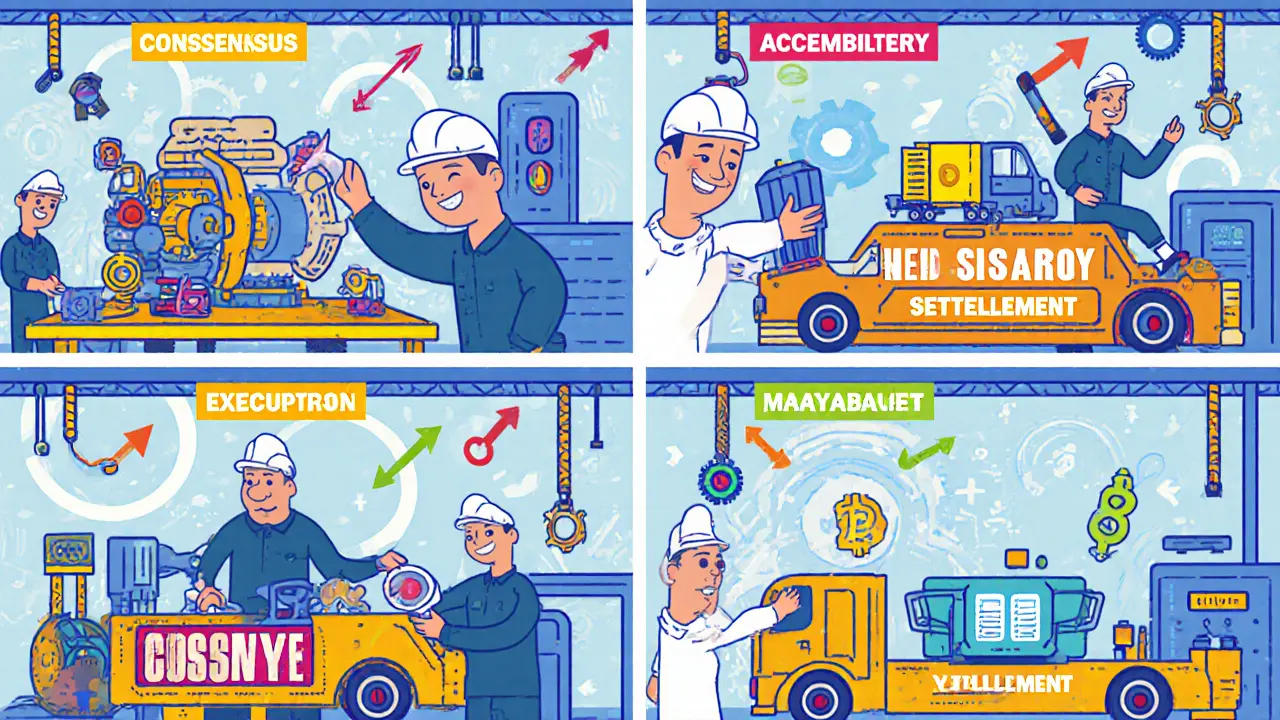
Traditional blockchains, or monolithic blockchains, blockchains where consensus, execution, and data availability all happen on the same layer, struggle with speed and cost. Every transaction slows down the whole network because everyone has to verify everything. Modular blockchains fix that by separating tasks. Think of it like a factory: one team handles production (execution), another handles quality control (consensus), and a third stores the raw materials (data availability). The rollup, a type of execution layer that bundles transactions off-chain and submits them to the main chain for security is the most common example—you get fast, cheap transactions on the rollup, while the main chain ensures they’re valid. Then there’s data availability, the layer that guarantees transaction data is published and accessible so anyone can verify it. Without it, rollups would be unsafe. Projects like Celestia built their entire network just to handle this one job.
Why does this matter to you? If you’ve ever waited minutes for a transaction to confirm or paid $50 in gas fees, modular blockchains are the reason things are getting better. They enable faster DeFi apps, cheaper NFT mints, and scalable gaming platforms without sacrificing security. Even if you’re not building on one, you’re likely using apps that run on them. The shift isn’t just technical—it’s economic. More efficiency means lower costs for users and more room for innovation.
What you’ll find in the posts below are real-world examples of how modular blockchain design is being used—and sometimes misused. From platforms that claim to be modular but still act like old-school chains, to new protocols that nail the separation of duties, you’ll see what works, what doesn’t, and why some projects are gaining traction while others vanish. This isn’t about hype. It’s about understanding the real structure behind the apps you use every day.
27
Sep
Modular blockchains split functions like consensus, execution, and data storage into independent layers. This lets each scale separately, boosting speed, lowering costs, and preserving security - without rebuilding the entire network.
Read More