DPRK Hacking: How North Korea Targets Crypto and What It Means for You
When you hear DPRK hacking, state-sponsored cyber operations launched by North Korea to steal funds, disrupt systems, and evade sanctions. Also known as North Korean cyberattacks, it's not sci-fi—it's a daily reality for crypto exchanges, wallets, and traders worldwide. This isn’t about lone hackers in basements. It’s organized, well-funded, and backed by a government that uses crypto to bypass international sanctions and fund its military programs.
These attacks aren’t random. They target weak points: poorly secured exchanges, unverified airdrop platforms, and users who reuse wallets across risky sites. The Lazarus Group, North Korea’s most feared cyber unit, has stolen over $2 billion in crypto since 2017, according to Chainalysis. They don’t just steal Bitcoin—they go after tokens on new chains, exploit DeFi protocols, and even fake airdrops to trick users into signing malicious transactions. You might think, "I don’t trade on big exchanges, so I’m safe." But if you’ve ever connected a wallet to a new dApp, claimed a free token, or used an unregulated platform, you’re still in the crosshairs.
Blockchain security, the practice of protecting digital ledgers and crypto assets from theft and manipulation has become a frontline defense. Tools like hardware wallets, multi-sig setups, and transaction monitoring aren’t optional anymore—they’re basic survival skills. Even major exchanges like Binance and KuCoin have been hit. The pattern? Always the same: social engineering, phishing, and exploiting trust in fake announcements. And while governments try to track these attacks, the decentralized nature of crypto makes recovery nearly impossible.
North Korea doesn’t just want your coins. They want to break the system. By targeting crypto, they undermine financial oversight, fund weapons programs, and test global response times. That’s why every post in this collection—whether it’s about cyber warfare, state-backed digital attacks aimed at critical infrastructure and economic systems, exchange scams, or how sanctions affect Iranian traders—connects back to the same truth: if you’re in crypto, you’re part of a battlefield. You won’t find magic fixes here. But you will find real cases, real risks, and real steps to stay safe. What follows are the tools, warnings, and lessons from the front lines. Use them before it’s too late.
5
Nov
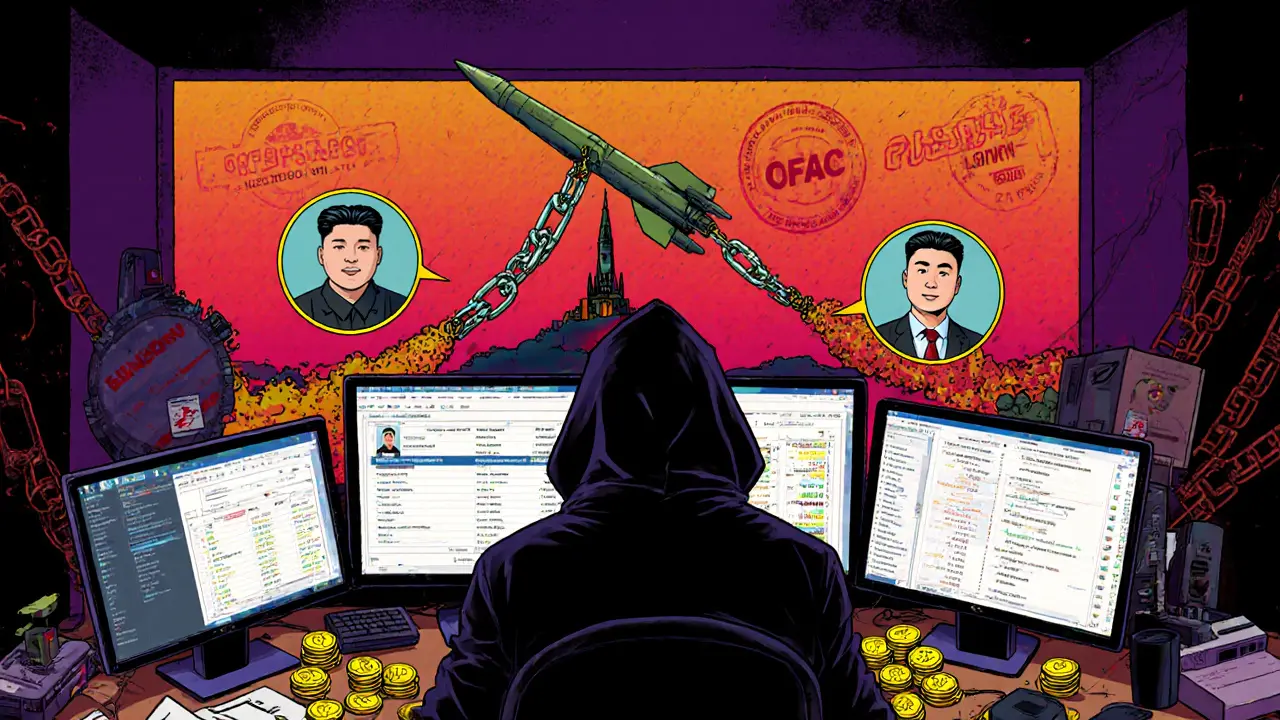
OFAC has targeted North Korean crypto networks that stole over $2.1 billion in 2025, using fake IT workers and global laundering schemes to fund weapons programs. Here's how the U.S. is fighting back.
Read More