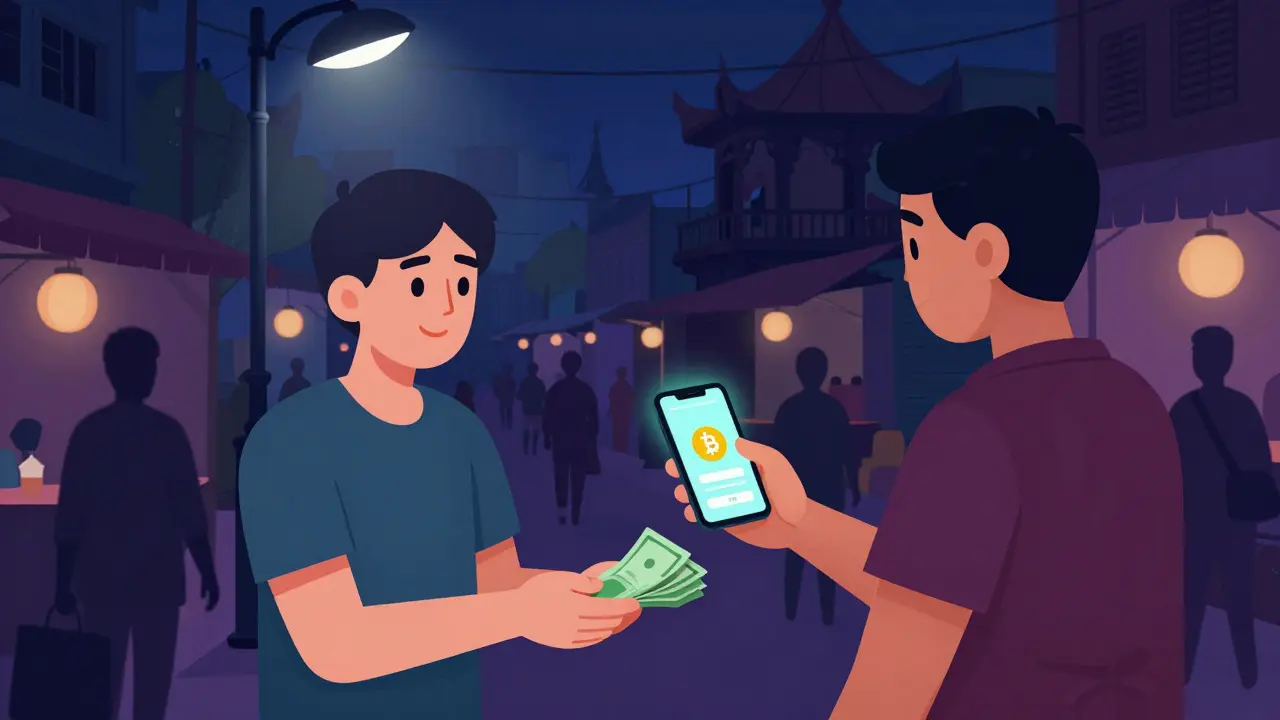
You cannot buy Bitcoin at a store in Yangon. You cannot trade Ethereum on a licensed exchange in Mandalay. In fact, doing either is a criminal offense under the current military regime. Yet, if you walk through the bustling streets of Myanmar’s major cities today, you will find thousands of people quietly moving money using digital assets. This is the reality of Myanmar's underground cryptocurrency market, a resilient, shadow economy that operates entirely outside the law to provide financial services where traditional banking fails or refuses to serve. As of 2026, this ecosystem remains one of the most restrictive yet active in Asia, driven by necessity rather than speculation.
The Legal Wall: Why Crypto Is Banned
To understand how the market works, you first have to understand why it is hidden. The Central Bank of Myanmar (CBM) the country's monetary authority which enforces strict prohibitions on all forms of digital currency transactions and mining activities. issued a comprehensive ban in 2020. They did not just restrict usage; they defined cryptocurrencies as unrecognized and unregulated instruments. Under the Foreign Exchange Management Law, converting any local currency (Kyat) into foreign assets-including Bitcoin or USDT-is illegal.
The government views financial freedom as a direct threat to its power structure. By controlling the currency, they control the flow of capital. Consequently, the CBM has the legal authority to freeze bank accounts, seize assets, and initiate criminal charges against anyone caught trading. Mining is also completely prohibited. If authorities catch you running mining rigs, they will confiscate your equipment and potentially pursue imprisonment. There are no loopholes for "educational" purposes or small-scale hobbyists. The ban is absolute.
How the Shadow Market Actually Operates
If there are no exchanges, how do people trade? The answer lies in a complex web of trust, technology, and social media. Since domestic platforms are banned, traders rely on international giants like Binance. However, accessing these sites requires bypassing state internet filters using Virtual Private Networks (VPNs). Even then, connecting your local bank account directly to an exchange is risky because banks monitor for suspicious outgoing transfers related to crypto.
Instead, the market relies heavily on Peer-to-Peer (P2P) networks. Here is how a typical transaction looks:
- Find a Dealer: Users connect with trusted cash dealers via Facebook groups or Telegram channels. These dealers act as unofficial market makers.
- Negotiate Terms: Prices fluctuate wildly due to thin liquidity. A large trade might move the price significantly more than a small one. Trust is the primary currency here.
- Execute Off-Record: The buyer sends Kyat via mobile banking apps (like KBZPay or Wave Money) or hands over cash. The seller releases the crypto from their personal wallet.
- No Paper Trail: Because these deals happen between individuals, there is no formal invoice or regulated contract. If something goes wrong, there is no customer support team to call.
This system creates extreme volatility. Without deep order books, a single large purchase can spike prices locally. It also means that while small peer-to-peer deals often slip through regulatory cracks, organized networks handling larger volumes face intense scrutiny and enforcement actions.
The Role of Community: Myan Crypto Masters
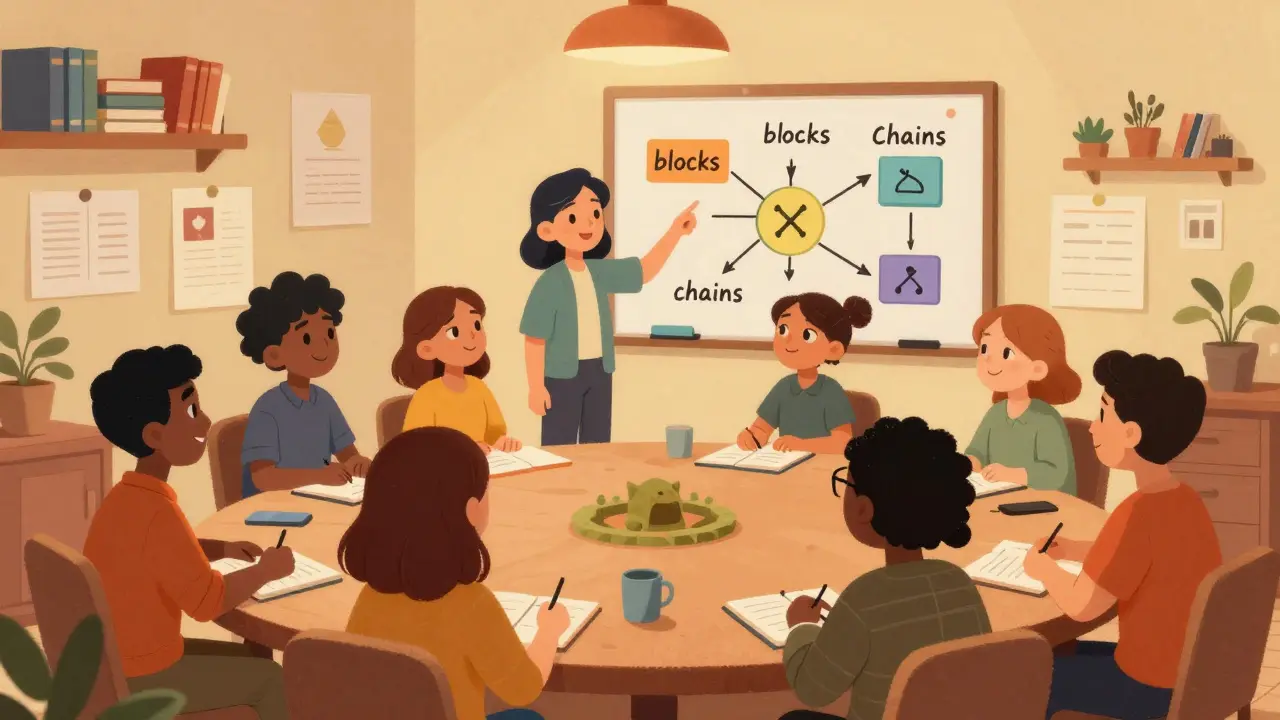
In a vacuum of official information, community becomes everything. The most significant player in this space is the Myan Crypto Masters Community (MCM) a grassroots educational organization founded by Feliz that provides Burmese-language cryptocurrency training and support to over 23,000 members.. Founded by an individual known as Feliz, MCM has grown into the primary hub for crypto knowledge in the country.
MCM does not facilitate trades directly, which keeps them slightly safer legally. Instead, they focus on education. They host weekly workshops, run interactive forums, and create digital courses explaining blockchain basics, security practices, and risk management. Their goal is to bridge the information gap. As Feliz notes, much of the available crypto literature is in English, leaving many locals vulnerable to scams due to language barriers. By breaking down complex concepts into digestible Burmese content, MCM empowers users to navigate this dangerous landscape with better tools. They operate across Facebook, Telegram, and TikTok, creating a supportive environment where veterans help newcomers avoid common pitfalls.
Risks and Realities: Scams and Seizures
Operating in the shadows comes with severe consequences. The lack of regulation means there is no safety net. When a deal goes bad, funds vanish without recourse. There are no courts to sue scammers, and no regulators to file complaints with. You are on your own.
One stark example occurred in 2022 when a high-profile cryptocurrency scheme collapsed, leaving thousands of investors in financial ruin. This event highlighted the urgent need for better education and underscored the dangers of trusting unverified entities. Newcomers frequently fall prey to fake investment platforms promising guaranteed returns, only to lose their life savings. Veterans warn constantly about these traps, but the allure of quick profits in a struggling economy makes many vulnerable.
Beyond scams, the threat of state enforcement is real. Authorities actively monitor social media for signs of organized trading rings. While they may ignore a student buying $50 worth of Bitcoin, they will aggressively target those moving larger sums. Account freezes are common. If your bank account is linked to a crypto dealer who gets flagged, your entire history may be scrutinized, leading to frozen assets and potential legal trouble.
Crypto as Resistance and Remittance
For many, cryptocurrency is not just an investment; it is a lifeline. With the political instability following the 2021 coup, traditional banking systems became unreliable for certain groups. Cryptocurrency emerged as a tool for financial resistance and survival.
A notable development is the Spring Development Bank a digital banking initiative launched by the National Unity Government (NUG) operating on the Polygon blockchain to facilitate remittances and savings., implemented by the National Unity Government (NUG) on the Polygon blockchain. This platform offers diaspora remittances, gold-backed savings, and USDT rails to finance resistance communities. It operates in direct opposition to the military government’s prohibitive stance, providing a way for overseas supporters to send money directly to those inside the country without passing through sanctioned banks. This use case demonstrates how deeply embedded crypto has become in the socio-political fabric of Myanmar, serving functions far beyond mere speculation.
Comparison with Neighbors
| Country | Crypto Status | Mining Legality | Primary Risk |
|---|---|---|---|
| Myanmar | Banned (Illegal) | Prohibited | Criminal prosecution, asset seizure |
| Thailand | Regulated | Licensed Only | Compliance costs, tax reporting |
| Laos | Restricted/Evolving | Restricted | Policy uncertainty, energy limits |
| China | Banned (Illegal) | Prohibited | Strict surveillance, network blocks |
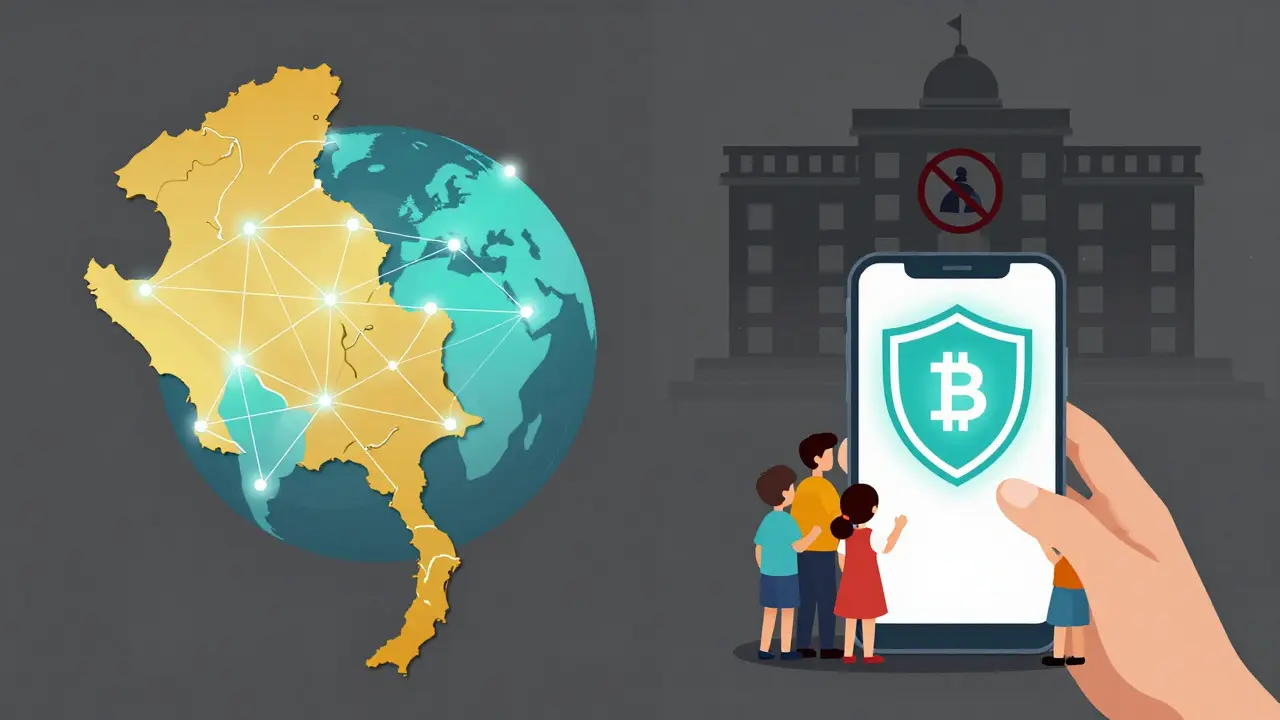
Unlike Thailand, which has moved toward progressive regulation, or Laos, which is cautiously exploring frameworks, Myanmar remains locked in prohibition. This disparity has led to a migration of miners to neighboring countries, affecting regional energy demands. For users in Myanmar, this means higher barriers to entry and greater reliance on informal networks compared to their neighbors who can use licensed exchanges.
Practical Tips for Navigating the Grey Market
If you are involved in this space, safety is paramount. Here are practical steps to minimize risk:
- Use Reputable Communities: Join established groups like MCM to learn from experienced users. Avoid random DMs from strangers offering "guaranteed" profits.
- Verify Dealers: Check references within trusted circles before engaging in P2P trades. Start with small amounts to test reliability.
- Secure Your Wallet: Never leave large amounts on exchanges. Use hardware wallets or secure software wallets with strong backups. Phishing attacks are rampant.
- Protect Your Identity: Use VPNs consistently. Be cautious about sharing personal details online. Assume that any digital footprint can be traced.
- Understand the Volatility: Prices in the underground market can swing dramatically. Do not invest money you cannot afford to lose, especially given the inability to recover losses through legal means.
The learning curve is steep. You must master VPN usage, understand blockchain mechanics, and develop a keen sense of who to trust. There is no room for error when the stakes involve both your finances and your freedom.
Future Outlook: Will the Ban Lift?
As of 2026, there are no signs of regulatory relaxation. The military-led CBM continues to enforce the ban strictly. The regime sees crypto as a challenge to its monetary sovereignty. Any future change depends entirely on the political landscape. Should a civilian government return, they may face pressure to harmonize regulations with global standards, potentially opening the door to licensed exchanges. However, until then, the underground market will persist. Its resilience proves that demand for financial freedom cannot be suppressed by decree alone. Whether viewed as a tool for resistance, a hedge against inflation, or a simple remittance channel, cryptocurrency has carved out a permanent, albeit hidden, place in Myanmar’s economy.
Is it legal to own Bitcoin in Myanmar?
No. The Central Bank of Myanmar (CBM) banned all cryptocurrency transactions in 2020. Owning, trading, or mining Bitcoin is considered illegal under the Foreign Exchange Management Law. While enforcement varies, the legal status remains strictly prohibitive.
How do people buy crypto in Myanmar if exchanges are banned?
People use Peer-to-Peer (P2P) networks on social media platforms like Facebook and Telegram. They connect with trusted cash dealers who facilitate off-record transactions. Buyers transfer Kyat via mobile banking or cash, and sellers release crypto from personal wallets. Access to international exchanges like Binance is done via VPNs.
What happens if I get caught trading crypto?
Authorities can freeze your bank accounts, seize your assets, and initiate criminal charges. Penalties can include fines and imprisonment. The CBM actively monitors for suspicious transactions, particularly those involving large sums or organized networks.
Is there any educational resource for crypto in Myanmar?
Yes, the Myan Crypto Masters Community (MCM) is the largest educational hub. Founded by Feliz, it offers free workshops, forums, and courses in Burmese to help users understand blockchain technology, security, and risk management. It serves over 23,000 members.
Why do people use crypto despite the risks?
Cryptocurrency serves as a financial lifeline. It allows for remittances from the diaspora, acts as a hedge against inflation, and provides access to global markets. For some, it is also a tool for political resistance, enabling funding channels that bypass state-controlled banking systems.
Can I mine Bitcoin in Myanmar?
No, mining is completely illegal. The government prohibits mining operations, and authorities regularly confiscate equipment. Additionally, persistent energy shortages make large-scale mining difficult, forcing any remaining activity to be small, clandestine, and high-risk.
Are there any safe ways to store crypto in Myanmar?
The safest method is using non-custodial wallets, such as hardware wallets or reputable software wallets where you control the private keys. Avoid keeping funds on centralized exchanges, as they can be frozen or hacked. Always back up your seed phrase securely offline.