
Imagine trying to buy a cup of coffee with a stack of gold bars. It’s heavy, the value fluctuates wildly by the minute, and the barista probably doesn’t have enough change to give you back. That is exactly what using Bitcoin for everyday purchases feels like in 2026.
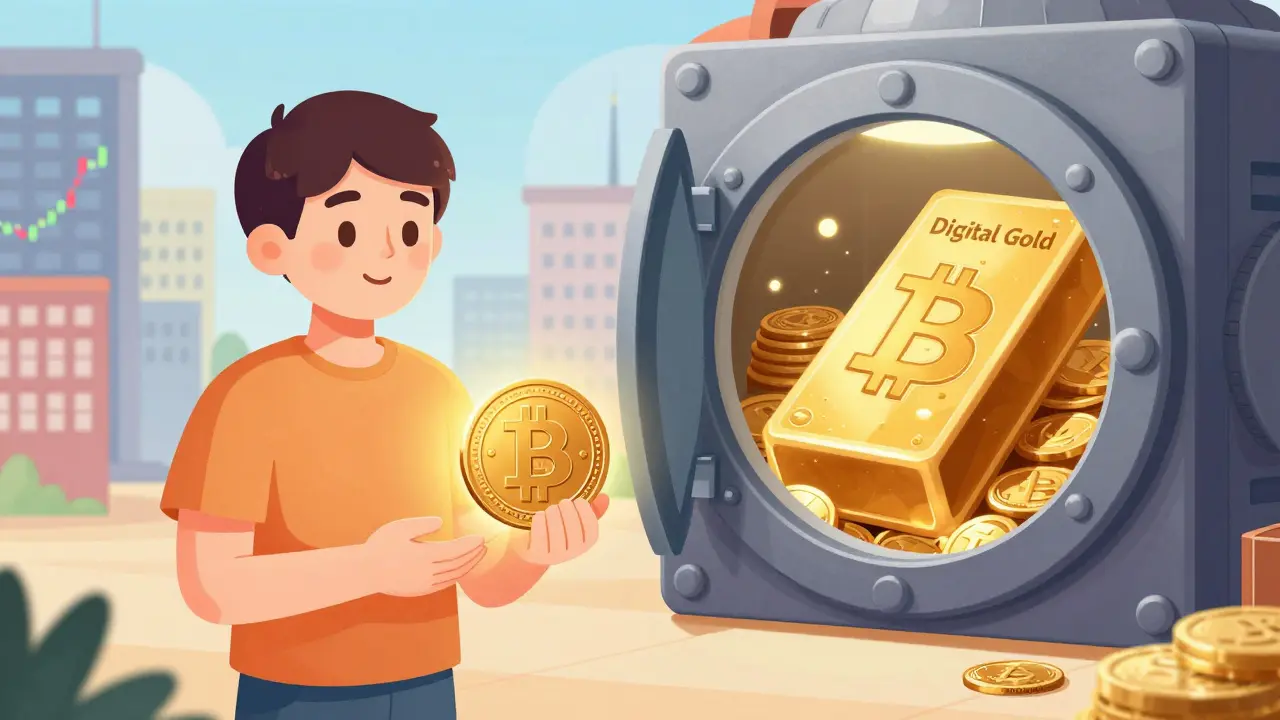
We’ve been told for years that Bitcoin was going to replace credit cards. We were promised instant, borderless, fee-free payments for everyone. But if you look at the headlines from late 2025 and early 2026, the story has changed completely. Bitcoin isn't just 'electronic cash' anymore; it has morphed into something else entirely. While the technology behind it-the blockchain-continues to revolutionize how banks move money, Bitcoin itself has largely abandoned its role as a daily payment method. Instead, it sits on balance sheets as 'digital gold,' a store of value rather than a medium of exchange.
So, can you actually use Bitcoin to pay your bills today? Technically, yes. Practically? It’s complicated, risky, and often more trouble than it’s worth. Let’s break down why this shift happened, what it means for your wallet, and whether you should bother trying to spend your crypto.
The Identity Crisis: From E-Cash to Digital Gold
To understand why Bitcoin struggles as a payment currency, we have to look at where it started versus where it is now. When Satoshi Nakamoto introduced Bitcoin in 2009, the goal was clear: create peer-to-peer electronic cash. The idea was to bypass banks and allow people to send value directly to one another without a middleman. In its early days, this worked. You could send Bitcoin across the globe for a fraction of the cost of a wire transfer.
However, the narrative shifted dramatically around 2016 and accelerated through the 2020s. As prices soared, users stopped spending their coins. Why would you spend an asset that might double in value next month? This behavior created a feedback loop. Less supply on exchanges meant higher prices, which encouraged even more hoarding. By the time Tesla announced its $1.5 billion Bitcoin purchase in 2021, the message was loud and clear: corporations viewed Bitcoin as an investment vehicle, not a transactional tool.
Today, the price reflects this reality. After breaking the $100,000 barrier in 2024 and hitting highs near $109,000 in January 2025, Bitcoin traded around $90,167 in April 2025. These numbers are fantastic for investors but terrible for merchants. If a shop owner accepts a $50 Bitcoin payment, they face two risks. First, the price could drop before they convert it to dollars. Second, the sheer volatility makes pricing goods nearly impossible. You don’t want to list your toaster at 0.0005 BTC only to see that value swing by 10% during lunch hour.
The Technical Hurdles: Speed, Fees, and Complexity
Even if we ignore the price swings, Bitcoin’s underlying infrastructure poses significant challenges for daily payments. The blockchain network is designed for security and decentralization, not speed. When you send Bitcoin, miners must verify the transaction and add it to a block. During periods of high network congestion-which happens frequently when prices rise-this process slows down considerably.
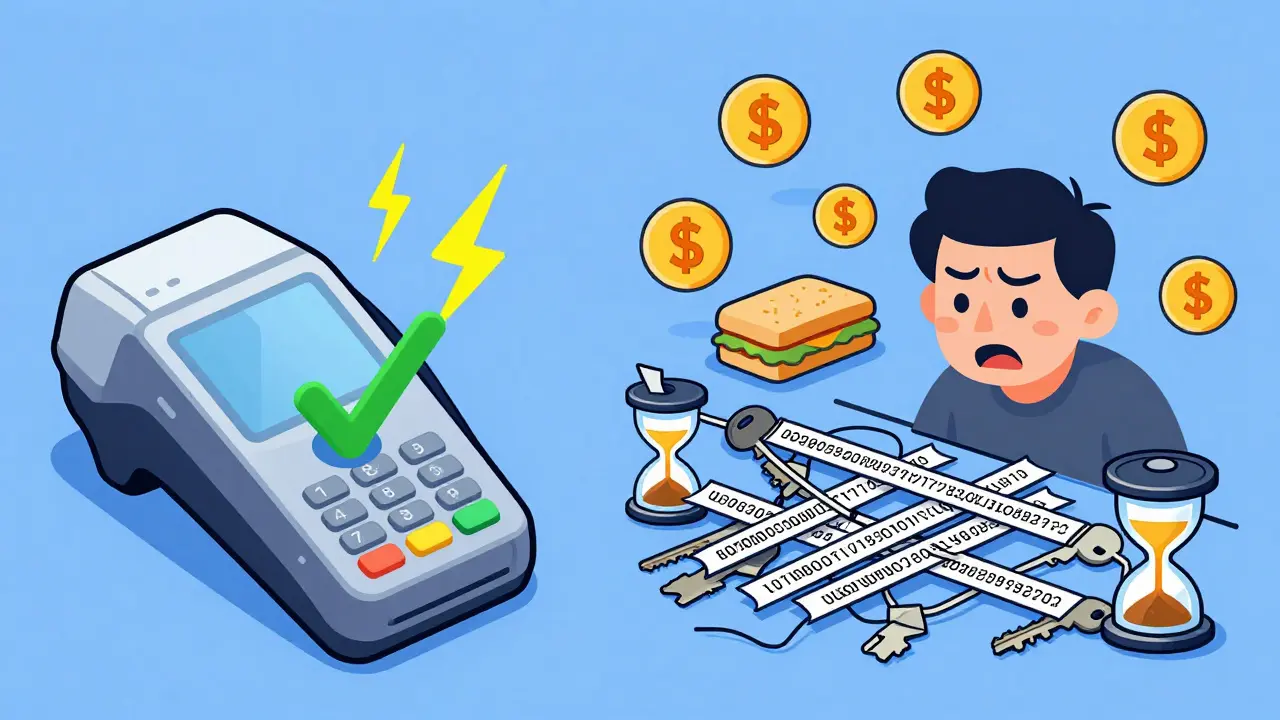
Transaction times can range from ten minutes to several hours. Compare that to Visa or Mastercard, which settle transactions in seconds. For a consumer buying groceries, waiting forty-five minutes for confirmation is unacceptable. To speed things up, users can pay higher fees. But here lies another problem: fee structures are unpredictable. On busy days, transaction fees can spike to tens of dollars, making small purchases economically unviable. Paying a $5 fee to buy a $3 sandwich doesn’t make sense.
Furthermore, the user experience remains clunky. Unlike entering a card number into a secure checkout page, sending Bitcoin requires managing private keys, public addresses, and understanding network confirmations. One mistake-sending funds to the wrong address-and those funds are gone forever. There is no customer service line to call, no bank to reverse the charge. This complexity creates a massive barrier to entry for non-technical users who simply want to pay for services.
| Feature | Bitcoin (On-Chain) | Credit/Debit Cards | Stablecoins (e.g., USDC) |
|---|---|---|---|
| Transaction Speed | 10 mins - several hours | Seconds | Seconds to minutes |
| Average Fee | $1 - $50+ (variable) | 0% - 3% (merchant side) | <$0.10 |
| Price Stability | Highly Volatile | Stable (Fiat-backed) | Stable (Pegged to USD) |
| Reversibility | None (Irreversible) | Yes (Chargebacks available) | Depends on platform |
| User Complexity | High (Keys, Addresses) | Low (Tap to Pay) | Medium (Wallet Management) |
The Institutional Shift: ETFs and Tokenization
If Bitcoin isn’t being used for coffee, what is it being used for? The answer lies in institutional finance. The approval of spot Bitcoin Exchange-Traded Funds (ETFs) by the Securities and Exchange Commission (SEC) in January 2024 marked a turning point. For the first time, mainstream investors could gain exposure to Bitcoin through traditional brokerage accounts, just like they would with stocks or bonds.
This development didn’t help Bitcoin become a better payment method; it cemented its status as an asset class. Companies like Charles Schwab reported massive inflows into these products, signaling that Wall Street had embraced Bitcoin as a portfolio diversifier. The political landscape also played a role. With shifting regulatory attitudes in the US and Europe-including the EU’s Markets in Crypto-Assets regulation taking effect in late 2024-the environment became safer for large-scale investment.
Meanwhile, the actual utility of blockchain technology for payments is being realized elsewhere. Major financial institutions like Mastercard and J.P. Morgan are building Multi-Token Networks. These systems use blockchain principles to settle transactions faster and cheaper, but they often rely on tokenized versions of fiat currencies or stablecoins, not volatile assets like Bitcoin. This separation is crucial: the tech is winning, but Bitcoin itself is retreating from the point-of-sale counter.
Can You Still Spend Bitcoin? Practical Options
Despite the hurdles, some people still prefer to spend their Bitcoin. Perhaps they believe in the original vision, or maybe they want to reduce their holdings without triggering tax events by selling on an exchange. If you fall into this category, you have a few options, though none are perfect.
Crypto Debit Cards: Services like Coinbase Card or Crypto.com offer debit cards linked to your crypto wallet. When you swipe the card, the provider instantly sells your Bitcoin for local currency and processes the transaction via Visa or Mastercard networks. This solves the volatility and speed issues for the merchant, but you lose the direct benefits of using Bitcoin. You’re essentially converting crypto to cash in real-time, paying conversion fees along the way.
Direct Merchant Acceptance: Some online retailers and niche physical stores accept Bitcoin directly. Lightning Network, a second-layer protocol built on top of Bitcoin, attempts to solve the speed and fee problems by enabling micro-transactions. However, adoption remains limited. Most average consumers won’t find a grocery store or gas station equipped to handle Lightning payments seamlessly.
P2P Platforms: Peer-to-peer marketplaces allow users to trade Bitcoin for goods and services directly. While this preserves the decentralized ethos, it carries significant risk. Disputes are hard to resolve, and scams are prevalent. Without a central authority to mediate, trust becomes the primary currency.
The Future Landscape: CBDCs and Competition
As we move through 2026, the digital payment space is becoming increasingly crowded. Central Bank Digital Currencies (CBDCs) are moving from theory to practice. The European Central Bank aims to launch the digital euro by 2025, and China’s digital yuan has already completed extensive testing phases. Unlike Bitcoin, CBDCs are issued by governments, ensuring stability and legal tender status. They promise the efficiency of blockchain without the volatility of cryptocurrency.
This creates a bifurcated future. On one side, you have stable, government-backed digital currencies for everyday transactions-paying rent, buying food, settling salaries. On the other side, you have assets like Bitcoin, serving as long-term stores of value, hedges against inflation, and speculative investments. The lines between 'money' and 'asset' are blurring, but their functions are diverging.
For the average person, this means you likely won’t be waking up tomorrow and paying your landlord in Bitcoin. Instead, you’ll manage your Bitcoin in a digital wallet or ETF, treating it like gold or real estate, while using stablecoins or CBDCs for your daily spending needs. Understanding this distinction is key to navigating the modern financial ecosystem.
Security Risks and User Responsibility
Whether you hold Bitcoin as an investment or attempt to use it for payments, security remains your biggest responsibility. Unlike a bank account, there is no FDIC insurance for your crypto. If you lose your private keys, your funds are inaccessible forever. If you click a phishing link, hackers can drain your wallet in seconds.
Storing Bitcoin securely requires hardware wallets-physical devices that keep your keys offline-or reputable custodial services offered by major exchanges. Even then, risks persist. Exchange hacks, regulatory seizures, and smart contract vulnerabilities are real threats. Users must educate themselves on best practices, such as enabling two-factor authentication and verifying transaction details meticulously. The convenience of digital payments comes with a steep learning curve regarding personal cybersecurity.
Is Bitcoin legal tender in the United States?
No, Bitcoin is not considered legal tender in the US. While businesses can choose to accept it as payment, they are not required to do so. Taxes apply to Bitcoin transactions, meaning spending or selling Bitcoin triggers capital gains tax events based on the difference between your purchase price and current value.
Why don’t more stores accept Bitcoin directly?
Most stores avoid direct Bitcoin acceptance due to volatility and technical complexity. Price fluctuations mean the value of a sale can drop significantly before conversion to fiat currency. Additionally, processing fees and slow transaction speeds make it impractical for high-volume retail environments compared to established card networks.
What is the Lightning Network?
The Lightning Network is a second-layer protocol built on top of Bitcoin’s blockchain. It enables faster, cheaper micro-transactions by moving most activity off the main chain. While it solves many scalability issues, adoption among merchants and users remains relatively low compared to traditional payment methods.
How do Bitcoin ETFs affect its use as a currency?
Bitcoin ETFs primarily reinforce Bitcoin’s role as an investment asset rather than a payment currency. By allowing easy access through traditional brokerages, they attract institutional capital focused on long-term holding and portfolio diversification, further reducing the circulating supply available for daily transactions.
Are there safer alternatives to Bitcoin for daily payments?
Yes, stablecoins like USDC or USDT are pegged to fiat currencies like the US Dollar, offering blockchain speed without price volatility. Additionally, emerging Central Bank Digital Currencies (CBDCs) provide government-backed stability with digital efficiency, making them more suitable for everyday commerce than volatile cryptocurrencies.
Barclay Chantel
June 1, 2026 AT 00:08It is truly pathetic that people still cling to the naive notion of Bitcoin as 'cash' when the reality is starkly obvious to anyone with a modicum of financial literacy. The article merely scratches the surface of why this experiment in peer-to-peer electronic cash failed so spectacularly, leaving us with a digital hoarding asset instead. One must wonder if the proponents ever read the whitepaper or just fell for the marketing hype.
The comparison to gold bars is apt, but even gold has industrial uses; Bitcoin is purely speculative fiction wrapped in cryptographic jargon. It is a waste of time debating its utility as currency when it clearly serves only as a vehicle for wealth transfer from the ignorant to the sophisticated.
Craig Swanson
June 1, 2026 AT 15:59Look, I get the frustration, but let's not throw the baby out with the bathwater here. The technology behind Bitcoin is revolutionary, even if the coin itself isn't your daily driver for coffee runs. We need to stop expecting it to be Visa and start appreciating what it actually is: a decentralized ledger that works.
If you're trying to buy groceries, yeah, use a card. But if you're sending money across borders without a bank freezing your assets, BTC is still king. Let's educate ourselves on the difference between Layer 1 and Layer 2 solutions like Lightning Network before we dismiss the whole ecosystem. It's about adoption curves, folks. Give it time.
Bill Gunn
June 2, 2026 AT 13:48Exactly! 🚀 The Lightning Network changes everything for small payments. ⚡️ You can send sats instantly for pennies. The problem is user experience, not the tech. Once wallets become as easy as Venmo, watch out world! 🌍💸
Crystal Davis
June 3, 2026 AT 08:35Please spare me the emoji-filled techno-utopianism. Lightning Network is a band-aid on a gunshot wound. It reintroduces centralization by relying on payment channels and liquidity providers who are essentially private banks again. The 'decentralization' argument falls apart the moment you need to close a channel or deal with routing failures. It is a complex mess that solves a problem most people don't have while creating new ones. Stick to stablecoins if you want speed; they are far more practical for actual commerce.
Rosie Morris
June 4, 2026 AT 20:35i totally agree with crystal here lol. its just too confusing for normal ppl. why would i wanna learn all that stuff just to buy lunch? 😩
Eric Grosso
June 5, 2026 AT 13:00its not just confusing tho, the fees are insane sometimes. i tried sending btc last year and paid more in gas than the item cost. makes no sense.
Sam Dashti
June 7, 2026 AT 06:51You guys are missing the forest for the trees, my friends! The beauty isn't in buying the sandwich; it's in the sovereignty of the wallet. When you hold your keys, you hold the power. Sure, the UX is clunky right now, but remember when banking apps were just paper checks? We're in the dial-up era of crypto payments. The volatility is a feature, not a bug, because it forces appreciation. If it were stable, everyone would spend it, and then where's the scarcity premium? Think bigger! 🧠✨
kamal ifrani
June 9, 2026 AT 03:14Oh, look at Mr. Big Brain talking about 'sovereignty.' Spare me your self-righteous moralizing. You're sitting there hoarding volatile tokens while real people struggle with inflation, pretending you're part of some noble revolution. It's nothing but a casino for the greedy. The 'scarcity premium' is just a fancy term for price manipulation by whales. You're not a revolutionary; you're a gambler with a delusion of grandeur. Wake up and smell the regulatory crackdown coming.
Edith Mair
June 11, 2026 AT 00:42Kamal, tone it down. Everyone has a right to their investment strategy. Whether it's gambling or saving is subjective. The point of the article is valid though-Bitcoin isn't replacing credit cards yet. That's a fact, not an opinion. Let's keep the discussion civil and focused on the technical limitations mentioned in the post.
lorna erni
June 11, 2026 AT 06:03I am so tired of these toxic comments! Can we not? 💔 Let's just talk about how we can make payments easier. I love the idea of borderless transactions, but the current setup is exhausting. Why can't we just have a simple app that handles the conversion automatically? Is that too much to ask?
stalin brian
June 11, 2026 AT 12:14Hey Lorna, you got it. Its all about making things smoother. In many countries, remittances via crypto are already cheaper than Western Union. Maybe thats where the real use case is first. Not coffee shops, but sending money home to family. Thats a huge win.
saradee dee
June 12, 2026 AT 10:51Oh my gosh, yes! Sending money home is such a big deal. My cousin sends money back to India and the fees are terrible. If crypto could fix that, I'd care way more. But honestly, it feels like every day something breaks or gets hacked. It's scary!
Joe Clements
June 12, 2026 AT 21:26I hear you, Saradee. Security is a huge concern for everyday users. It's really hard to trust a system where one wrong click loses everything. Banks have insurance and fraud protection for a reason. Until crypto offers that same peace of mind, most people will stick to what they know. It's not about being anti-tech; it's about risk management.
mark valmart
June 13, 2026 AT 18:52Yeah, exactly. I'm not a coder or a finance bro. I just want to pay for my Netflix subscription. If I have to worry about seed phrases and network congestion, I'm out. Keep your digital gold, I'll take my plastic.
Dana Rapoport
June 14, 2026 AT 21:56There is a philosophical shift happening here that many miss. We are moving from a society of convenience to one of responsibility. With great power comes great complexity. Perhaps the friction is intentional, forcing users to think twice before spending. It aligns spending with mindfulness rather than impulse. However, I concede that for mass adoption, the abstraction layer must hide this complexity completely. The future is likely invisible crypto, not visible wallets.
Hadleigh Edwards
June 15, 2026 AT 14:58While I appreciate the deep dive into the metaphysical aspects of transactional mindfulness, I find myself wondering if we might be overcomplicating the immediate practicalities of the situation, especially considering that the average consumer simply desires a seamless experience that does not require them to understand the underlying blockchain mechanics, which leads me to believe that perhaps the solution lies not in educating the masses but in building better interfaces that abstract away the technical hurdles entirely, thereby allowing the benefits of decentralization to shine through without the burden of cognitive load.
Debbie Lewis
June 16, 2026 AT 19:34Hadleigh, you made a good point there. Sometimes less is more. I just want to see the industry mature a bit more. It's interesting to watch how the narrative shifts from 'currency' to 'asset'. I think we'll see stablecoins take the payment role while BTC stays as the reserve asset. It's a natural evolution.
Christina Pearce
June 17, 2026 AT 03:33Debbie, that seems like the most logical path forward. Stablecoins offer the stability needed for pricing goods, while Bitcoin retains its value store properties. It respects the boundaries of what each technology is best suited for. I hope regulators clarify the status of stablecoins soon so merchants can adopt them with confidence.