North Korea crypto: How the regime uses blockchain and what it means for global crypto
When you think of North Korea crypto, state-backed cryptocurrency operations used to fund military programs and evade international sanctions. Also known as DPRK cryptocurrency hacking, it's not about people trading Bitcoin for fun—it's about a government running a digital heist operation. The U.S. Treasury and Interpol have tied North Korea to over $2 billion in crypto theft since 2017, mostly through exchange hacks, smart contract exploits, and fake airdrops. This isn’t speculation—it’s documented in FinCEN reports and blockchain forensics from Chainalysis and Elliptic.
How do they do it? They don’t need to mine or invest. They steal. Teams of hackers, often based in China and Russia, target small exchanges with weak security, drain wallets using phishing tools, and move funds through mixers like Tornado Cash or privacy coins like Monero. Then they convert crypto into fiat through underground remittance networks or fake NFT sales. The crypto laundering, the process of disguising the origin of stolen digital assets to avoid detection. Also known as crypto obfuscation, it’s a core part of North Korea’s financial strategy. Unlike criminals who want to disappear, North Korea needs the money to buy missile parts, food, and tech—so they keep moving it, fast and smart.
And it’s not just theft. They also run fake crypto projects—like the Pyongyang Coin, a non-existent token promoted in phishing campaigns to trick users into sending real crypto. Also known as DPRK scam tokens, these are designed to look legitimate on CoinGecko or Telegram groups. These scams target beginners in Southeast Asia and Africa, where regulatory oversight is thin. Meanwhile, the regime uses blockchain analytics tools—same ones you’d use to track your own wallet—to find vulnerabilities in Western exchanges.
Why should you care? Because every stolen dollar from a small exchange helps fund nuclear tests. Every fake airdrop you fall for makes the system more dangerous for everyone. And if you trade on an unregulated platform, you might be unknowingly helping them clean their money. The blockchain surveillance, the monitoring of public ledgers to trace illicit crypto flows. Also known as crypto forensics, it’s now a critical defense tool for governments and exchanges alike. Companies like CipherTrace and TRM Labs are working with the U.S. government to flag transactions linked to North Korean wallets—so if your wallet ever gets flagged, it’s not a glitch, it’s a red flag.
The posts below dig into how North Korea exploits crypto infrastructure, the exchanges they’ve hit, the tactics they use to bypass sanctions, and how global regulators are trying to shut them down. You’ll see real cases—like the 2022 Ronin Bridge hack, the Lazarus Group’s use of DeFi protocols, and how a single wallet address can connect a hacker in Pyongyang to a user in Manila. This isn’t sci-fi. It’s happening now. And if you’re trading crypto, you’re already in the middle of it.
5
Nov
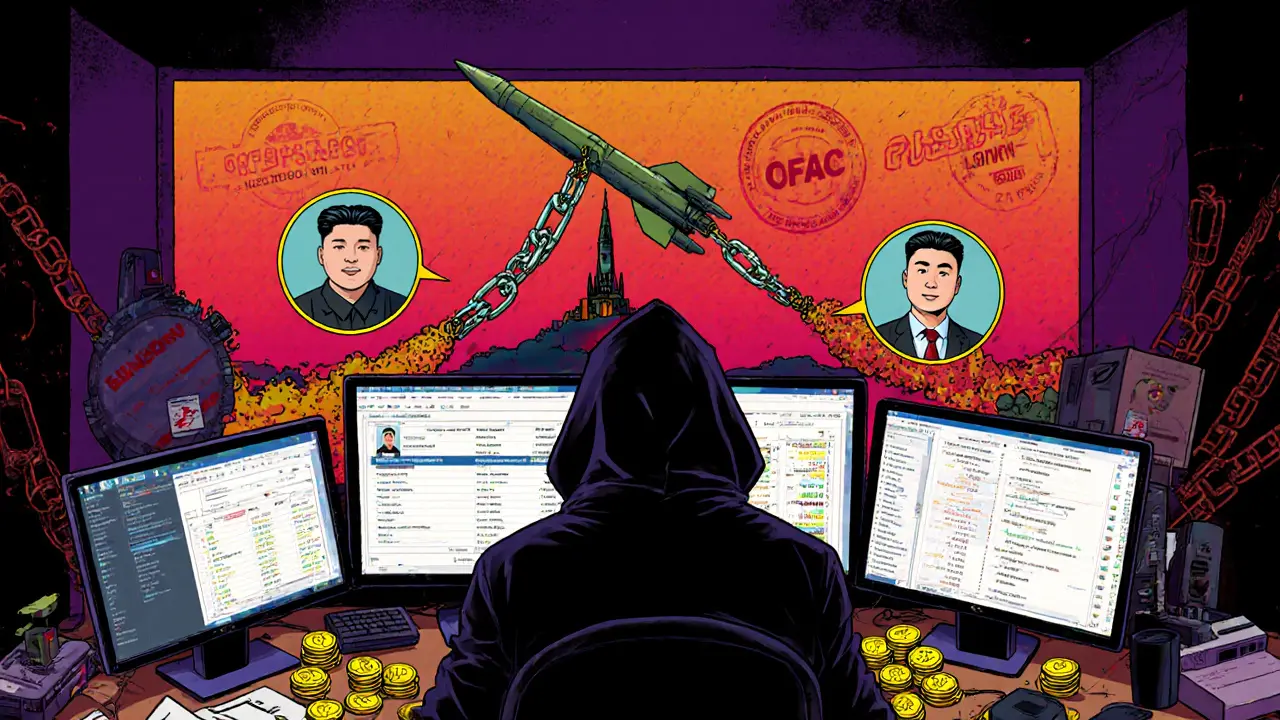
OFAC has targeted North Korean crypto networks that stole over $2.1 billion in 2025, using fake IT workers and global laundering schemes to fund weapons programs. Here's how the U.S. is fighting back.
Read More