EU Crypto Rules: What You Need to Know About Regulations, Trading, and Compliance
When it comes to EU crypto rules, a unified set of regulations governing cryptocurrency use across all European Union member states. Also known as MiCA, it stands for Markets in Crypto-Assets and is the first comprehensive crypto law in the world. Before MiCA, every EU country had its own rules—some blocked crypto entirely, others let exchanges run wild. Now, if you’re trading, staking, or holding crypto in Europe, these rules directly impact you.
MiCA, the core framework behind EU crypto rules. Also known as Markets in Crypto-Assets Regulation, it requires all crypto exchanges, wallet providers, and stablecoin issuers to get licensed and follow strict transparency rules. That means platforms like Bxlend, a Lithuania-based hybrid crypto platform offering SEPA Instant banking for EU users, must now prove they’re audited, secure, and compliant—or shut down. If a service doesn’t follow MiCA, it can’t legally operate in the EU. This isn’t just bureaucracy—it’s about protecting your money from scams, hidden fees, and unregulated platforms.
These rules also change how you use crypto in daily life. crypto banking access, the ability to link your bank account to crypto services is now clearer in countries like Germany and Lithuania, but still blocked in others. MiCA doesn’t force banks to work with crypto firms, but it does give compliant exchanges the right to apply for banking partnerships. That’s why platforms like Bxlend focus on SEPA transfers—they’re playing by the new rules. Meanwhile, non-custodial wallets like MetaMask and Ledger aren’t regulated under MiCA, which means you still control your keys, but you’re on your own if something goes wrong.
And it’s not just about exchanges. crypto regulations Europe, the broader legal landscape shaped by MiCA and national laws now includes rules for stablecoins, NFTs, and even meme coins. If a token claims to be "stable" but isn’t backed properly, it’s banned. If a project hides its team or doesn’t publish a whitepaper, it can’t be marketed in the EU. That’s why you’ll see fewer shady airdrops and fake DEXs like AfroDex or DSG token schemes—they simply can’t pass compliance checks.
For traders, this means less noise and more safety. You won’t find KickEX or Betconix operating openly in the EU anymore—they don’t meet the standards. Instead, you’ll see more legitimate platforms with real audits, user reviews, and clear terms. The trade-off? You’ll need to verify your identity on CEXs, but you’ll also have legal recourse if things go south. DEXs still work without KYC, but now you’re choosing between freedom and protection.
What’s next? MiCA rolls out fully in 2025. By then, every crypto service targeting EU users must be registered. If you’re using crypto in Europe, you’re not just a user—you’re part of a new financial system that’s finally being held accountable. Below, you’ll find real guides and reviews that show how these rules play out in practice: which exchanges still work, how to stay compliant, and where the risks still hide—even under strict laws.
14
Nov
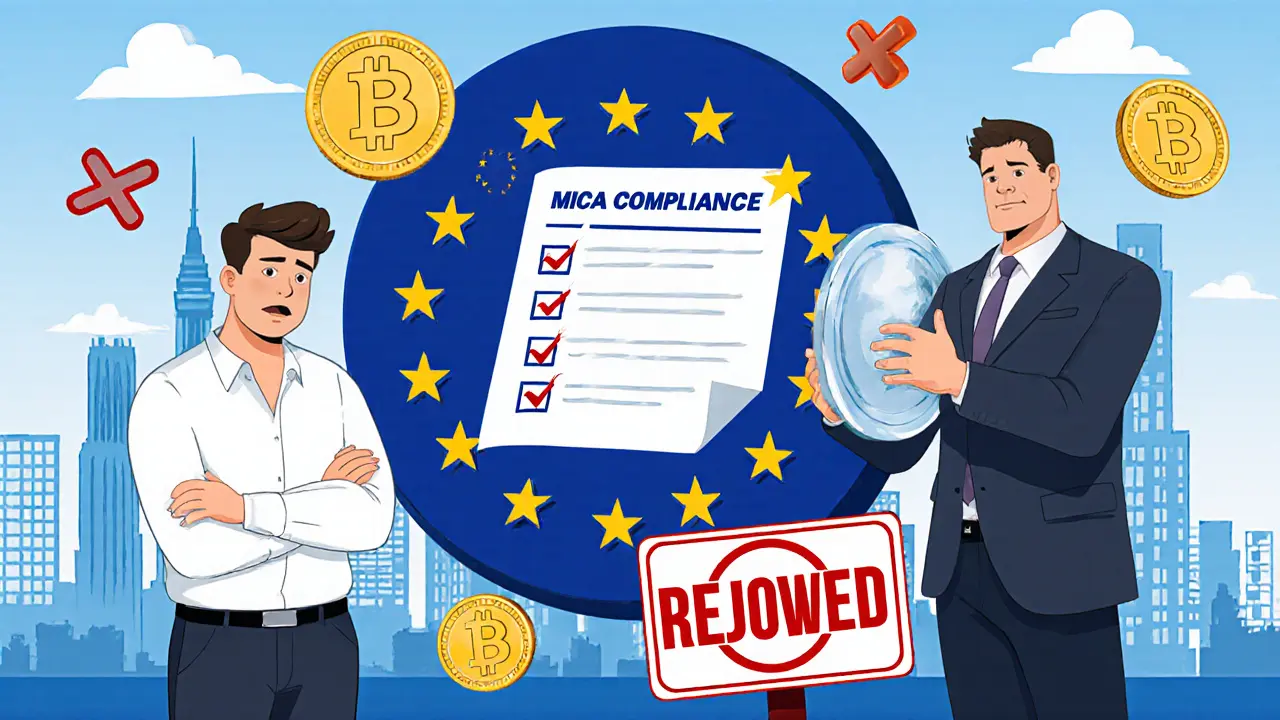
MiCA regulation is now in force for all crypto businesses serving EU customers. This guide covers licensing, stablecoin rules, compliance costs, and what you must do by 2025 to stay legal in Europe.
Read More