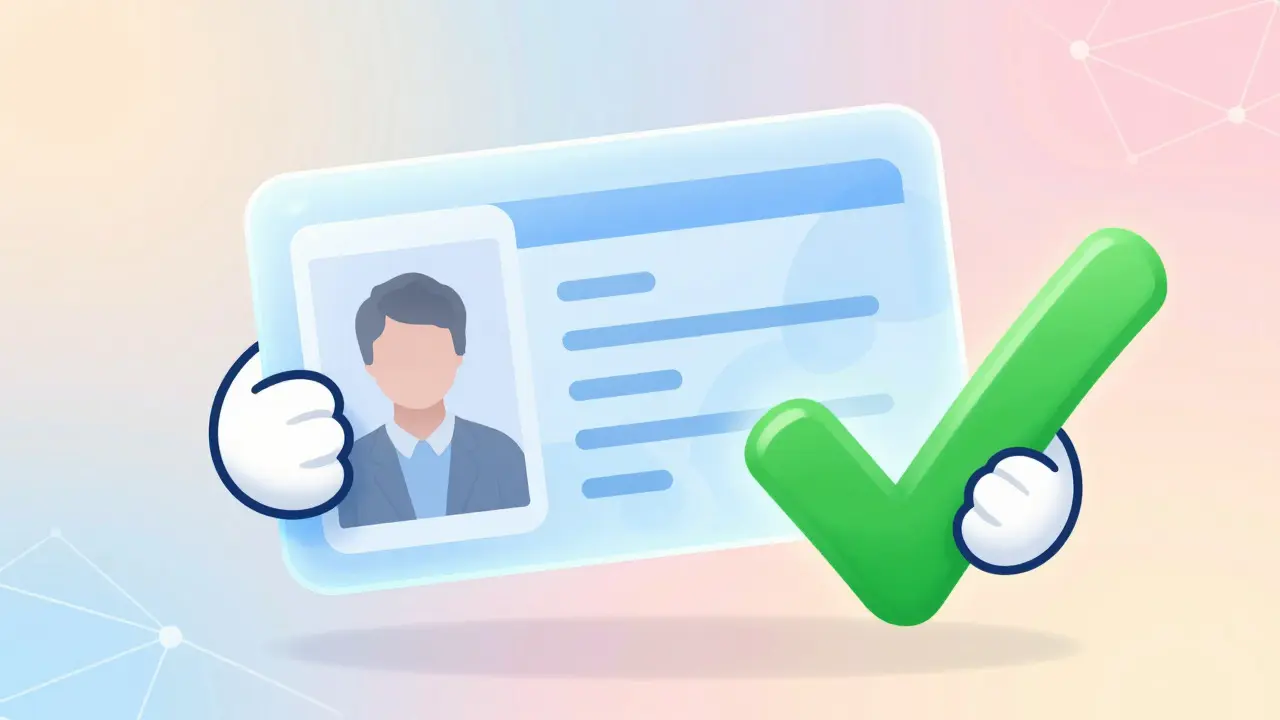
Imagine proving you are over 18 without showing your ID card. You don’t reveal your name, date of birth, or address-just the fact that you meet the requirement. That’s the core idea behind zk-SNARKs, which stands for Zero-Knowledge Succinct Non-Interactive Arguments of Knowledge. These cryptographic tools let one party prove they know specific information without revealing the data itself. In blockchain networks, this means you can verify a transaction is valid while keeping the sender, receiver, and amount completely private. The technology isn’t new magic; it was formally introduced in a 2012 paper by cryptographers Nir Bitansky, Ran Canetti, Alessandro Chiesa, and Eran Tromer. But its real-world impact exploded with Zcash, the first major cryptocurrency to use zk-SNARKs for shielded transactions. Today, these proofs are moving beyond just privacy coins into layer-2 scaling solutions, identity verification, and even voting systems. If you’ve ever wondered how a decentralized network can stay transparent yet private, zk-SNARKs are the engine under the hood.
The Core Mechanics: Proving Without Telling
At its heart, a zk-SNARK operates on three main principles. First, it’s zero-knowledge, meaning the verifier learns nothing about the secret data other than whether the statement is true. Second, it’s succinct, so the proof is tiny-often just a few hundred bytes-regardless of how complex the underlying computation was. Third, it’s non-interactive, meaning no back-and-forth conversation is needed between the prover and verifier. The prover generates a single piece of data, and the verifier checks it instantly.
This process relies on heavy mathematics, specifically elliptic curve cryptography and polynomial commitments. Think of it like folding a complex origami crane. The final shape (the proof) is simple to inspect, but creating it requires precise steps based on a hidden pattern (the witness). The verifier doesn’t need to see the folding process or the original paper; they just check if the crane holds its shape according to the rules. This allows verification to happen in milliseconds, which is critical for fast-paced blockchain networks where speed determines usability.
The Trusted Setup: The Elephant in the Room
Here’s where things get tricky. Most traditional zk-SNARK implementations require something called a "trusted setup." Before anyone can generate or verify proofs, a group of participants must contribute random numbers to create a set of cryptographic keys. If any participant keeps their secret number after the ceremony, they could theoretically forge false proofs later. This sounds scary, but in practice, ceremonies are designed so that only if all participants collude and keep their secrets does the system break. Since it’s hard to coordinate perfect secrecy among many independent parties, the risk is considered low.
However, not everyone likes relying on trust. This is why newer protocols like Halo 2, introduced in Zcash’s Network Upgrade 5 in May 2022, aim to eliminate the trusted setup entirely. By using recursive proofs, Halo 2 allows the system to bootstrap its own security without initial secret keys. While this solves the trust issue, it comes with a trade-off: slightly larger proof sizes and longer generation times compared to classic SNARKs. For most users, though, the peace of mind from removing the setup phase is worth the minor performance hit.
zk-SNARKs vs. zk-STARKs: Which One Should You Care About?
You’ll often hear zk-SNARKs compared to zk-STARKs (Zero-Knowledge Scalable Transparent Arguments of Knowledge). Both achieve the same goal-proving knowledge without revealing data-but they take different paths. Understanding the difference helps explain why some blockchains choose one over the other.
| Feature | zk-SNARKs | zk-STARKs |
|---|---|---|
| Trusted Setup | Required (in most cases) | Not required |
| Proof Size | Very small (~200 bytes) | Larger (~1-10 KB) |
| Verification Speed | Extremely fast (milliseconds) | Faster than SNARKs for large computations |
| Quantum Resistance | No (relies on elliptic curves) | Yes (based on hash functions) |
| Best Use Case | On-chain storage, high-frequency trading | Large-scale rollups, long-term security |
In short, if you need to save space on the blockchain, zk-SNARKs win because their proofs are tiny. If you’re worried about quantum computers breaking encryption in the next decade, zk-STARKs are safer. Many modern projects are actually experimenting with hybrid approaches, trying to get the best of both worlds.
Real-World Applications Beyond Zcash
While Zcash made zk-SNARKs famous for private payments, the technology is quietly powering other parts of the crypto ecosystem. One of the biggest uses today is in layer-2 scaling solutions, particularly zk-rollups. Projects like StarkNet and Scroll use zero-knowledge proofs to bundle thousands of Ethereum transactions off-chain, then post a single validity proof back to the main chain. This drastically reduces gas fees for users while maintaining Ethereum’s security guarantees.
Beyond scaling, zk-SNARKs are solving identity problems. Imagine logging into a service and proving you have a valid credit score above 700 without revealing your actual score or name. Or think about voting in a DAO (Decentralized Autonomous Organization) where you prove you hold enough tokens to vote, but no one knows who you are or how much you voted. These applications protect user privacy while still allowing networks to enforce rules. Even supply chains are exploring this tech, letting manufacturers prove a product meets quality standards without sharing proprietary production data.
Getting Started: What Developers Need to Know
If you’re a developer looking to implement zk-SNARKs, be prepared for a steep learning curve. It’s not just writing code; it’s understanding circuit design. You translate your logic into an Arithmetic Circuit, which is essentially a math problem the proof will solve. Tools like Circom make this easier by letting you write circuits in a high-level language that compiles down to the necessary constraints.
For JavaScript developers, snarkjs provides a robust library to generate and verify proofs in the browser or Node.js environment. However, optimization is key. A poorly designed circuit can take minutes to generate a proof, making it unusable for real-time applications. You’ll spend a lot of time tweaking your circuit to minimize variables and operations. Also, remember that proof generation is computationally heavy. While verifying a proof takes milliseconds, generating one might take seconds to minutes depending on complexity. This asymmetry means the prover usually bears the cost, which is fine for centralized services but challenging for mobile devices.
Common Pitfalls and How to Avoid Them
One of the biggest mistakes new teams make is ignoring circuit correctness. If your circuit has a bug, the proof might pass verification even when the statement is false. This is known as a soundness error. To avoid this, use formal verification tools whenever possible, and test your circuits against known edge cases. Another pitfall is mishandling the trusted setup parameters. If you’re running your own network, ensure the ceremony is transparent and that participants destroy their secrets properly. Finally, don’t assume all zk-SNARK libraries are equal. Some are experimental, while others like those used in Zcash have been battle-tested in production for years. Choose mature tooling unless you have a specific reason to experiment.
Future Outlook: Where Is This Heading?
The trajectory for zk-SNARKs looks strong. As blockchain networks grow, the demand for privacy and scalability only increases. We’re seeing more adoption in enterprise settings, where companies need to share data with auditors without exposing sensitive business metrics. Regulatory compliance is another big driver; governments want to track tax obligations without forcing citizens to surrender total financial transparency. zk-SNARKs offer a middle ground: prove you paid taxes, but keep your spending habits private.
Research continues to push efficiency limits. Newer constructions are reducing proof generation times and shrinking proof sizes further. Hybrid systems that combine SNARKs and STARKs are also emerging, aiming to provide quantum resistance without sacrificing the small proof sizes that make SNARKs attractive. For now, if you’re building on blockchain, understanding zk-SNARKs isn’t just a nice-to-have-it’s becoming essential infrastructure for anyone serious about privacy and scale.
What is the main advantage of zk-SNARKs over regular encryption?
Regular encryption hides data until someone with the key decrypts it. zk-SNARKs allow you to prove facts about the data without revealing the data itself at all. This means the verifier never needs access to the secret, reducing the attack surface significantly.
Do I need a trusted setup to use zk-SNARKs?
Most standard implementations do require a trusted setup ceremony. However, newer variants like Halo 2 remove this requirement. If you’re using an existing protocol like Zcash, the setup is already done. If you’re building your own, you must either run a ceremony or choose a setup-free variant.
Are zk-SNARKs safe from quantum computers?
Generally, no. Traditional zk-SNARKs rely on elliptic curve cryptography, which quantum computers could potentially break. zk-STARKs are considered more quantum-resistant because they rely on hash functions. If long-term quantum safety is a priority, look into STARK-based solutions or hybrid approaches.
How long does it take to generate a zk-SNARK proof?
It depends on the complexity of the circuit. Simple proofs can be generated in seconds, while complex ones might take minutes. Verification, however, is always very fast, typically taking only a few milliseconds. This makes them ideal for scenarios where the prover has power but the verifier needs speed.
Which cryptocurrencies use zk-SNARKs?
Zcash is the most prominent example, using them for shielded transactions. Several layer-2 solutions on Ethereum, such as zkSync and Stacks, also utilize zero-knowledge proofs for scaling. As the technology matures, we expect to see more integration across various DeFi and NFT platforms.
Bill Patterson
August 28, 2026 AT 03:18another long winded explainer on math that nobody asked for. just tell us if it works or not
Sam Ariafar
August 29, 2026 AT 09:20The moral imperative here is clear. If we are to build a truly fair society, privacy must be the default, not the exception. zk-SNARKs offer a path where the state cannot snoop on your financial life without your consent. It is a tool for justice.
Laine Van Sickle
August 29, 2026 AT 22:59love this tech its so cool right? i feel like everyone else is missing the point though its basically magic but also kinda scary how much trust we put in these ceremonies dont you think? its wild
Emmanuel Ogbomo
August 30, 2026 AT 15:08There is a certain beauty in the mathematics of folding complexity into simplicity. The origami crane analogy holds up well. It reminds me that truth does not always need to be shouted; sometimes it just needs to hold its shape under scrutiny.
Ashwin Bhandurge
September 1, 2026 AT 04:34This is exactly the kind of deep dive we need! Understanding the 'why' behind the tech empowers us to build better. Let's push the boundaries of what decentralized identity can look like. The future is bright for those who learn the circuits today!
jeffry jones
September 2, 2026 AT 01:05Key insight: prover asymmetry. Heavy computation on prover side, light verification on verifier. Critical for L2 rollup architecture. Minimize constraint count to reduce proof gen latency. Use snarkjs for rapid prototyping before moving to optimized Rust bindings.
Paul Needham
September 3, 2026 AT 07:25Sure, and I'm sure my neighbor isn't spying on me either. These 'trusted setups' are just backdoors waiting to happen. Who watches the watchers? Probably the same old guys in suits. Don't get too excited about your little cryptographic toys.
Aaliyah Simpson
September 4, 2026 AT 21:06yeah because the only thing worse than a quantum computer breaking our encryption is some random guy in a ceremony keeping his secret number. i bet the NSA has been running their own private ceremonies for years. wake up people. the setup is the hack.
Jillian Pye
September 6, 2026 AT 07:07It’s interesting to consider the philosophical implications of 'knowing without seeing.' We often equate transparency with truth, but perhaps there is a deeper integrity in verified opacity. It changes how we define accountability in digital spaces. 🤔
Ashwini Chaskar
September 7, 2026 AT 13:41you really think this is safe? i mean sure it works for zcash but what about all the other chains? i feel like people are ignoring the real risks here. it feels like we are building castles on sand again. don't you find it worrying that we rely on such complex math for basic security?
Jane yuan
September 9, 2026 AT 13:08America leads in crypto innovation, and this is why. While Europe argues about regulation, we are solving hard problems like scalability and privacy. This technology secures our economic freedom from foreign interference. It is essential infrastructure for national competitiveness.
Kevin Payette
September 9, 2026 AT 19:58You're missing the point entirely. The 'trust' in trusted setup is a marketing term. It's actually a coordination game. If you think one person can break it, you don't understand game theory. Stop being so paranoid and read the paper. It's not rocket science, it's basic probability distribution among rational actors.
Rebecca Springer
September 10, 2026 AT 08:06From a cultural perspective, this shifts power dynamics significantly. In many societies, privacy is a communal value rather than an individual right. zk-SNARKs allow for a form of collective verification that respects individual autonomy. It bridges the gap between traditional social norms and digital enforcement. It is a subtle but powerful shift in how we interact as a global community.
Carey Thornton
September 11, 2026 AT 07:32Oh, darling, let us not forget the sheer audacity of elliptic curve cryptography. To think we once relied on RSA like peasants huddling around a fire! Now we have these sleek, quantum-resistant (or so they claim) STARKs dancing on the stage. It is a magnificent theater of numbers, isn't it? One simply must appreciate the elegance of the polynomial commitments, even if one's brain hurts trying to follow the algebraic acrobatics. Truly, a spectacle for the discerning technologist.
Melanie Armijo
September 13, 2026 AT 01:21I've been thinking about this a lot lately. It makes you wonder if privacy is really a human right or just a feature we've decided to monetize. Like, do we deserve to hide things from each other? Or is transparency the ultimate good? It feels like we're trading one kind of vulnerability for another. What do you all think about the ethics of invisible transactions?
Nadia Christian
September 13, 2026 AT 05:40Finally! A guide that doesn't assume we are all PhDs in math!! However, note the importance of the US leading this space!!! We must ensure our regulations support this innovation!!! It is crucial for our technological dominance!!! Great article!!!