Ever tried to send a Bitcoin transaction during peak hours and watched your confirmation time stretch into an eternity? Or maybe you've paid $50 in gas fees just to swap a token on Ethereum mainnet. If so, you’ve felt the pain of blockchain congestion. The core issue is simple: most major blockchains were built for security and decentralization first, leaving speed as an afterthought. Enter sidechains. These parallel chains offer a practical way to offload traffic from the main network, drastically improving speed and lowering costs without completely reinventing the wheel.
But are sidechains actually the silver bullet for scalability, or do they introduce new risks? This guide breaks down exactly how sidechains work, why they’re faster, where they fall short compared to other solutions like rollups, and what you need to know before building on one. Whether you're a developer, an investor, or just curious about tech, understanding these trade-offs is crucial in today's landscape.
What Exactly Is a Sidechain?
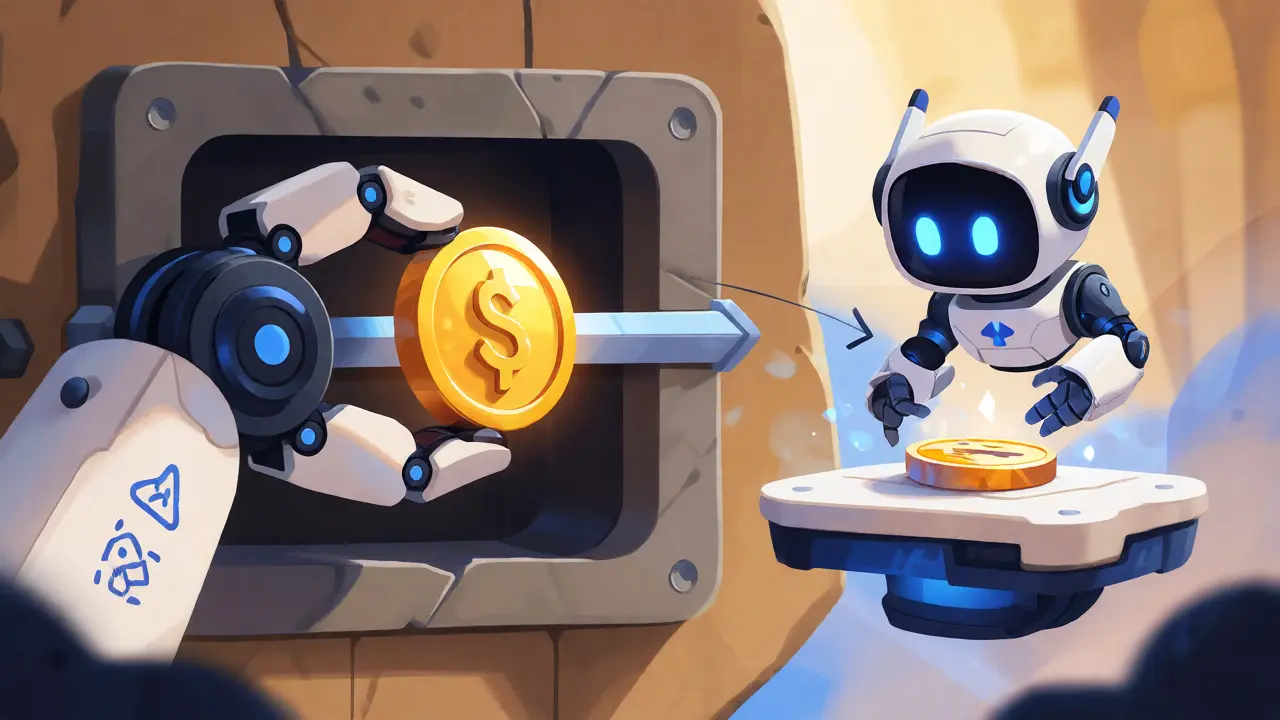
Think of a sidechain as a sibling to the main blockchain (the "mainchain"). It runs independently but stays connected through a special mechanism called a two-way peg. This peg allows assets to move back and forth between the mainchain and the sidechain. When you lock your ETH on the mainchain, an equivalent amount gets minted on the sidechain. You can then use those funds there, enjoy faster transactions, and eventually unlock them back on the mainchain.
The concept wasn't invented yesterday. Adam Back and his colleagues outlined it in a 2014 paper titled "Enabling Blockchain Innovations with Pegged Sidechains." Their goal was clear: let developers experiment with new features-like smart contracts on Bitcoin-without risking the stability of the original network. Today, projects like Polygon (for Ethereum) and Liquid Network (for Bitcoin) prove this model works at scale.
The Core Scalability Advantages
Why bother with a sidechain when you could just upgrade the main chain? Because upgrading a massive, decentralized network is slow and politically difficult. Sidechains bypass this bottleneck by allowing different rules.
Massive Throughput Increases
The biggest selling point is raw speed. Ethereum’s base layer handles roughly 15-45 transactions per second (TPS). Compare that to Polygon’s sidechain, which has demonstrated capacities up to 7,000 TPS. That’s not a marginal improvement; it’s a two-order-of-magnitude jump. For gaming applications like Immutable X, this difference is critical. They process over 9,000 TPS with near-zero fees, something impossible on the mainnet without clogging the entire ecosystem.
Dramatically Lower Costs
If throughput goes up, cost per transaction naturally drops. During the DeFi boom in late 2021, Ethereum gas fees spiked above $50 per swap. On sidechains, those same operations often cost pennies-sometimes less than $0.01. A report from Hedera noted that sidechains can reduce fees by 70-90% during congestion. For users making small, frequent transactions (like buying NFTs or playing games), this makes the difference between viable and unusable.
Faster Finality
Bitcoin blocks take about 10 minutes to confirm. The Liquid Network, a Bitcoin sidechain launched by Blockstream in 2018, confirms transactions in under a minute. While not instant, this speed-up enables use cases like merchant payments that require quicker settlement times than the base layer can provide.
How Sidechains Compare to Other Scaling Solutions
Sidechains aren’t the only kids on the block. Rollups and sharding are their main competitors. Understanding the differences helps you pick the right tool for the job.
| Feature | Mainchain (e.g., Ethereum) | Sidechain (e.g., Polygon PoS) | Rollup (e.g., Arbitrum) |
|---|---|---|---|
| Security Model | Inherited directly from miners/validators | Independent consensus; relies on bridge security | Inherits security from mainchain proofs |
| Throughput (TPS) | 15-45 | Up to 7,000+ | Varies, typically 1,000-4,000 |
| Transaction Cost | High ($5-$50+) | Very Low (<$0.10) | Low ($0.10-$1.00) |
| Finality Time | Minutes to Hours | Seconds to Minutes | ~1 Hour (Optimistic) |
| Dev Flexibility | Low (hard forks required) | High (custom consensus/rules) | Moderate (EVM compatible mostly) |
The key takeaway here is flexibility versus security. Sidechains give you total control over the consensus mechanism. Want to change block times? Go ahead. Need a specific governance model? Build it. Rollups, on the other hand, force you to adhere to stricter compatibility with the mainchain to maintain security guarantees. Vitalik Buterin himself has noted that while sidechains offer immediate scalability paths, they sacrifice the robust security inheritance that rollups provide.
The Security Trade-Offs You Can't Ignore
Here’s the catch: sidechains don’t inherit the full security budget of the mainchain. They have their own validators or nodes. If those validators are compromised, the sidechain suffers-even if the mainchain remains secure.
The Bridge Problem
The two-way peg is the weakest link. Moving assets across requires trust in the bridge contract. In February 2022, the Wormhole bridge hack resulted in a $625 million loss because attackers exploited a validation vulnerability. Professor Emin Gün Sirer from Cornell University pointed out in 2022 that sidechains fragment security budgets, creating "honeypots" for attackers. Since 2022, over $2 billion has been lost in bridge-related hacks. This isn't a theoretical risk; it’s a recurring operational hazard.
Consensus Independence
Unlike rollups, which post data back to Ethereum to ensure no one cheats, sidechains rely on their own consensus. If a sidechain uses a small set of federated nodes (like Liquid’s 15-member federation), you’re trusting a centralized group rather than thousands of global miners. This is fine for enterprise use cases where identity is known, but risky for open, permissionless finance.
Real-World Implementation Scenarios
Who actually benefits from sidechains? Let’s look at concrete examples.
- Gaming: Games need high frequency and low stakes. Players won’t wait 10 seconds for a sword purchase or pay $5 in fees for a $1 item. Immutable X thrives here because its sidechain architecture supports microtransactions seamlessly.
- Enterprise Finance: J.P. Morgan used a private Ethereum sidechain for their JPM Coin pilot. They achieved 99.98% uptime and sub-second finality. Why? Because they didn’t need public decentralization; they needed speed and privacy within a trusted consortium.
- NFT Mints: During a recent NFT drop, a project processed 12,500 mints at $0.003 each on a sidechain. On Ethereum mainnet, that same event would have cost nearly $190,000 in gas alone, frustrating users and reducing participation.
However, it’s not all smooth sailing. Developers often face liquidity fragmentation. Your tokens on Polygon aren’t automatically visible on Ethereum unless bridged. QuickSwap, a popular DEX, reported significant challenges managing liquidity across chains, noting that user experience suffers when assets feel "stuck" on one side of the bridge.
Future Outlook and Hybrid Models
The market for sidechain technology was valued at $3.87 billion in 2022 and is projected to hit $22.54 billion by 2028. Gartner predicts that by 2026, 65% of enterprises using blockchain for scalability will adopt sidechain architectures. Why? Speed to market. Implementing a sidechain takes an average of 4.7 months, whereas integrating complex rollup solutions can take 9-12 months.
We are also seeing hybrid approaches emerge. Polygon’s AggLayer aims to unify liquidity across dozens of sidechains, offering sub-second finality while maintaining some security checks. Meanwhile, regulatory frameworks like the EU’s MiCA are forcing sidechain operators to implement strict compliance measures, adding complexity but also legitimacy for institutional players.
Ultimately, sidechains aren’t going away. They serve a specific niche: high-throughput, lower-security-critical applications. As long as bridge security improves and standards solidify, they remain a vital part of the multi-chain future.
Are sidechains safer than rollups?
Generally, no. Rollups inherit security directly from the mainchain (like Ethereum) by posting transaction data back to it. Sidechains run their own independent consensus mechanisms. If the sidechain's validators are compromised, the funds can be stolen even if the mainchain is secure. Therefore, rollups are considered more secure for high-value assets, while sidechains are better for speed-focused, lower-value interactions.
How long does it take to move assets between a sidechain and the mainchain?
This varies by implementation. Typically, locking assets on the mainchain requires 10-100 confirmations to prevent double-spending attacks. This can take anywhere from 10 minutes to several hours depending on network congestion. Once confirmed, minting on the sidechain is fast. Returning assets involves burning them on the sidechain and unlocking on the mainchain, which again depends on mainchain confirmation speeds.
Can I use Ethereum smart contracts on any sidechain?
Not all sidechains are EVM-compatible. Polygon PoS, for example, is fully compatible, meaning you can deploy existing Ethereum dApps with minimal changes. However, other sidechains might use different virtual machines or languages (like Cosmos SDK or Substrate), requiring code rewrites. Always check the technical documentation of the specific sidechain before migrating.
What happens if a sidechain fails or halts?
If a sidechain halts, transactions stop processing on that chain. Assets locked on the mainchain usually remain safe, assuming the bridge contract itself hasn't been hacked. However, you cannot access or transfer those assets until the sidechain resumes operation. In extreme cases, such as a catastrophic failure of the consensus mechanism, governance processes may be needed to recover funds, which can be lengthy and uncertain.
Do sidechains affect the price of the mainchain cryptocurrency?
Indirectly, yes. By reducing congestion on the mainchain, sidechains can lower demand for mainchain block space, potentially reducing gas fees. This can make the mainchain more accessible for high-value settlements. Conversely, successful sidechains can increase overall utility and adoption of the underlying ecosystem, potentially driving value to the native token if it's used for staking or governance on the sidechain.