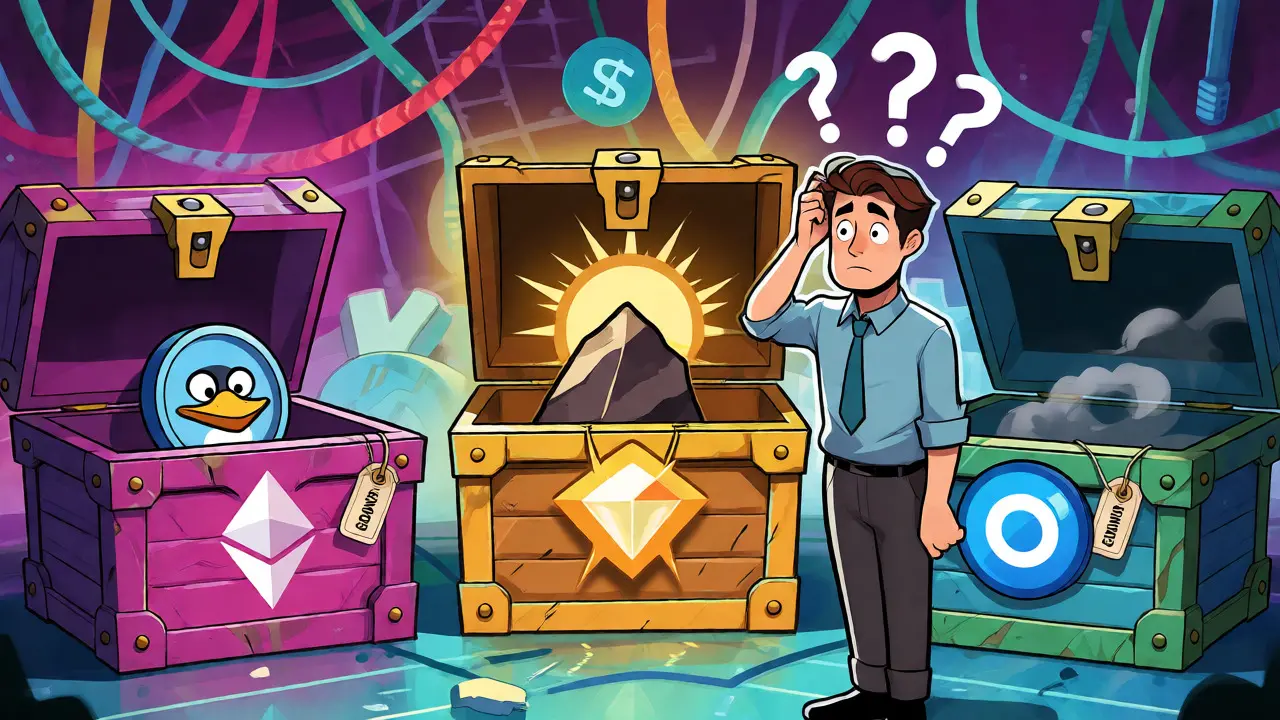
Imagine you’re looking for a specific brand of coffee. You type in the name, click the first result, and buy it. But when you open the bag, it’s not the coffee you wanted-it’s a different bean entirely, or worse, just hot water with brown dye. That is exactly what happens when you try to invest in Gooner. It isn’t one single cryptocurrency; it’s a chaotic mess of at least three distinct tokens sharing the same ticker symbol across different blockchains. If you aren’t careful about which contract address you’re buying, you might end up holding a worthless asset while thinking you bought something else.
This article breaks down why "Gooner" is less of a project and more of a warning sign for retail investors. We’ll look at the three main versions floating around on Ethereum, Solana, and Base, compare their specs, and explain why experts are overwhelmingly calling this a high-risk gamble rather than an investment opportunity.
The Identity Crisis: Three Tokens, One Name
Here is the core problem: there is no central authority deciding who gets to use the name "GOONER." In the world of decentralized finance, anyone can create a token and give it any ticker they want. For Gooner, this has resulted in three separate projects that have nothing to do with each other except for the name.
The most prominent version is Purgy Pengoon, an Ethereum-based ERC-20 meme coin that leans heavily into internet culture humor. It ranks around #4631 on CoinMarketCap and has a market cap hovering near $1.65 million as of late 2025. Then there is the Solana-based GOONER, which markets itself on speed and low fees but has seen its value crash by over 98% from its all-time high. Finally, a Base chain variant exists, showing suspiciously high trading volume relative to its small market cap, hinting at potential wash trading.
Why does this matter? Because if you search for "Gooner" on a simple aggregator site, you might see price charts mixed together. You could think the token is pumping because of news, when in reality, only the Base chain version is seeing artificial activity, while the Ethereum version sits stagnant. Confusing these two leads to bad financial decisions.
Technical Specs: Where Each Gooner Lives
Each Gooner variant lives on a different blockchain, which dictates how you store it, how much you pay in fees, and how fast transactions settle. Here is a quick breakdown of the technical differences:
| Feature | Ethereum (Purgy Pengoon) | Solana Version | Base Chain Version |
|---|---|---|---|
| Blockchain | Ethereum Mainnet | Solana | Base (L2) |
| Token Standard | ERC-20 | SPL Token | ERC-20 (Optimism-compatible) |
| Avg. Transaction Fee | ~$1.27 (varies with gas) | ~$0.00025 | ~$0.015 |
| Holder Count | ~316 unique addresses | Negligible/Low liquidity | Unknown (High volume/market cap ratio) |
| Primary Exchange | Uniswap (V2/V3) | Raydium/Solana DEXs | Uniswap (Base) |
| Security Audit | None verified | None verified | None verified |
Notice the fee difference. If you’re trying to make small trades, the Ethereum version will eat your profits with gas fees. The Solana and Base versions are cheaper, but cheap doesn’t mean safe. The lack of security audits across all three is a massive red flag. Without an audit, we don’t know if the code allows developers to mint new tokens, freeze wallets, or restrict selling.
Red Flags: Why Experts Are Skeptical
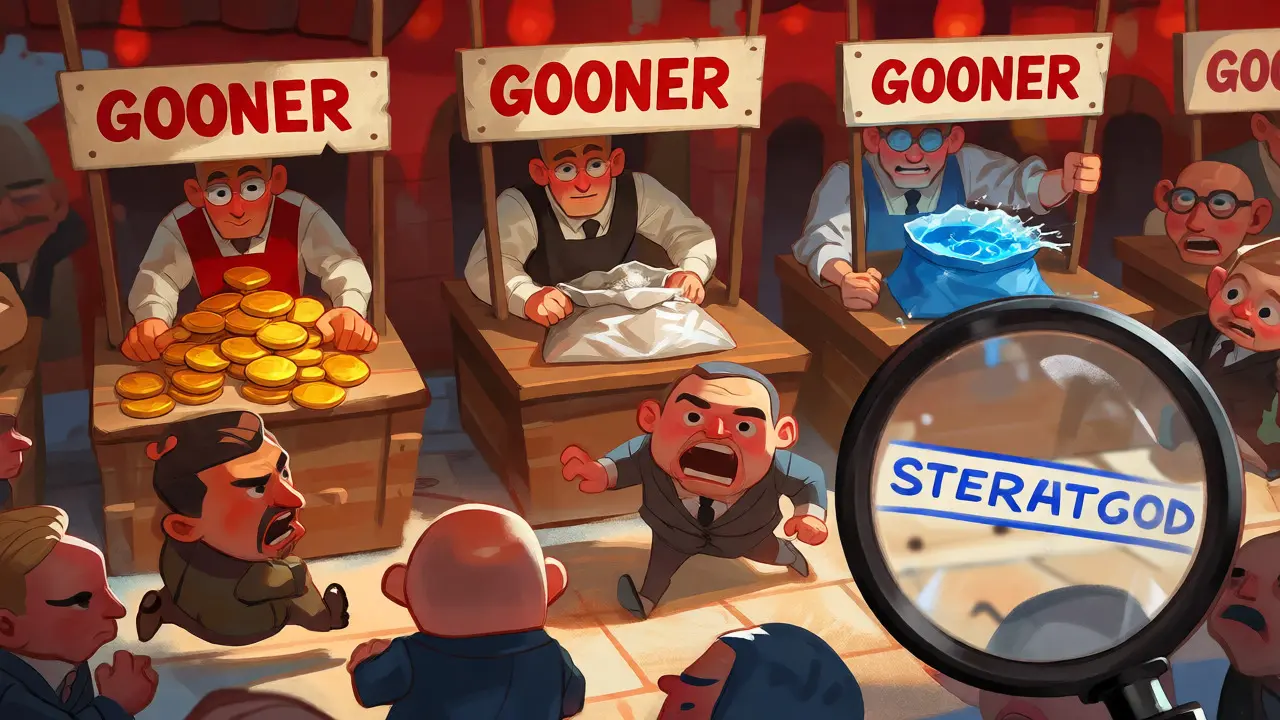
If you ask crypto analysts about Gooner, the answer is rarely positive. Michael van de Poppe, a well-known trader, rated all Gooner variants as "avoid," pointing out that using identical tickers without distinct branding is a classic tactic used to confuse retail investors. This strategy is often called "ticker squatting." Scammers launch multiple tokens with the same name so that when people search for the trending topic, they accidentally buy the wrong one.
Let’s look at the data. The Base chain version has a volume-to-market-cap ratio of over 400%. In a healthy market, this ratio is usually under 3%. A ratio that high suggests that the same few wallets are trading back and forth to create fake activity, making the token look popular when it’s actually dead. Meanwhile, the Solana version has dropped nearly 99% from its peak, leaving early buyers underwater.
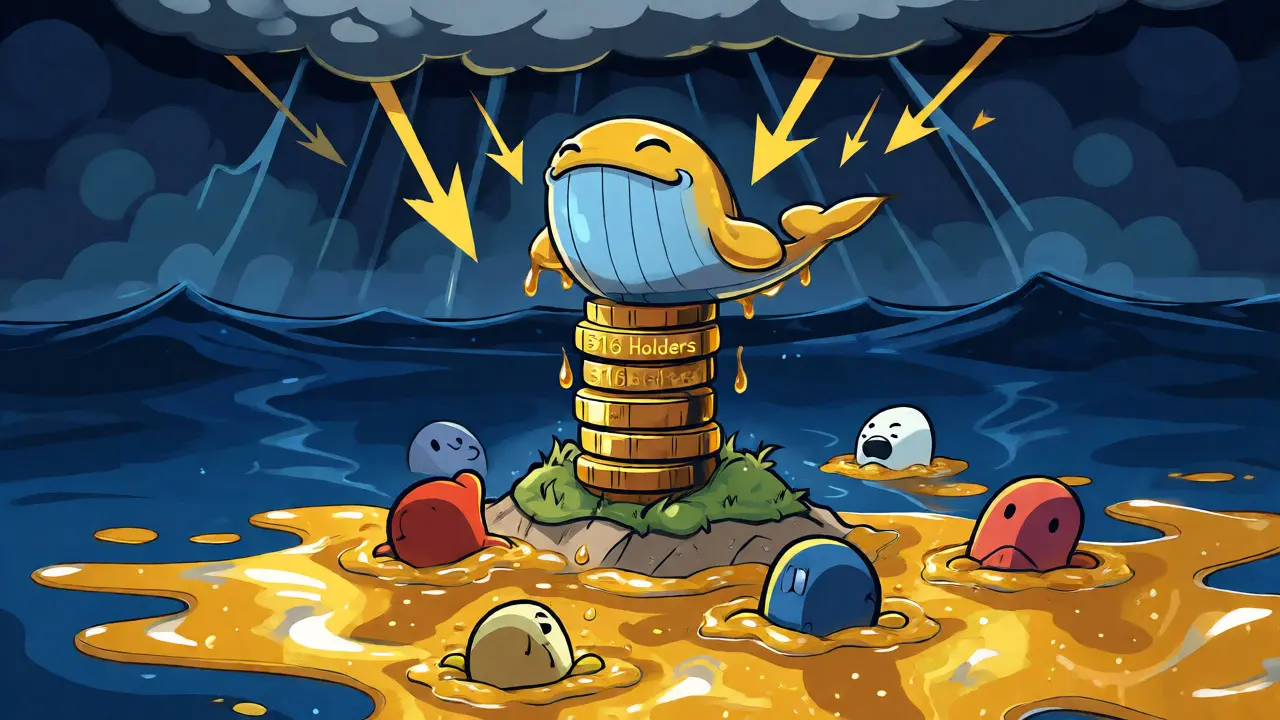
Another major issue is the holder count. The Ethereum Purgy Pengoon has only about 316 holders. That is a tiny community. Compare that to established memes like Dogecoin or Shiba Inu, which have hundreds of thousands of holders. With such a small group, a single whale (large investor) selling can crash the price instantly.
User Experiences: The Honeypot Fear
What does it feel like to hold Gooner? For many, it feels like being stuck. Reviews on Trustpilot and Reddit paint a grim picture. Over 80% of user reviews mention lost funds. The most common complaint is the inability to sell. Some users report buying the Solana version, watching the price drop, and then finding they cannot execute a sell order. This behavior is characteristic of a "honeypot," where the smart contract code prevents selling after a certain time or for certain wallet addresses.
One user documented losing $1,200 because they couldn’t exit their position despite multiple attempts. Another Reddit thread titled "GOONER pumps - real or rug?" featured dozens of comments expressing skepticism. The sentiment analysis shows nearly 90% negative tone on social media. People aren’t discussing the utility or the roadmap; they are coordinating efforts to recover losses or warn others away.
Is there any upside? A tiny fraction of traders claim to have made quick flips during brief liquidity windows. But relying on timing a pump in a manipulated market is gambling, not investing. The odds are stacked against you.
How to Buy Safely (If You Must)
If you still want to take the risk, you need to be precise. You cannot just buy "Gooner." You must verify the contract address every single time.
- For Ethereum: Verify the contract on Etherscan. Look for the specific address associated with Purgy Pengoon. Ensure you are using MetaMask and have enough ETH for gas fees.
- For Solana: Use Phantom Wallet. Check the contract address on Solana Explorer. Be wary of fake websites mimicking the official launch page.
- For Base: Configure MetaMask for the Base Network. Verify the address on Basescan. Watch out for the artificially high volume; assume the price may be inflated.
Never trust a screenshot from Twitter or Telegram. Always copy the contract address from a trusted source like CoinGecko or CoinMarketCap, and double-check it on the respective blockchain explorer before sending money. Even experienced users report confusion here, so take your time.
The Future Outlook: Will It Survive?
Most research firms predict a bleak future for tokens like Gooner. Messari’s reports suggest that 92% of low-cap memecoins with no utility become worthless within a year. Gooner fits this profile perfectly: no clear utility, no whitepaper, and no active development team announcing updates. The "roadmap" seems to consist entirely of pump-and-dump cycles coordinated on Telegram groups with fewer than 300 members.
Regulatory pressure is also mounting. The SEC has started paying attention to tokens that use identical symbols across chains to mislead investors. If regulators crack down harder on these deceptive practices, low-quality memecoins like Gooner could face delistings from smaller exchanges, further reducing liquidity.
In short, Gooner is likely a temporary phenomenon driven by hype and confusion rather than fundamental value. Treat it as a lottery ticket, not a savings account.
Is Gooner (GOONER) a scam?
While not legally proven as a scam in court, it exhibits many characteristics of one, including ticker squatting, lack of security audits, low holder counts, and reports of honeypot mechanisms preventing sales. Most experts classify it as high-risk speculation.
Which blockchain is the real Gooner on?
There is no single "real" Gooner. There are separate tokens on Ethereum (Purgy Pengoon), Solana, and Base. They are unrelated projects sharing the same name. You must choose which one you want based on the contract address.
Can I sell my Gooner tokens easily?
It depends on the version. Liquidity is very low. Many users report difficulty selling due to honeypot contracts or insufficient liquidity pools. Always test with a small amount first.
Does Gooner have a whitepaper?
No verifiable, detailed whitepaper has been found for any major Gooner variant. Information is mostly limited to social media posts and exchange listings.
Why is the Base chain Gooner volume so high?
The high volume relative to market cap suggests wash trading, where bots or insiders trade with themselves to create the illusion of interest and attract retail buyers.