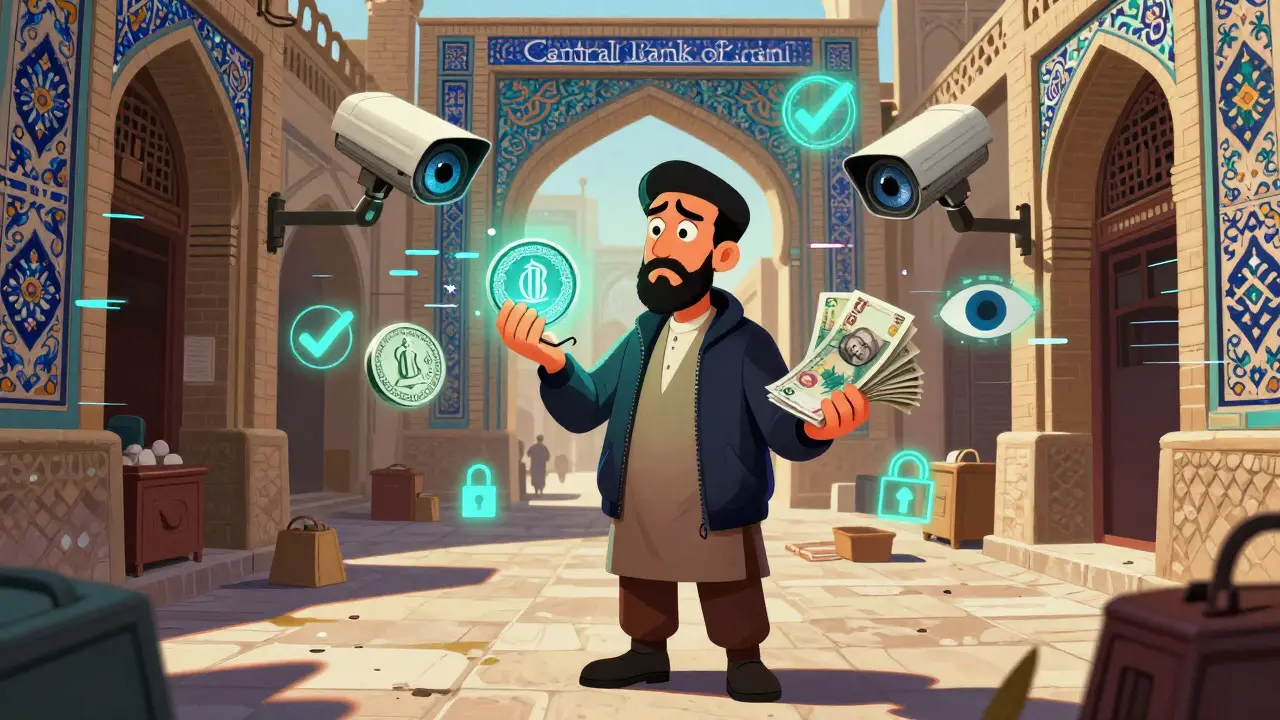
Imagine trying to buy groceries or pay rent using a digital asset that the government technically bans but secretly relies on to survive international sanctions. That is the reality for millions of Iranians navigating the complex web of cryptocurrency regulations. If you are looking at the Iranian market, you might assume it is either completely open like some Asian hubs or totally closed like certain authoritarian states. The truth is much messier and far more strategic.
As of August 2026, Iran has moved from a state of ambiguous tolerance to strict, centralized control. The days of wild west trading are over. Now, every transaction flows through a funnel controlled by the Central Bank of Iran (CBI). This shift isn't just about money; it's about sovereignty, energy management, and keeping up with global pressure. Let’s break down exactly how the system works, what it means for traders, and why the rules keep changing so fast.
The Current Regulatory Framework: Who Holds the Power?
Since January 2025, the landscape has been defined by one key player: the CBI. Under President Masoud Pezeshkian’s directive, the central bank became the sole authority for licensing and overseeing all digital assets. This includes both foreign cryptocurrencies like Bitcoin and local stablecoins. There is no independent regulatory body; if you want to operate legally in Iran, you answer to Tehran.
The core mechanism is simple but intrusive. All platforms must integrate with a government-controlled API. This means the state doesn't just watch the blockchain; it watches your wallet. According to TRM Labs, this setup grants the government 'unprecedented surveillance capabilities.' Every rial converted into crypto, and every crypto swapped back into rials, happens through designated accounts approved by the CBI. It is a closed loop designed to track every satoshi moving through the country.
- Licensing: Individuals, businesses, and miners need explicit licenses from the CBI.
- Surveillance: Full data access for the state on all licensed transactions.
- Payment Gateways: Mandatory use of government-approved channels for fiat-crypto swaps.
Stablecoin Limits: The $10,000 Ceiling
If you hold Tether (USDT) or other stablecoins, listen up. In September 2025, the CBI imposed hard caps on how much you can own. Why? Because stablecoins were becoming the primary tool for hedging against the rapidly devaluing rial. The government didn't like losing its grip on currency stability.
Here are the current rules that took full effect after the compliance deadline:
- Annual Purchase Limit: You can buy a maximum of $5,000 worth of stablecoins per year.
- Holding Balance Cap: Your total stablecoin balance cannot exceed $10,000.
- Compliance Window: Holders who exceeded these limits had one month to offload their excess assets or face penalties.
This restriction hit hard. For many Iranians, stablecoins aren't speculative bets; they are savings accounts. With the rial losing value quickly, locking in dollars via USDT was the only way to protect wealth. Now, that safety net is capped. Deputy Governor Asghar Abolhasani made it clear: comply, or deal with the consequences. State media even warned that non-compliant accounts could be frozen, adding a layer of psychological pressure to the financial constraint.
Mining: From Gold Rush to Underground Operation
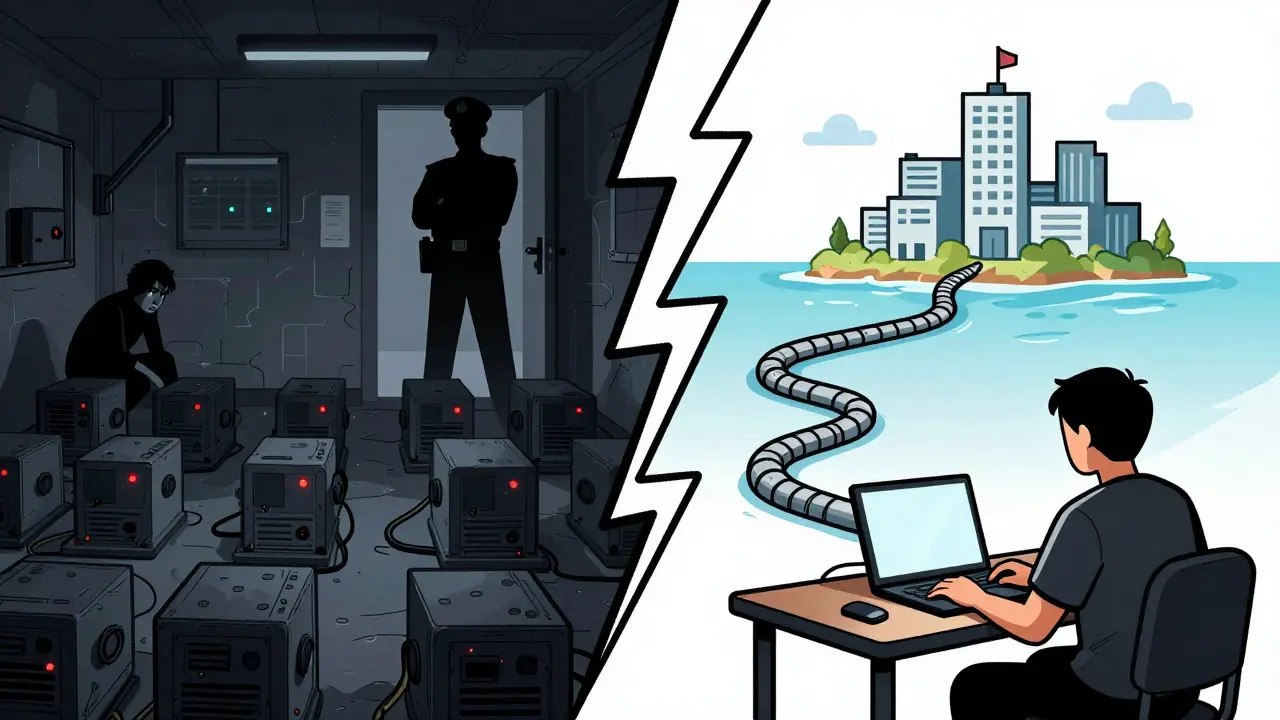
Cryptocurrency mining used to be a massive industry in Iran, fueled by cheap electricity. But those days are largely gone. Since 2019, the rule has been stark: licensed miners must sell their mined coins directly to the CBI. They don't get to keep them or trade them freely.
The catch? The energy tariffs for licensed mining operations are set high enough to make profitability nearly impossible for most. This paradox pushed thousands of miners underground. They now operate without licenses, hiding their rigs in basements and remote areas to avoid paying the state its cut. This unregulated sector causes real problems, particularly during winter when power demand spikes. Unauthorized mining loads have contributed to rolling blackouts, which in turn forced the government to tighten enforcement further in late 2024.
| Feature | Licensed Miners | Unlicensed (Underground) Miners |
|---|---|---|
| Sales Channel | Mandatory sale to CBI | Free market/OTC sales |
| Energy Cost | High, regulated tariffs | Variable, often subsidized or stolen |
| Legal Risk | Low (if compliant) | High (fines, equipment seizure) |
| Profitability | Negative/Marginal | Positive (due to lower costs) |
Taxation and the New Normal
For years, crypto trading in Iran existed in a tax gray zone. That changed in August 2025 with the enactment of the Law on Taxation of Speculation and Profiteering. This law explicitly included cryptocurrency trading alongside gold, real estate, and forex as taxable activities. It is the first time capital gains tax applies to crypto profits in the country.
The Ministry of Economic Affairs and Finance plans to fully integrate crypto tax reporting into existing financial systems by Q2 2026. This means the era of anonymous, untaxed gains is officially ending. If you are making significant profits from trading, you will soon need to declare them. The integration aims to close loopholes that previously allowed traders to hide income behind the pseudonymity of blockchain technology.

The Workaround Economy: VPNs and DAI
Regulations change, but human ingenuity adapts faster. When the CBI blocked direct payment channels in December 2024, users didn't stop trading. They went around the block. Virtual Private Networks (VPNs) became essential tools, allowing Iranians to access foreign exchanges like Binance or OKX directly. Chainalysis estimates that roughly 60% of trading volume still occurs through these unofficial, offshore channels.
But the biggest shift happened in July 2025. Tether froze 42 Iranian-linked addresses, including major holdings on the domestic exchange Nobitex. This event shook confidence in USDT. In response, Iranian users rapidly pivoted to DAI, a decentralized stablecoin built on the Polygon network. Unlike USDT, DAI isn't controlled by a single company that can freeze your assets based on geopolitical whims. TRM Labs projects that DAI's share among Iranian stablecoin users will jump from 35% in Q3 2025 to 65% by Q4 2026. It’s a clear vote of no confidence in centralized stablecoins.
What Does This Mean for Investors?
If you are an international investor eyeing the Iranian market, the risk profile has shifted dramatically. The market size is still substantial-estimated between $30 billion and $50 billion-but access is fragmented. You are dealing with a bifurcated system: a small, highly regulated domestic slice and a large, shadowy offshore ecosystem.
Key takeaways for anyone involved in this space:
- Compliance is Expensive: Setting up a compliant account takes 3-5 business days and requires heavy identity verification.
- Documentation is Poor: Official guidelines lack English translations and are often ambiguous, forcing reliance on third-party guides.
- Sanctions Are the Wildcard: UN sanctions reinstated in September 2025 triggered immediate local restrictions. Any future nuclear deal negotiations could flip the script entirely, potentially opening the market up again.
The long-term viability of Iran's crypto market hinges less on technology and more on geopolitics. If sanctions ease, the need for crypto as a workaround disappears, potentially shrinking the market. If tensions rise, the market will likely grow darker and more decentralized, relying heavily on privacy coins and offshore venues. For now, the state is tightening its grip, but the people are finding new ways to stay liquid.
Is Bitcoin legal in Iran in 2026?
Yes, but with strict conditions. You must trade through CBI-licensed platforms or use offshore exchanges via VPN. Direct peer-to-peer trades for domestic goods are discouraged, and all fiat conversions must go through approved gateways. Mining is legal only if you sell your output to the Central Bank.
Can I hold more than $10,000 in Tether?
Technically, the limit is $10,000 for holding balances. Exceeding this cap risks account freezes or penalties. Many users have switched to DAI on Polygon to avoid centralized freezing risks and navigate these limits more flexibly, though the official cap applies to all stablecoins recognized by the CBI.
Do I need to pay taxes on crypto profits in Iran?
Yes. Since August 2025, capital gains tax applies to cryptocurrency trading. The system is being fully integrated into national financial reporting by mid-2026. Keeping records of your entry and exit prices is now mandatory for compliance.
Why did Tether freeze Iranian wallets?
In July 2025, Tether froze 42 addresses linked to Iran, partly due to international sanctions pressures and concerns about financing sanctioned entities. This move accelerated the local shift toward decentralized alternatives like DAI, where no single entity can freeze your funds.
Is it safe to use Iranian exchanges like Nobitex?
Nobitex operates under strict government oversight, which adds a layer of security against scams but increases regulatory risk. If the government decides to restrict specific tokens or impose new fees, the exchange must comply immediately. Users should diversify across offshore venues to mitigate this single-point-of-failure risk.