Imagine sending a handwritten letter through the mail. You sign your name at the bottom to prove it’s from you. If someone tries to alter the message or forge your signature, the recipient knows something is wrong. Now, imagine doing this on a global scale, millions of times a day, without any post office or central authority checking the work. That is exactly what happens on every blockchain network.
The magic ingredient that makes this possible is the digital signature. It is not a scanned image of your pen stroke. It is a complex mathematical proof that guarantees two things: you authorized the transaction, and no one changed the details after you signed it. Without digital signatures, blockchain would be just a public ledger anyone could edit. With them, it becomes an immutable record of truth.
The Core Concept: Asymmetric Cryptography
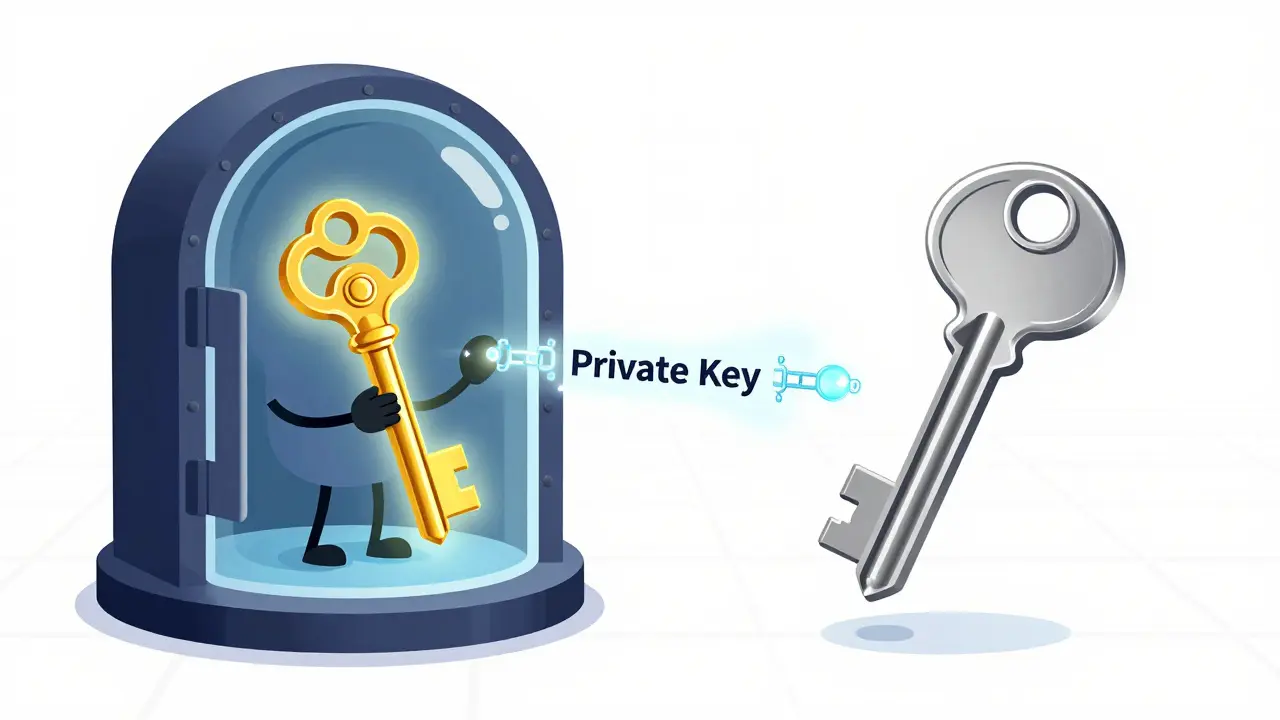
To understand how digital signatures work, we first need to look at the foundation they are built on: asymmetric cryptography. Unlike traditional locks where everyone shares the same key, asymmetric cryptography uses a pair of mathematically linked keys. These are the private key and a secret number known only to the owner, used to sign transactions and the public key and a derived value shared openly, used to verify signatures.
Think of the private key as a wax seal stamp kept in your safe. The public key is like the impression that stamp leaves on wax. Anyone can see the impression (the public key) and recognize it as yours. However, only you have the physical stamp (the private key) needed to create that exact impression. In the world of blockchain, if you want to send Bitcoin or Ethereum, you must use your private key to "stamp" the transaction. The network then uses your public key to check if the stamp matches.
This system solves the problem of identity in a decentralized environment. You don’t need to show your ID card to a bank manager. You simply prove, through mathematics, that you possess the private key associated with the funds you are trying to move. This process is trustless because it relies on code and math, not on trusting a third party to tell the truth.
Step-by-Step: How a Transaction Gets Signed
When you click "send" on your crypto wallet, several invisible steps happen instantly. Let’s break down the journey of a single transaction from your device to the blockchain.
- Data Collection: Your wallet gathers the details of the transaction. This includes the recipient’s address, the amount you are sending, and often a small fee for the network. It might also include extra data, like a memo or a smart contract instruction.
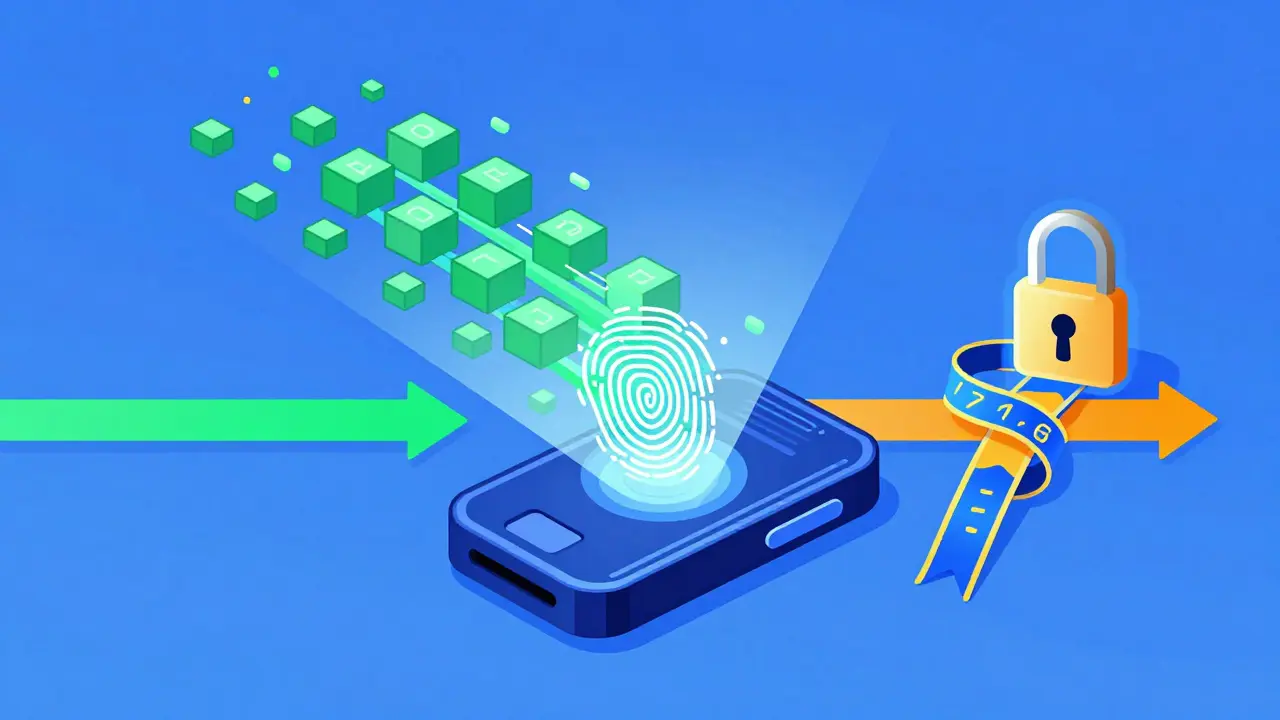
- Hashing: Before signing, the wallet runs these details through a hashing algorithm, typically SHA-256 for Bitcoin. This creates a unique string of characters called a hash. Think of this hash as a digital fingerprint of the transaction. Even changing a single comma in the transaction data would result in a completely different hash.
- Signing: Here is where the private key comes in. The wallet combines the transaction hash with your private key using a specific algorithm. For most major blockchains, this is the Elliptic Curve Digital Signature Algorithm (ECDSA). The output is the digital signature.
- Broadcasting: Your wallet sends the original transaction data, your public key (or an address derived from it), and the new digital signature to the blockchain network. Crucially, your private key never leaves your device.
Once broadcast, thousands of nodes across the world receive this packet of information. They do not ask your permission to verify it; they simply run the numbers.
The Verification Process: How Nodes Check the Work
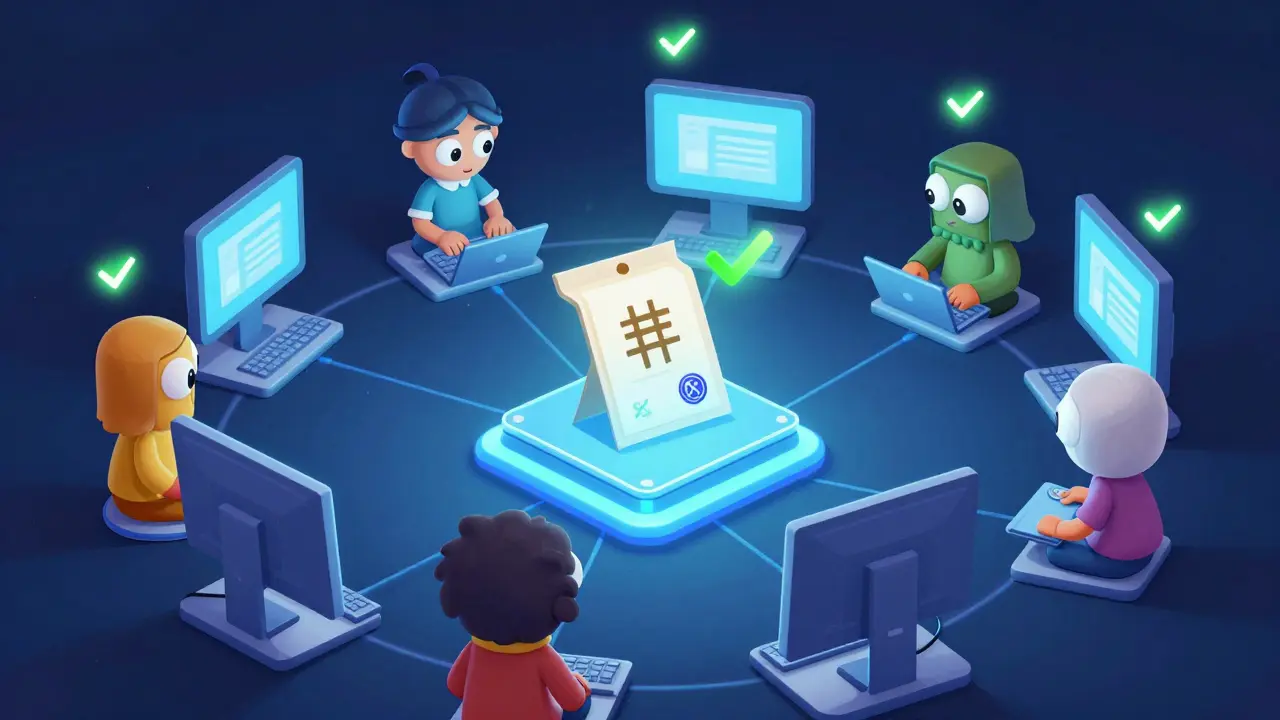
Verification is the mirror image of signing. Network nodes take the transaction data, the public key, and the digital signature, and run them through the verification side of the ECDSA algorithm.
The node asks two critical questions:
- Did the holder of this private key actually sign this? The math checks if the signature corresponds to the provided public key. If yes, the node knows the owner authorized it.
- Has the transaction data been altered? The node recalculates the hash of the transaction data it received. It then checks if this hash matches the one that was originally signed. If even one bit of data has changed-say, a hacker tried to change the recipient address-the hashes will not match, and the signature will fail verification.
If both checks pass, the node accepts the transaction as valid. If either fails, the transaction is rejected immediately. This happens independently on every node, ensuring that there is no single point of failure. No central server decides if a transaction is real; the math decides.
Why ECDSA Dominates Blockchain
You might wonder why blockchains use ECDSA instead of other encryption methods like RSA. The answer lies in efficiency and size. Early internet security relied heavily on RSA, which requires very long keys to be secure. Long keys mean more data to store and more processing power to verify.
ECDSA Elliptic Curve Digital Signature Algorithm, a cryptographic method providing high security with smaller key sizes offers the same level of security as RSA but with much shorter keys. Bitcoin uses a specific curve called secp256k1. This choice allows Bitcoin transactions to remain relatively small, which is crucial because every transaction is stored forever on the blockchain. Smaller transactions mean the blockchain grows slower, making it easier for regular computers to keep up with the network.
Ethereum also uses ECDSA for its standard transactions. However, the landscape is evolving. Newer networks and upgrades are exploring alternatives like EdDSA or Schnorr signatures. These newer algorithms promise faster verification and better privacy features, but ECDSA remains the workhorse of the current crypto ecosystem due to its proven track record and widespread implementation.
| Algorithm | Key Size (approx) | Security Level | Primary Use Case |
|---|---|---|---|
| RSA | 2048+ bits | High | Web SSL/TLS, Legacy Systems |
| ECDSA | 256 bits | High | Bitcoin, Ethereum, Most Blockchains |
| Schnorr | 256 bits | High | Lightning Network, Future Bitcoin Upgrades |
| EdDSA | 256 bits | High | Cardano, Stellar, High-Performance Chains |
Real-World Applications Beyond Simple Transfers
Digital signatures are not just for moving money from Alice to Bob. They enable complex interactions that define modern blockchain utility.
Smart Contracts: When you interact with a DeFi protocol to swap tokens or lend assets, you are signing a transaction that executes code. The digital signature proves you agreed to the terms of that code. If the contract tries to drain your wallet unexpectedly, the signature ensures that only the actions you explicitly approved are executed.
Multi-Signature Wallets: For businesses or high-net-worth individuals, relying on a single private key is risky. Multi-sig wallets require multiple private keys to sign a single transaction. For example, a company might require three out of five directors to sign off on a large transfer. The digital signature scheme aggregates these proofs, ensuring that the transaction only proceeds when the required threshold of approvals is met.
Supply Chain Tracking: Companies use blockchain to track goods. Each time a product moves from factory to warehouse to store, the handler signs the update with their private key. This creates an unforgeable history. If a retailer claims a diamond is conflict-free, the blockchain shows a chain of digital signatures from every entity that handled it, proving its journey.
Security Risks and Best Practices
While the math behind digital signatures is virtually unbreakable, the human element is vulnerable. The security of your assets depends entirely on the secrecy of your private key. If someone steals your private key, they can generate valid digital signatures for transactions you did not authorize. The network cannot tell the difference between a legitimate user and a thief holding the correct key.
Common pitfalls include:
- Phishing Attacks: Fake websites trick users into entering their seed phrases or private keys. Never share these. Legitimate services will never ask for your private key.
- Malware: Keyloggers or clipboard hijackers on your computer can steal keys or alter transaction addresses before you sign them. Always double-check the recipient address on the confirmation screen.
- Poor Storage: Storing private keys in plain text files or cloud notes is dangerous. Use hardware wallets, which keep the private key isolated inside a secure chip, signing transactions internally without exposing the key to the internet.
Remember, digital signatures provide non-repudiation. Once you sign a transaction and it is confirmed on the blockchain, you cannot deny having sent it. There is no chargeback button. This finality is a feature, not a bug, but it demands responsibility.
The Future: Quantum Resistance and Scaling
As technology advances, so do the threats. Quantum computers, once sufficiently powerful, could potentially break ECDSA by deriving private keys from public keys. This is a theoretical risk today, but one that blockchain developers are actively preparing for.
Research is underway to integrate post-quantum cryptographic algorithms, such as CRYSTALS-Dilithium, into blockchain networks. These algorithms are designed to resist attacks from quantum computers. Additionally, Layer 2 scaling solutions are optimizing signature verification to handle millions of transactions per second, reducing the computational load on the main blockchain while maintaining the same security guarantees.
The evolution of digital signatures will continue to balance three competing needs: security, privacy, and scalability. As zero-knowledge proofs become more integrated, we may see signatures that prove ownership without revealing any identifying information about the signer, enhancing privacy while keeping the trustless nature of blockchain intact.
Can a digital signature be forged?
Mathematically, forging a digital signature without the private key is computationally infeasible with current technology. The probability is so low that it is considered impossible for all practical purposes. However, if an attacker gains access to your private key through theft or malware, they can create valid signatures, effectively impersonating you.
What happens if I lose my private key?
If you lose your private key, you lose access to the funds associated with that public key. Since no central authority holds your key, there is no password reset option. The digital signatures required to move those funds can never be generated again, rendering the assets permanently inaccessible.
Why do blockchains use ECDSA instead of RSA?
ECDSA provides equivalent security to RSA but with significantly smaller key and signature sizes. This efficiency reduces the storage space required on the blockchain and speeds up verification processes, which is critical for a distributed network where every node must validate every transaction.
Is my private key sent to the network when I sign a transaction?
No. Your private key never leaves your device. Only the resulting digital signature and your public key (or address) are broadcast to the network. The private key is used locally to generate the signature, but the signature itself does not reveal the private key.
Can I reuse a digital signature for a different transaction?
No. A digital signature is bound to the specific data of the transaction. If you change the recipient, amount, or any other detail, the hash changes, and the original signature becomes invalid. Each unique transaction requires a new signature.
Brad Semp
July 17, 2026 AT 02:04The analogy of the wax seal is charmingly quaint, though it fails to capture the rigorous mathematical certainty provided by elliptic curve cryptography. One must appreciate that the security does not rely on physical obscurity but on computational hardness assumptions. It is a elegant solution to the double-spending problem in a trustless environment.
Ran Tao
July 18, 2026 AT 16:35Oh please 🙄 another basic explainer for people who think blockchain is magic beans ✨ The reality is far more boring and bureaucratic than this fairy tale suggests. We are essentially just glorified accountants with expensive calculators 🧮📉
Korn Arrieta
July 19, 2026 AT 10:53This explanation ignores the centralization risks inherent in wallet providers. If your private key is generated or stored by a third party, you have no sovereignty. The math is sound, but the implementation is often compromised by corporate greed and negligence. Stop pretending decentralization exists when most users rely on centralized exchanges.
Jackie D
July 21, 2026 AT 04:16i totally get why people are scared of losing their keys but think about it like this... its like having a safe deposit box where only you have the key and if you lose it the bank doesnt care lol. it sounds harsh but its actually pretty liberating once you wrap your head around being your own bank. no more frozen accounts!
Lisa Chong
July 22, 2026 AT 10:20Thy artical is riddled with lies from the globalist agenda! They want us to believe in these digital seals so we can be tracked every step of the way. The 'private key' is merely a facade for total surveillance. Wake up sheeple! The government knows exactly what you bought with those 'anonymous' coins. Do not trust the system! It is all a big con job designed to enslave us through technology. Stay vigilant against the deep state crypto overlords!
Heather Austin
July 22, 2026 AT 10:55hey everyone just wanted to add that hardware wallets are super important here because they keep your private key offline so even if your computer has malware it cant steal your funds easily. also dont forget to write down your seed phrase on paper and store it somewhere safe like a fireproof box. i learned this the hard way when i lost access to some old coins :( hope this helps someone avoid my mistakes
Kristy Morrow
July 23, 2026 AT 14:53the concept of truth is subjective yet here we pretend math provides objective reality. interesting paradox. we build towers of abstraction on sand. who decides which hash is valid really? the network? the nodes? or the hidden hands controlling the infrastructure. question everything especially the narrative of freedom. it is a cage made of code.
Ruth Williams
July 25, 2026 AT 04:28It is evident that the majority of participants in this discourse lack a fundamental understanding of cryptographic principles. The reliance on ECDSA is not arbitrary; it is the result of decades of cryptanalysis. Those who dismiss its efficacy due to quantum threats without understanding post-quantum migration strategies reveal their ignorance. Education is required before one can offer critique.
Sophie Nakasako
July 27, 2026 AT 04:22I find it fascinating how this technology shifts power dynamics. Instead of trusting institutions, we trust mathematics. This requires a new kind of literacy and responsibility from each individual. It is empowering but also demanding. We must learn to protect our keys as we would our lives. The journey to financial sovereignty begins with understanding these tools.