
Most people treat cryptocurrency like a casino. They buy because the price is going up and sell because it’s dropping. But if you want to build real wealth in blockchain, which is a decentralized ledger technology that records transactions across many computers so that the record cannot be altered retroactively, you need a better system. You need fundamental analysis frameworks. These aren't just Wall Street buzzwords; they are systematic methods to figure out what an asset is actually worth, separate from the hype.
The concept of fundamental analysis started with Benjamin Graham and David Dodd in 1934. They taught investors to look at a company's financial health rather than its stock chart. Today, we apply those same principles to digital assets. The goal is simple: find the gap between what a token costs today and what it should cost based on its utility, technology, and adoption. If the market price is lower than the intrinsic value, you have a buying opportunity. If it’s higher, you might want to stay away.
The Three Main Approaches to Analysis
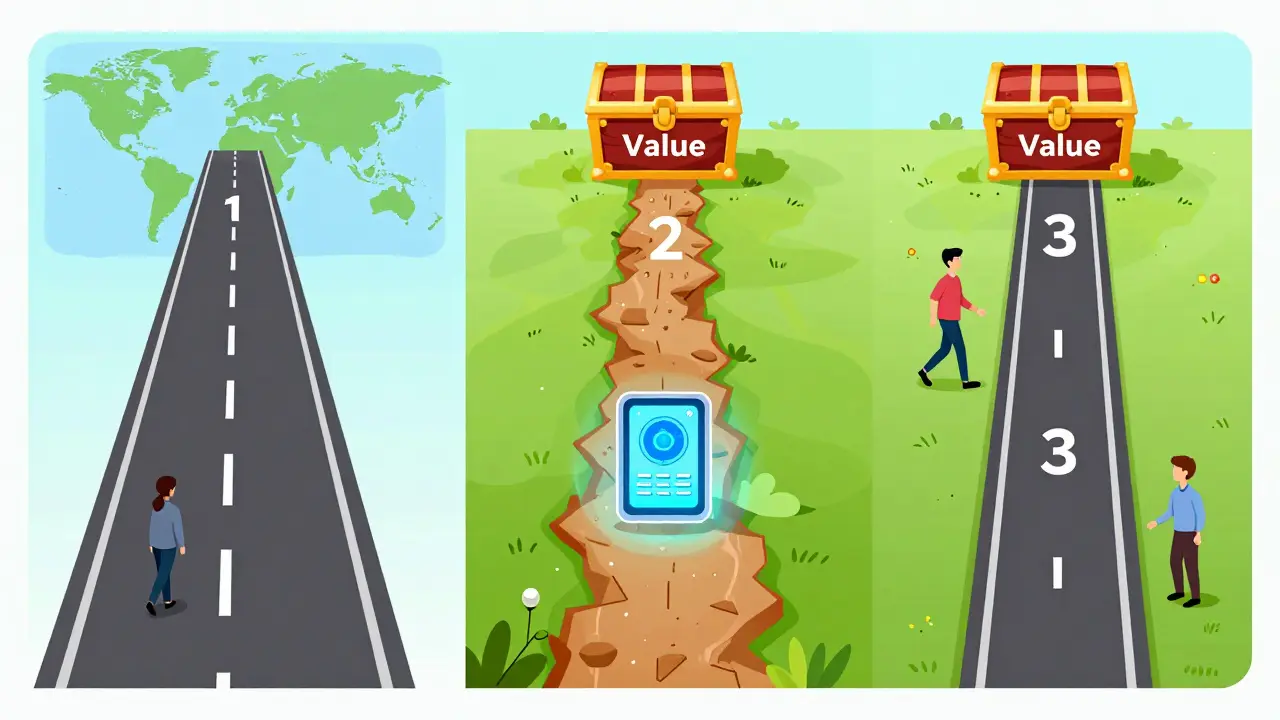
When analyzing any investment, whether it’s a share of Apple or a bag of Bitcoin, you generally choose one of three paths. Understanding these helps you decide how deep you want to go.
- Top-Down Analysis: You start big. You look at the global economy, interest rates, and regulatory trends. Then you narrow down to specific industries (like DeFi or Gaming) before picking individual projects. This is great for spotting macro trends but can miss hidden gems in smaller sectors.
- Bottom-Up Analysis: You ignore the noise. You pick a project because its technology is superior, its team is credible, and its user base is growing. You assume that if the product is good, it will succeed regardless of the broader market. This is risky if the whole sector crashes due to regulation, but it often yields the highest returns.
- Hybrid Frameworks: This is where most pros live. You combine both. You check if the macro environment is safe (top-down) and then hunt for the best projects within that safe zone (bottom-up). Modern tools often use scoring systems here, weighting macro factors at 40%, industry health at 30%, and project specifics at 30%.
Adapting Traditional Metrics for Blockchain
You can’t just copy-paste a spreadsheet from 1950 to analyze a decentralized autonomous organization (DAO). Traditional metrics like Price-to-Earnings (P/E) ratios don’t work well when there are no "earnings" in the traditional sense. Instead, we adapt.
In traditional finance, we look at revenue consistency and margin trends. In blockchain, we look at Tokenomics, which refers to the economic model of a cryptocurrency project, including supply dynamics, distribution, and utility mechanisms. Here is how the translation works:
| Traditional Metric | Blockchain Equivalent | What It Tells You |
|---|---|---|
| Revenue Growth | Active Addresses / Transaction Volume | Is the network actually being used? |
| Earnings Per Share (EPS) | Protocol Revenue (Fees collected) | Does the protocol generate real cash flow? |
| Debt-to-Equity Ratio | Staking Ratios / Lock-up Periods | How stable is the supply? Are holders committed? |
| Price-to-Earnings (P/E) | Market Cap to Fee Ratio (MCFR) | How expensive is the network relative to its income? |
| Management Quality | Developer Activity & Community Governance | Is code being written? Is the community active? |
For example, a low Market Cap to Fee Ratio suggests a network is undervalued compared to its actual usage. If Network A charges $1 million in fees daily and has a $1 billion market cap, while Network B charges $100k in fees but has a $5 billion market cap, Network A looks fundamentally stronger, even if Network B’s price is rising faster right now.
The Human Factor: Team and Community
Peter Lynch, the legendary fund manager, once said that qualitative factors often outweigh quantitative ones. In blockchain, this is doubly true. Code can be copied, but trust cannot. You need to assess the "soft" fundamentals.
Look at the development activity. Tools like GitHub allow you to see how many lines of code are being committed weekly. A project with zero commits for six months is likely dead, regardless of its marketing. Look at the governance. How are decisions made? Is it a small group of insiders, or does the community vote via DAO proposals? Projects with transparent, active governance tend to survive crises better because they have built-in resilience and feedback loops.
Also, consider the "economic moat." Does this blockchain have a unique advantage that competitors can’t easily replicate? Ethereum has the largest developer ecosystem. Solana has speed and low costs. Bitcoin has brand recognition and security. Identifying this moat is crucial for long-term holding.

Common Pitfalls and How to Avoid Them
Fundamental analysis isn't foolproof. Even experts make mistakes. One common error is ignoring macro risks. During the 2022 banking crisis, many investors held onto high-yield DeFi tokens because their fundamentals looked strong locally. However, the broader market crashed due to interest rate hikes and liquidity crunches. A pure bottom-up approach failed them. Always keep one eye on the macro environment.
Another pitfall is over-engineering your models. As investor Howard Marks noted, if your analysis requires a 50-variable spreadsheet, you’ve probably lost sight of the basics. Start simple. Check the usage, check the revenue, check the team. Only add complexity if you need to differentiate between two very similar projects.
Finally, beware of accounting tricks. In traditional finance, companies can manipulate earnings. In crypto, teams can inflate transaction volume by moving money back and forth (wash trading) to make the network look busier than it is. Always cross-reference on-chain data with third-party analytics platforms to verify authenticity.
Tools for the Modern Analyst
You don’t need to be a mathematician to do this. There are tools that simplify the process. Platforms like Dune Analytics allow you to query blockchain data directly. You can create dashboards that track active users, total value locked (TVL), and fee generation for any protocol. For deeper financial modeling, resources like Aswath Damodaran’s valuation spreadsheets (adapted for crypto) can help you calculate intrinsic value using discounted cash flow models, though you must adjust for the volatility and lack of historical data inherent in new assets.
Remember, the goal of fundamental analysis is not to predict tomorrow’s price. It’s to understand the underlying value of the asset. If you know what something is worth, you won’t panic when the market dips, and you won’t get greedy when it spikes. You’ll just stick to the plan.
What is the difference between fundamental and technical analysis in crypto?
Technical analysis looks at price charts and trading volumes to predict short-term movements. Fundamental analysis looks at the project's utility, technology, team, and economic model to determine its long-term intrinsic value. Technical analysis is for timing trades; fundamental analysis is for choosing what to hold.
Can fundamental analysis guarantee profits in blockchain?
No analysis method guarantees profits. Markets are influenced by unpredictable events like regulation changes or global economic shifts. However, fundamental analysis improves your odds by helping you avoid scams and overvalued projects, focusing instead on assets with real utility and growth potential.
Which metric is most important for valuing a Layer 1 blockchain?
There is no single "best" metric, but a combination of Active Addresses (usage), Total Value Locked (TVL) (capital efficiency), and Protocol Revenue (fees) provides a strong picture. High TVL with low fees might indicate inefficiency, while high fees with low active addresses might suggest a niche or struggling network.
How do I check the developer activity of a blockchain project?
You can visit the project’s public GitHub repository. Look for the frequency of commits, the number of contributors, and the recency of updates. Regular, diverse contributions from multiple developers usually signal a healthy, evolving project. Stagnant repositories are a red flag.
Is top-down or bottom-up analysis better for beginners?
Bottom-up analysis is often easier for beginners to grasp because it focuses on specific projects you can research deeply. However, starting with a basic top-down view to ensure you're investing in a viable sector (e.g., avoiding banned jurisdictions) is wise. A hybrid approach is ideal as you gain experience.
Terry Hyland
June 18, 2026 AT 12:14Most of this is just fancy talk for gambling. The whole system is rigged against the little guy and you know it. They want you to think you are smart but really you are just feeding the machine. I say stay away from all this digital nonsense before it collapses on top of us all.
Monica Pathammavong
June 19, 2026 AT 14:33actually u missed a huge point about tokenomics. its not just fees its also inflation rates and vesting schedules. ur article is too basic for real investors who understand the deeper mechanics of defi protocols. u should look at more advanced models before writing such simplistic guides. also why did u not mention liquidity mining yields??
Tim Lefebvre
June 20, 2026 AT 05:56hey thanks for the feedback but i tried to keep it simple for beginners. tokenomics is complex enough without adding every single variable right away. maybe in part two we can dive into vesting and liquidity mining. appreciate the input though!
Rob Aronson
June 20, 2026 AT 12:38This is a solid overview of the macro vs micro analysis dichotomy 📊. The MCFR metric is particularly useful for L1s, though one must adjust for staking rewards which act as a subsidy. In traditional finance, we’d call this an adjusted free cash flow yield. Great read 👍
Kwon Bill
June 20, 2026 AT 21:13In South Korea, we often blend these frameworks with high-frequency trading data because our market moves fast. The cultural emphasis on community governance is stronger here too. We value the DAO aspect more than just raw revenue sometimes. It is interesting how different regions prioritize different metrics based on their financial culture.
ravi mahla
June 21, 2026 AT 23:52Oh wow, another guide telling us to be 'smart' instead of lucky. How original! But seriously, if fundamental analysis was so easy, everyone would be rich. The market doesn't care about your spreadsheets when FUD hits. Keep dreaming though, maybe one day the charts will match your logic 😂.
Mark Brunschwiler
June 22, 2026 AT 05:57I feel like people forget that money is just a story we tell ourselves. This framework tries to put numbers on a dream. Is it real? Maybe. Does it matter? Only if you believe in the narrative. I spend hours thinking about what value really means in a digital void. It consumes me.
Sonya O'Brien
June 24, 2026 AT 01:48I completely agree with the section on developer activity because it is one of the most tangible signs of health in any project, especially when you consider that many projects launch with great marketing but fail to deliver on the technical promises they made during their initial coin offering phases, which leads to a loss of trust among the early adopters who were genuinely interested in the technology rather than just speculation.
Filbert Reeves
June 25, 2026 AT 03:52its all a psyop. the SEC wants you to track these metrics so they can trace your transactions. wash trading is just the government testing surveillance tools. dont fall for the trap of thinking you are analyzing anything. they are watching you watch the charts. stay offline or get caught in the web of digital dragnet.
Nick Rice
June 26, 2026 AT 03:13You need to stop letting fear dictate your investment strategy. Education is power. Learn the metrics, apply the frameworks, and take control of your financial destiny. Do not let anyone tell you that you cannot succeed by using logic and data. Get out there and analyze!
Amit Thakur
June 28, 2026 AT 01:54The correlation between TVL and protocol revenue is critical for assessing capital efficiency. Many projects hoard TVL but generate minimal fees, indicating poor product-market fit. Aggressive expansion without sustainable unit economics is a red flag. Focus on protocols with positive net revenue after incentives.
Eric Scheinberg
June 28, 2026 AT 16:10It is imperative to recognize that fundamental analysis provides a probabilistic edge rather than certainty. The adaptation of traditional valuation models to decentralized assets requires rigorous scrutiny of assumptions. One must remain disciplined in applying these frameworks consistently across market cycles to derive meaningful insights.
pankaj chawla
June 30, 2026 AT 13:07I think the hybrid approach is definitely the way to go. You cannot ignore the macro environment even if you love a specific project. It is important to balance both views to make informed decisions. Let us discuss more on how to weight these factors effectively.
Charles Pawlikowski
June 30, 2026 AT 17:50typical woke crypto bro stuff. you guys sit around talking about 'decentralization' while relying on centralized exchanges to buy your tokens. shame on you. real freedom is holding physical gold and staying off the grid. this digital garbage is just a scam for the elites.
Andrea Burd
July 2, 2026 AT 10:54boring. another long article saying nothing new. i could have told you to check github commits in five seconds. waste of my time reading this fluff. probably written by someone who has never actually traded a single satoshi.
Akeem Whittaker
July 2, 2026 AT 12:24We need to ensure that newcomers understand the risks involved. Fundamental analysis reduces risk but does not eliminate it. It is crucial to maintain a diversified portfolio and never invest more than you can afford to lose. Let us support each other in learning these skills responsibly.
Manish Prajapat
July 3, 2026 AT 16:29The philosophical underpinning of value is subjective. When we assign worth to a token, we are engaging in a collective act of faith. The metrics provide structure to this faith, but the essence remains human belief. Understanding this duality is key to navigating the markets with wisdom.