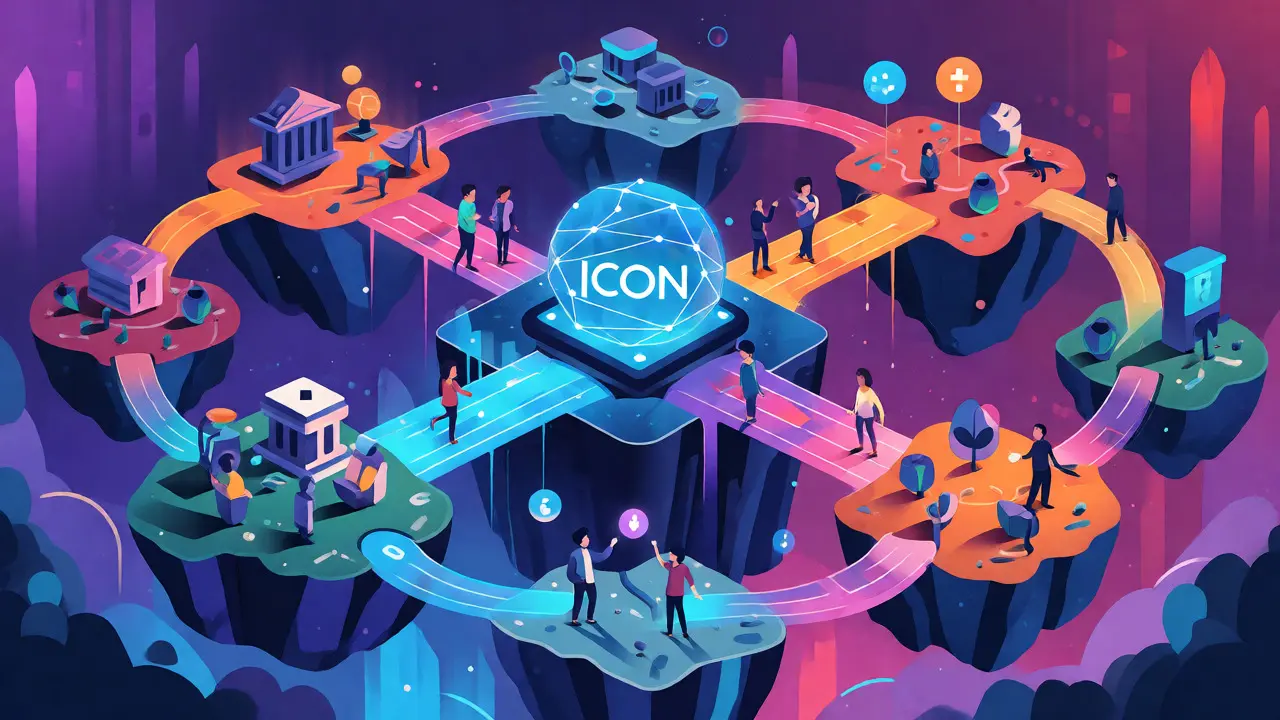
Imagine a digital world where different blockchains don't just talk to each other-they actually understand each other. That was the big promise of ICON, a project that aimed to build a "digital nation" of interconnected networks. If you've seen the ticker ICX pop up in your portfolio or news feed, you might be wondering what it actually does and why its price has swung so wildly over the years.
Here's the quick reality check before we get into the tech: ICON is a veteran player in the crypto space, launching its mainnet back in January 2018. It wasn't some overnight meme coin; it raised roughly $43 million in its initial coin offering (ICO) by selling half its supply for Ethereum. But as of late 2026, things look pretty quiet on the trading front. The token trades at fractions of a cent, far removed from its all-time high of $0.58 hit in early 2018. So, what happened? And is there still value here?
The Core Mission: Hyper-Connectivity
Most blockchains are like walled gardens. Bitcoin doesn't natively swap with Ethereum without a middleman. ICON tried to solve this by focusing on interoperability. Their goal was "hyper-connectivity," creating a network of networks. Think of it less like a single bank and more like the SWIFT system but for decentralized applications. Different communities-banks, hospitals, universities-could run their own blockchains but still exchange value seamlessly through the ICON protocol.
This structure relies on something called the Icon Nexus Protocol. This allows distinct blockchains, referred to as "communities," to communicate. Each community can have its own rules and consensus mechanisms, yet they all plug into the larger ICON ecosystem. It’s an ambitious architectural choice designed to let enterprises adopt blockchain without abandoning their existing infrastructure.
How ICON Works: DPoS and Governance
Unlike Bitcoin, which burns massive amounts of electricity to mine blocks, ICON uses a Delegated Proof-of-Stake (DPoS) consensus mechanism. This is similar to what you see in Tron or EOS. Instead of every computer competing to solve a math problem, token holders vote for representatives who validate transactions. This makes the network faster and more energy-efficient, capable of processing thousands of transactions per second according to technical specs.
Governance is handled through a unique structure involving Community Representatives (C-Reps). These are elected nodes trusted to manage the network. Regular users, or "Citizen Nodes," can stake their ICX tokens to vote for these reps. Your stake equals your voting power. This isn't just about voting; it's about earning rewards. The Icon Incentives Scoring System (IISS) calculates how much you earn based on your participation and delegation choices.
| Component | Function | Role in Consensus |
|---|---|---|
| Icon Republic | Governing body for the entire network | Coordinates between communities |
| Icon Communities | Independent blockchain networks | Maintain local consensus rules |
| C-Reps | Elected representatives | Validate blocks and receive rewards |
| C-Nodes | Infrastructure providers | Support community operations |
| Citizen Nodes | Regular users | Stake tokens to vote, no validation role |
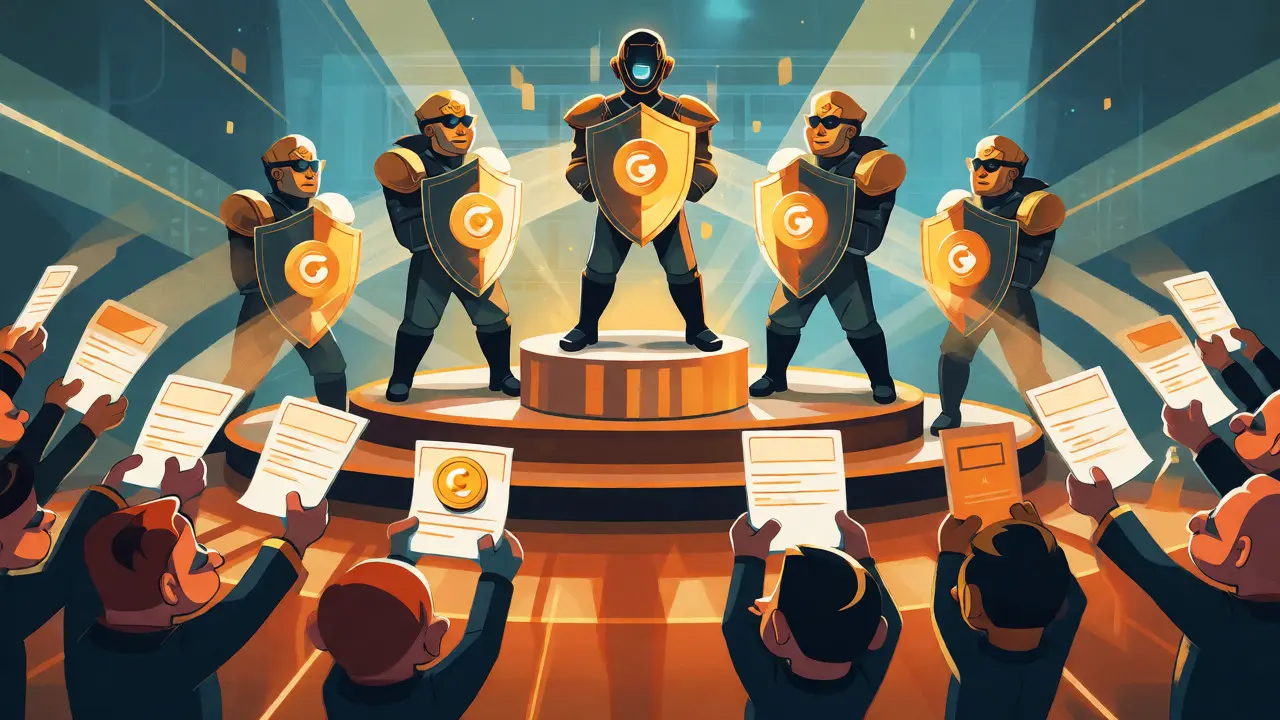
The ICX Token: More Than Just Currency
The native token, ICX, serves multiple purposes. First, it pays for transaction fees, often called "fuel." Second, it acts as a governance tool. When you stake ICX, you're locking it up to signal support for specific projects or representatives. Third, it distributes rewards. New ICX is minted every block and sent to a public treasury, from which contributors claim their share based on their "I-Score," a metric that measures contribution quality.
Recently, ICON has pivoted toward being an interoperability layer for cross-chain applications. All fees generated by apps using ICON technology, whether on the main chain or connected externally, are burned on-chain. This deflationary mechanism aims to capture value from cross-chain activity directly into the ICX token. However, with current trading volumes hovering near zero on many exchanges, the practical impact of this burn rate remains minimal compared to high-volume chains like Ethereum or Solana.

Market Performance: The Reality Check
Let's look at the numbers. As of October 2026, ICON faces significant challenges. Data from major aggregators shows the price fluctuating between $0.002 and $0.006 USD. That's a drop of over 99% from its February 2018 peak of $0.58. Liquidity is extremely thin, with some reports indicating only one active market with negligible volume.
Why such a decline? Several factors likely contributed. First, competition in the interoperability space intensified. Projects like Polkadot and Cosmos emerged with strong narratives and developer ecosystems, overshadowing ICON's earlier lead. Second, execution issues and slower adoption rates meant that the "digital nation" vision didn't materialize as quickly as investors hoped. Finally, the broader crypto market cycles have favored newer, more agile platforms, leaving older L1s struggling to regain attention.
Is ICON Still Relevant?
If you're holding ICX, you're probably asking if it's worth keeping. The technical foundation is solid. The DPoS model works, the governance is functional, and the interoperability features are real. But crypto markets aren't driven solely by technology; they're driven by narrative, liquidity, and developer activity.
For now, ICON operates in a niche. It hasn't disappeared-the team continues development, and the network remains secure-but it lacks the viral momentum of top-tier assets. If you believe in long-term utility over hype, ICON offers a case study in resilient infrastructure. But if you're looking for quick gains, the low volume and stagnant price suggest caution. Always do your own research, especially when dealing with assets that have experienced such steep corrections.
What is the primary function of the ICX token?
The ICX token serves three main functions: it pays for transaction fees on the ICON network, it is used for staking to participate in governance and earn rewards, and it facilitates interoperability between different blockchain communities within the ICON ecosystem.
How does ICON's consensus mechanism differ from Bitcoin?
Bitcoin uses Proof-of-Work, requiring miners to solve complex puzzles, which consumes significant energy. ICON uses Delegated Proof-of-Stake (DPoS), where token holders vote for representatives (C-Reps) to validate blocks. This method is faster, more energy-efficient, and allows for higher transaction throughput.
Why has the ICON price dropped so significantly since 2018?
The price drop reflects increased competition from other interoperability-focused blockchains like Polkadot and Cosmos, slower-than-expected adoption of ICON's specific use cases, and general market sentiment shifts that favor newer, higher-momentum projects. Low trading volume also exacerbates price volatility and stagnation.
Can I stake ICX to earn rewards?
Yes, you can stake ICX through the Icon Incentives Scoring System (IISS). By delegating your stake to Community Representatives or Dapps, you help secure the network and earn ICX rewards proportional to your contribution and the performance of your chosen delegates.
What is the "Icon Republic"?
The Icon Republic is the governing structure of the ICON network. It consists of nodes from various ICON communities that work together to maintain the integrity and operation of the overall blockchain system, coordinating between independent communities.